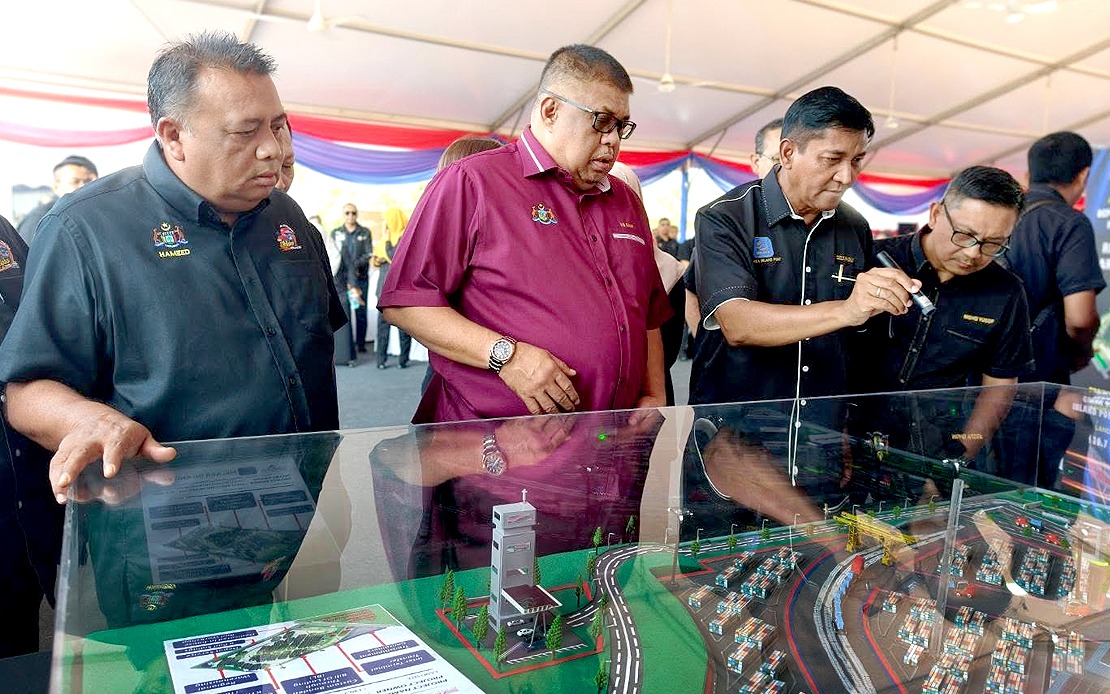
The Melaka government is moving ahead with an ambitious infrastructure plan to construct a 12-kilometre highway valued at RM129 million, designed to forge stronger links between the Kuala Linggi International Port and the Ayer Molek area near Kuala Sungai Baru. The initiative signals the state's determination to position itself as a key logistics hub within Malaysia's increasingly competitive port sector, with the new connection passing through the Melaka Inland Port to maximise inter-port efficiency.
According to Datuk Hameed Mytheen Kunju Basheer, chairman of the state's Public Works, Infrastructure, Public Facilities and Transport Committee, the project currently sits in the design phase under the Works Ministry's supervision. The road construction is anticipated to progress through quotation, tender, and contractor selection processes during the coming year, with actual construction work potentially commencing thereafter. This measured approach reflects standard Malaysian infrastructure development protocols, allowing for thorough planning before deployment of substantial public funds.
The fundamental appeal of this 12-kilometre route lies in its dramatic reduction of travel distances for logistics operators. Currently, the journey from Kuala Linggi to the inland port requires traversing approximately 28 kilometres of existing roads. Once completed, the new highway will cut this distance by more than half, eliminating unnecessary routing and reducing fuel consumption for commercial vehicles. For an industry where margins depend heavily on operational efficiency, this kind of time and distance saving translates directly into cost reductions and improved competitiveness for Melaka-based logistics firms.
The project's design specifically incorporates the Melaka Inland Port as a central hub, reflecting recognition that future port operations increasingly depend on seamless connectivity between maritime facilities and inland distribution networks. Rather than treating ports as isolated transport nodes, Melaka's planners are creating an integrated system where goods can move fluidly between international shipping terminals, the inland port, and distribution networks. This philosophy aligns with global best practices in port development, particularly in the context of the Belt and Road Initiative and growing container traffic through Southeast Asian waters.
Beyond the primary 12-kilometre project, Melaka officials have outlined complementary infrastructure upgrades that collectively represent a comprehensive reconfiguration of the state's port-adjacent road systems. These secondary initiatives include widening the existing route from Tangga Batu to Sungai Udang, which serves the Tanjung Bruas Port, ensuring that this competing facility maintains adequate access capacity. Such investments acknowledge that Melaka's ports function within a regional ecosystem, and maintaining competitive advantage requires attention to the entire network rather than focusing narrowly on a single facility.
A second major project involves constructing a six-kilometre road from Telok Gong to Kampung Pulau and Paya Lebar, with an estimated cost of RM49 million. This connection is designed to create an alternative logistics corridor, reducing dependency on existing village routes and providing direct access from port facilities to the Melaka Inland Port. The project is already advancing through preparatory stages, with the Paya Lebar to Kampung Pulau segment in quotation processes while the Kampung Pulau to Telok Gong alignment remains in design development.
The complete infrastructure programme is expected to reach completion by 2028 or 2029, representing a multi-year commitment that extends beyond typical election cycles. This extended timeline demonstrates that Melaka's government is framing these investments as fundamental state assets rather than short-term political initiatives. For investors and logistics companies considering facility location decisions, such long-term strategic infrastructure spending signals stability and serious commitment to creating world-class port operations.
The practical benefits extend beyond mere distance reduction. By establishing routes that bypass established villages and residential areas, the new highways will reduce traffic congestion in populated zones while improving safety for residents. This separation of commercial heavy-vehicle traffic from residential areas represents a more sophisticated approach to regional development than previous patterns, where port access typically cut through town centres.
For Malaysia's broader economic trajectory, Melaka's port expansion effort must be understood within the context of competition among southern Peninsular ports. Johor's Tanjung Pelepas Port has attracted significant international container traffic, while Port Klang continues to dominate the regional market. Melaka's investment in the Melaka Inland Port and associated road infrastructure represents a strategic bid to capture growing containerised trade, particularly as regional supply chains respond to geopolitical shifts and trade pattern reorientation following various trade tensions.
The logistics sector in Malaysia currently experiences capacity constraints at major ports, with many operators seeking alternative facilities capable of handling the volume growth projected over the coming decade. By enhancing its port connectivity infrastructure, Melaka positions itself as an attractive alternative to congested northern facilities, potentially capturing traffic from industries across central and southern Peninsular Malaysia.
These developments also carry implications for regional trade patterns within ASEAN. As the region intensifies efforts to create integrated supply chains and reduce trade friction through initiatives like the Regional Comprehensive Economic Partnership, efficient port access becomes increasingly critical. Melaka's enhanced logistics infrastructure contributes to broader regional competitiveness against competing ports in Thailand, Indonesia, and other Southeast Asian nations.
The financing and coordination required for this multi-project approach reflects evolving Malaysian governance patterns, with state governments increasingly taking proactive roles in infrastructure development rather than waiting for federal initiatives. Melaka's approach may serve as a model for other states seeking to leverage their geographic advantages or strategic locations. The projects demonstrate that even medium-sized states can undertake substantial infrastructure transformation when driven by clear strategic objectives.
As implementation proceeds through design, tendering, and construction phases over the coming years, the success of these initiatives will likely influence how other Malaysian states approach port infrastructure and logistics connectivity. For businesses in the region, particularly those in manufacturing, retail distribution, and international trade, these Melaka developments warrant close monitoring as they mature into operational assets that could reshape regional supply chain economics.

