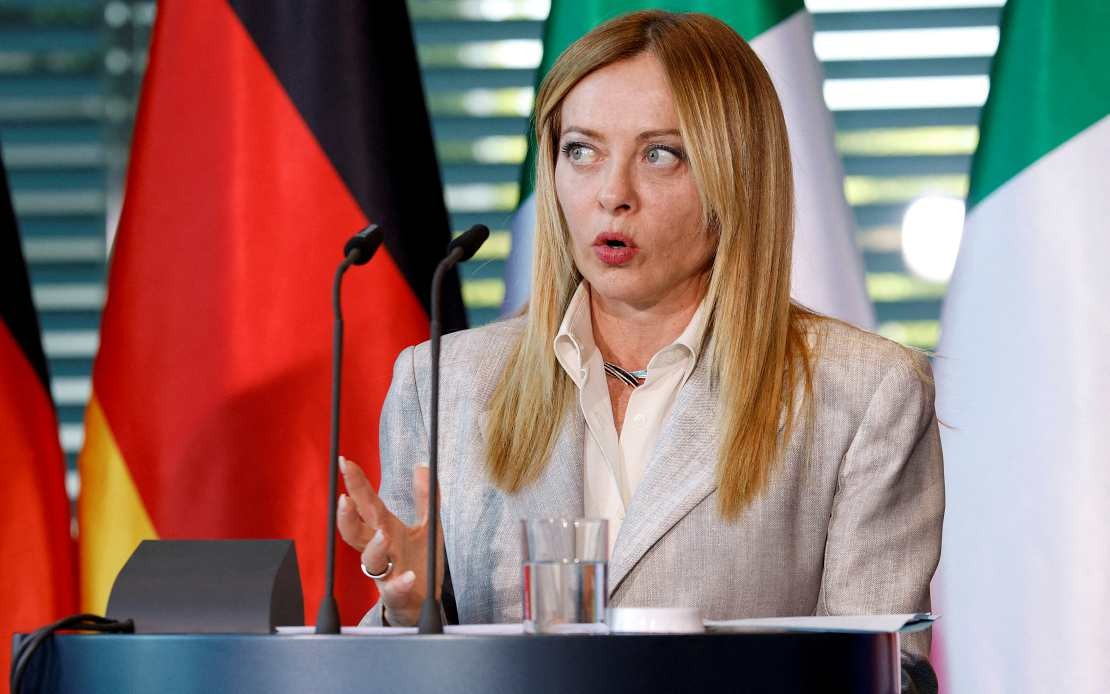
Italian Prime Minister Giorgia Meloni has intensified efforts to shift Europe's migration management strategy beyond EU territory, proposing the creation of migrant return hubs in third countries as part of a broader continental response to rising irregular arrivals. The initiative, which represents a significant expansion of Rome's existing approach, aims to have the first of these facilities operational by 2027, according to Italian media reports. The proposal underscores mounting pressure within the bloc to adopt alternative mechanisms for processing asylum claims and managing deportations, particularly as traditional border controls have become increasingly strained across Mediterranean and terrestrial crossing points.
The scheme will feature prominently at an informal meeting of EU home affairs ministers scheduled for this week, with Italy's Interior Minister Matteo Piantedosi leading discussions on behalf of Rome. Italian officials are seeking to model any agreements with third countries on the framework already established with Albania, which has emerged as a test case for the broader concept. The financial architecture supporting these centres would rely on EU funding rather than individual member states bearing costs independently, a crucial element designed to build political consensus among nations already grappling with substantial migration-related expenses. Rome intends to conclude binding agreements with potential host nations by year's end, establishing a clear timeline for implementation.
Denmark's Prime Minister Mette Frederiksen has signalled strong support for Italy's initiative, reflecting broader Nordic concerns about migration management. More significantly, twenty-two EU member states have collectively written to European Commission President Ursula von der Leyen and European Council President Antonio Costa, formally proposing that the leadership consider enhanced protection mechanisms specifically targeting illegal migration. This unusually coordinated approach demonstrates that concerns transcend geographical location and political orientation, spanning countries from the southern Mediterranean through Central Europe to Scandinavia. The collective petition represents a significant political statement about the urgency member states perceive in addressing migration pressures.
Negotiations with potential host countries have progressed furthest in Africa, where Rwanda and Uganda have emerged as the leading candidates. Denmark, Austria, the Netherlands, and Germany are spearheading diplomatic efforts to finalise these arrangements, each nation bringing distinct motivations rooted in their own migration challenges. Greece, similarly positioned on the EU's periphery as a major transit point, has also committed to launching operations by 2027 and is actively advocating for the initiative. This convergence of interest across diverse European capitals suggests that the external processing model may gain sufficient political momentum to become established European policy, despite substantial ethical and legal questions surrounding such arrangements.
Italy's experience with migrant centres operating abroad provides both a template and cautionary lessons. The Italian government currently manages facilities under its own authority and expense, tasked with processing asylum applications while also handling detention and deportation of undocumented migrants. However, this model has encountered significant resistance from Italy's judicial system, which has repeatedly prohibited migrant detention and ordered individuals returned to Italian territory. Courts have additionally challenged expedited border procedures applied to nationals from countries designated as safe, creating friction between the executive and judiciary over migration authority and due process protections.
The Albania experiment illustrates the operational challenges inherent in such programmes. Between May 2025 and mid-July 2026, only 685 individuals were transferred to Albanian facilities during the second phase of operations, yet fewer than fifteen percent of these were ultimately repatriated. The programme's modest success rate, combined with substantial financial requirements, raises questions about cost-effectiveness and scalability. Maintaining the Gjader centre alone cost an estimated €50 million during 2025, suggesting that expanded external processing could entail considerable financial commitments for participating European governments.
The timing of Meloni's proposal coincides with acute migration pressures at Europe's borders, most notably the dramatic situation unfolding in Spanish territorial waters and enclaves. In late July, Ceuta, a Spanish autonomous city located on Morocco's northern coast, experienced an unprecedented surge of arrivals from adjacent Moroccan territory. Within a single twenty-four-hour period spanning July 31, approximately 60,000 people entered the enclave, effectively doubling its resident population of roughly 85,000 residents. Spain responded by mobilising substantial security resources, deploying additional police units, Civil Guard contingents, and military personnel to Ceuta in an attempt to restrict unauthorised crossings and prevent further arrivals.
The Ceuta crisis serves as a stark reminder of the fragility of existing border management systems and the capacity for sudden, massive arrivals to overwhelm local infrastructure and services. This incident has likely accelerated discussions surrounding more fundamental structural changes to European migration policy, lending urgency to proposals like Meloni's external processing centres. For Malaysia and broader Southeast Asia, the European model merits careful observation, as the region confronts its own significant migration challenges involving Rohingya populations, irregular movement across maritime borders, and the movement of economic migrants seeking employment opportunities across ASEAN member states.
The establishment of external processing hubs represents a philosophical shift in how Europe approaches migration governance, moving responsibility and processing capacity away from the continent itself. This strategy attempts to address migration at source and transit points rather than exclusively at destination countries' borders. However, the approach raises substantive concerns regarding asylum seekers' access to due process, the adequacy of conditions in third-country facilities, and whether host nations possess appropriate institutional capacity to manage complex adjudication processes fairly and transparently.
For Southeast Asian policymakers and civil society observers, the European experience with external processing offers important lessons in both promise and peril. While external centres might theoretically reduce irregular arrivals at Europe's borders, implementation complexities and judicial oversight challenges could substantially limit effectiveness. The relatively poor outcomes achieved through the Albania mechanism suggest that merely relocating processing does not automatically solve underlying drivers of migration, nor does it eliminate the humanitarian imperatives surrounding vulnerable populations in transit.
The proposal also raises questions about regional equality and burden-sharing within the EU. Countries not immediately adjacent to major migration routes may resist contributing EU funding toward external facilities, preferring such resources be directed toward internal border security and integration programmes. Similarly, third countries hosting these facilities may demand compensatory financial arrangements or other concessions, potentially inflating overall costs beyond initial estimates. Political sustainability could prove challenging if public perception shifts or if host country governments experience domestic political pressure regarding migrant populations on their territories.

