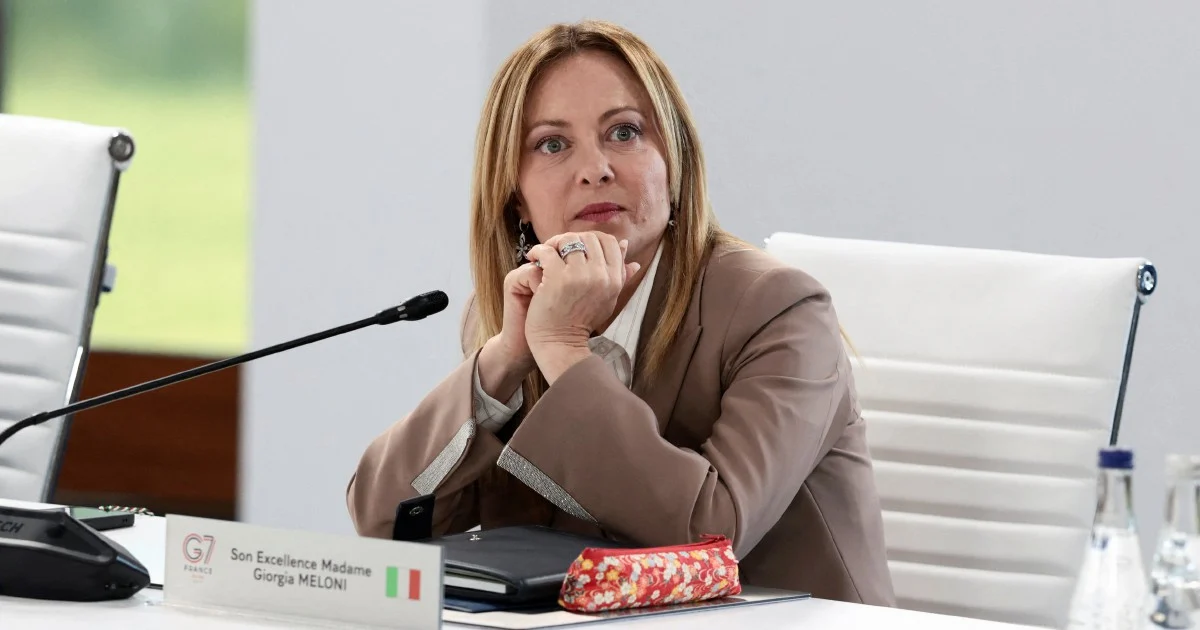
When Donald Trump took the oath of office for his second presidential term in 2025, Italian Prime Minister Giorgia Meloni stood uniquely positioned among European leaders—she alone had been extended a personal invitation to Washington for the inauguration ceremony. That singular gesture appeared to signal the beginning of a new era of strategic partnership between the United States and Italy, with Meloni positioned as Trump's most reliable ally within the European Union. Yet barely months into his presidency, this carefully cultivated relationship has deteriorated dramatically, with Meloni now emerging as one of Trump's most pointed critics on the international stage.
Meloni's initial embrace of Trump reflected a broader ideological alignment that had developed during his first administration and persisted through his 2024 campaign. As a right-wing nationalist who has emphasized Italy's sovereignty and independent foreign policy, Meloni appeared to find common ground with Trump's America First doctrine. Her presence at the inauguration was choreographed to underscore this partnership, positioning Italy as Washington's gateway into European affairs and suggesting that Rome would serve as a counterweight to more critical EU capitals like Brussels and Paris. The optics of that moment seemed to promise privileged access and influence for Italy within the Trump administration's strategic planning for Europe and the Mediterranean region.
The rupture between Rome and Washington has unfolded across multiple policy dimensions, though Meloni has been particularly vocal on issues that directly affect Italian interests and European stability. Her criticisms reflect not merely personal disagreement but fundamental disputes over how Trump's policies impact Italy's economic relationships, NATO commitments, and broader European cohesion. For Malaysian observers and Southeast Asian policymakers watching transatlantic dynamics, Meloni's transformation illustrates how even seemingly solid political alliances can fracture when economic and strategic interests diverge sharply from ideological compatibility.
The deterioration carries particular significance for Europe's internal politics. As an ostensibly sympathetic leader who once seemed poised to serve as a bridge between Trump and the European establishment, Meloni's pivot suggests that even nationalist-leaning European politicians are finding Trump's second-term agenda incompatible with their national interests. This dynamic potentially strengthens the EU's hand in confronting American unilateralism, as Meloni's criticisms carry weight among center-right European parties that might otherwise have been receptive to Trump's appeals.
For Italy specifically, the rupture likely reflects tensions over trade policy, NATO burden-sharing, or Trump's approach to European security questions—areas where even ideologically aligned governments find little room for compromise. Italy's economy, deeply integrated into European supply chains and reliant on the transatlantic relationship, cannot afford the kind of aggressive decoupling that some of Trump's policies appear designed to achieve. Meloni must balance her ideological affinity with Trump against the practical necessity of maintaining economic stability and European partnerships that sustain Italian prosperity.
The timing of Meloni's shift also suggests that initial optimism about Trump's second term has given way to sobering realities. In the opening weeks of his presidency, there may have been genuine hope among Trump-aligned European leaders that his administration would pursue relatively conventional Republican foreign policy. Instead, Trump's second term has proved more radical in its unilateralism, with decisions and proposals that threaten established alliance structures and economic arrangements that countries like Italy depend upon. Meloni, as a pragmatic nationalist, appears to have reassessed the cost-benefit calculation of maintaining close alignment.
From a regional perspective, Meloni's transformation has implications for how Southeast Asian nations assess their relationships with Washington and its European allies. Italy's willingness to publicly criticize Trump despite their earlier alignment demonstrates that even Western leaders cannot indefinitely sustain partnerships that conflict with core national interests. For countries in Southeast Asia juggling relationships with the United States, China, and regional powers, this example underscores the importance of maintaining strategic autonomy rather than betting entirely on any single great power.
The emotional temperature of Meloni's criticism may also reflect personal disappointment. Leaders who invest political capital in cultivating relationships with American presidents do so expecting tangible benefits—whether in terms of military support, trade agreements, or diplomatic influence. If Meloni extended significant goodwill toward Trump expecting reciprocal treatment, only to find Italian interests subordinated to broader American strategic imperatives, her public criticism may partly reflect that betrayed expectation.
Moving forward, Meloni faces the delicate task of managing both her relationship with the Trump administration and her standing within the European Union. If her criticisms continue to escalate, she risks antagonizing Washington at a moment when European nations may need American security guarantees. Conversely, if she attempts to patch over the rupture, she may appear unprincipled to both European partners and her domestic constituency. This political tightrope reflects the fundamental challenge facing Italian policymakers in an era of American unpredictability and European fragmentation.
The arc from Trump whisperer to Trump basher illustrates a larger truth about contemporary international relations: ideological affinity and personal relationships matter less than structural interests and concrete policy outcomes. Meloni's evolution suggests that even leaders who style themselves as Trump allies ultimately operate within constraints imposed by economic realities, alliance obligations, and domestic political pressure. As the Trump administration pursues policies that challenge existing international arrangements, expect more European leaders to follow Meloni's trajectory, moving from qualified support to open criticism as the costs of alignment become increasingly apparent.

