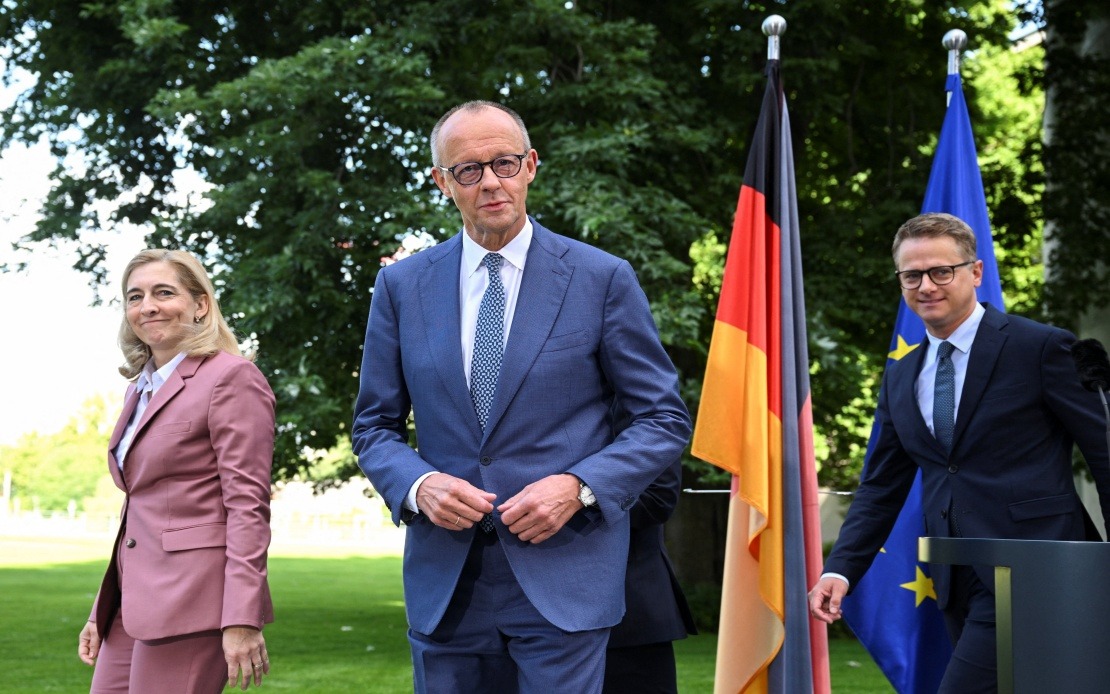
German Chancellor Friedrich Merz has orchestrated one of his most significant government overhauls since taking office, restructuring both his cabinet and the leadership hierarchy of the Christian Democratic Union (CDU) in moves that extend far beyond initial expectations. The cascading changes were triggered by the resignation of Jens Spahn, the CDU's parliamentary group leader, who stepped down after it became public that he and his partner had welcomed a child through surrogacy in the United States—a practice that remains prohibited under German law.
The magnitude of the reshuffle demonstrates Merz's determination to address the fallout from the Spahn controversy while simultaneously repositioning key figures within his administration. Rather than limiting changes to replacing Spahn's vacant position, the chancellor has embarked on a broader recalibration that signals a shift in strategic priorities and personnel management within the CDU-led government. This approach suggests Merz is using the crisis as an opportunity to reshape his leadership team according to his vision for the government's direction.
Thorsten Frei, who previously headed the chancellery—a pivotal office that coordinates government business and serves as a crucial advisory position—will assume Spahn's former role as parliamentary group leader of the CDU. This promotion reflects confidence in Frei's ability to manage the parliamentary caucus during a period of internal party tension and requires him to navigate complex relations between the executive and legislative branches while maintaining party discipline.
Filling the vacuum left by Frei's departure, Nina Warken, a former minister responsible for health policy, has been tapped to lead the chancellery. Warken's appointment to this administrative nerve centre indicates that Merz values her experience in managing large bureaucratic portfolios and her capacity to handle the operational demands of coordinating government activities. Her transition from the health ministry to the chancellery represents a lateral move that elevates her to one of the most influential positions in the administration.
The chain of personnel changes extends into the party hierarchy itself. Carsten Linnemann, who previously served as CDU Secretary General—a position responsible for party organization, strategy, and administration—will transition to become the new health minister. This shift places Linnemann at the helm of a substantial ministry at a time when healthcare policy remains a focal point for European governments grappling with demographic challenges, public spending pressures, and rising citizen expectations regarding medical services.
Additionally, reports from German press sources and media organizations indicate that Transport Minister Patrick Schnieder is prepared to relinquish his position, though the specific successor has not been formally announced. The transport portfolio oversees critical infrastructure, automotive policy, and rail networks—sectors vital to Germany's economic competitiveness and environmental transition goals. The departure of Schnieder suggests that transport policy priorities may shift under new leadership.
The Spahn resignation that precipitated these changes highlights the tension between personal circumstances and political leadership in Germany, where public scrutiny of politicians' private decisions remains intense. Surrogacy remains legally contentious in Germany, reflecting ongoing ethical and societal debates about reproductive rights, family structure, and the role of the state in regulating biological processes. For international observers, the swift and serious consequences for Spahn underscore how deeply such issues resonate within German political culture.
For Malaysia and Southeast Asia, these developments carry broader implications regarding governance standards and transparency expectations in democratic systems. The German case illustrates how even prominent political figures face accountability when their personal choices conflict with domestic legal frameworks, a principle that resonates across different democratic contexts. The incident also reflects differing regulatory approaches to emerging reproductive technologies across jurisdictions—a matter increasingly relevant as Southeast Asian nations develop their own policies on assisted reproduction and family law.
Merz's handling of the reshuffle reveals his leadership style: decisive action combined with strategic repositioning of allies and capable administrators. By executing these changes comprehensively rather than minimally, he demonstrates control over his party and government while signalling that integrity standards apply to senior figures. The breadth of the reorganization also suggests that Merz may have been planning adjustments to his team's composition and is using the Spahn situation as a catalyst for broader institutional change.
The reshuffle will require these new appointees to manage substantial transition periods while addressing ongoing policy challenges. Warken must integrate into the chancellery's operations quickly, Linnemann must navigate health ministry complexities and build relationships with healthcare stakeholders, and Frei must establish credibility with the parliamentary caucus—a delicate task given partisan tensions. Each transition carries risks if not executed smoothly, potentially affecting government effectiveness during a period when Germany faces economic pressures and European security concerns.
Longer term, the reshuffle positions these officials for sustained prominence within the CDU leadership structure. Their elevated roles provide platforms for developing policy agendas and building followings within the party. Conversely, those departing—particularly Schnieder—face questions about their political futures and whether they might seek positions in opposition parties or state governments, potentially altering the broader competitive landscape of German politics.

