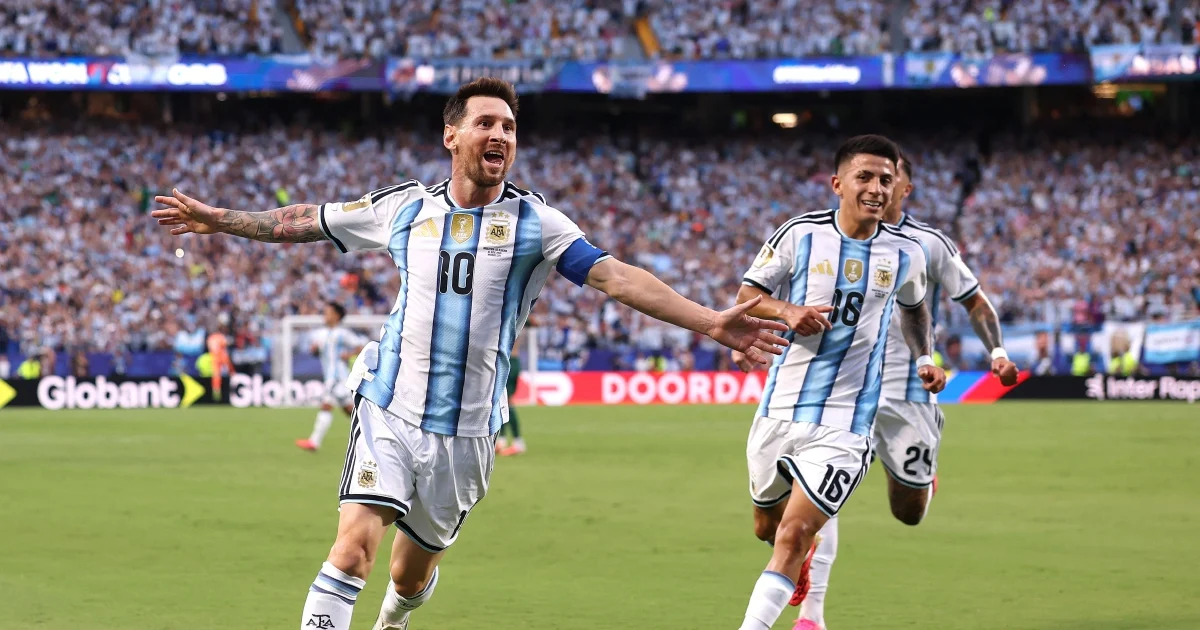
Lionel Messi has disclosed that he is currently navigating significant personal difficulties, providing insight into the emotional scenes that unfolded following his landmark hat-trick performance during Argentina's World Cup encounter against Algeria. The Barcelona-born forward netted three goals in the 3-0 triumph, marking a historic achievement on football's biggest stage, yet the visible emotions transcended simple sporting jubilation.
The revelation offers important context for observers who witnessed Messi's apparent distress during and after the match. Rather than being purely the result of sporting exertion or the weight of competition, the tears and visible strain reflected deeper personal struggles that have been occupying the Argentine icon's mind. Such admissions from elite athletes are relatively uncommon, as professional sportspeople typically compartmentalise their personal affairs from their public performances.
Messi's willingness to speak about his off-pitch challenges demonstrates the human dimension often obscured by sporting achievement and celebrity status. Even at the pinnacle of athletic success, celebrated figures navigate the same personal and family pressures that affect ordinary individuals. His openness could potentially help normalise discussions around mental health and personal wellbeing within professional sports, where the culture has historically emphasised stoicism and performance irrespective of circumstance.
The hat-trick itself represents a watershed moment in Messi's World Cup narrative. Having long been considered one of football's greatest players, yet entering his final World Cup cycle without the tournament's signature achievement, the three-goal haul against Algeria signified a turning point in his campaign. It was a performance of supreme technical quality, showcasing the precise finishing and football intelligence that have defined his career.
Argentina's dominant performance reflected the team's ambitions in the tournament. The 3-0 scoreline suggested a convincing display where the South American side controlled proceedings and converted their superiority into a commanding victory. Against an Algerian side that has proven competitive in African football, such a victory demonstrated Argentina's credentials as genuine contenders in the tournament.
For Malaysian and Southeast Asian football enthusiasts, Messi's candour about personal challenges while maintaining world-class performance offers a compelling narrative. The region has seen its own footballers struggle under pressure, and Messi's example illustrates how elite athletes compartmentalise external pressures to deliver on the pitch. His achievement provides inspiration that personal difficulties need not derail professional excellence, though they clearly exact an emotional toll.
The timing of Messi's disclosure is significant given Argentina's tournament trajectory. As the team progresses deeper into the competition, the Argentine talisman will face increasing scrutiny and pressure to perform. How he manages his personal circumstances alongside mounting expectations will prove crucial to Argentina's overall campaign. His willingness to discuss his struggles may also serve as a coping mechanism, allowing him to process these issues publicly rather than internalising them entirely.
Within the broader context of modern football, Messi's situation underscores how performers at the highest level operate under constant external scrutiny and pressure. The intersection of personal wellbeing and professional performance remains an understudied area in sports psychology. His case demonstrates that even the most gifted athletes experience difficulties that extend beyond the technical aspects of their sport.
The hat-trick achievement itself deserves recognition as a standalone accomplishment. For a player of Messi's calibre to score three goals in a World Cup match represents the convergence of skill, timing, opportunity, and execution at the highest level. Such performances become the defining memories of tournaments and shape legacies. Against this backdrop, the revelation that he achieved this while battling personal issues makes the performance even more remarkable from a resilience perspective.
Looking forward, Messi's openness may influence how other athletes approach public discussions about mental health and personal struggles. In football cultures across Southeast Asia and beyond, there remains significant stigma surrounding such conversations. A figure of Messi's stature breaking this silence could gradually shift perceptions and encourage other players to seek support and speak openly about challenges.
Argentina's medical and support staff will undoubtedly be aware of Messi's personal situation and will likely provide additional support mechanisms to help him navigate the tournament successfully. Professional football clubs and national teams increasingly employ sports psychologists and welfare officers to address exactly these circumstances. How effectively Argentina's support structure assists Messi in managing his off-pitch issues while maintaining performance levels will be worth monitoring as the tournament progresses.

