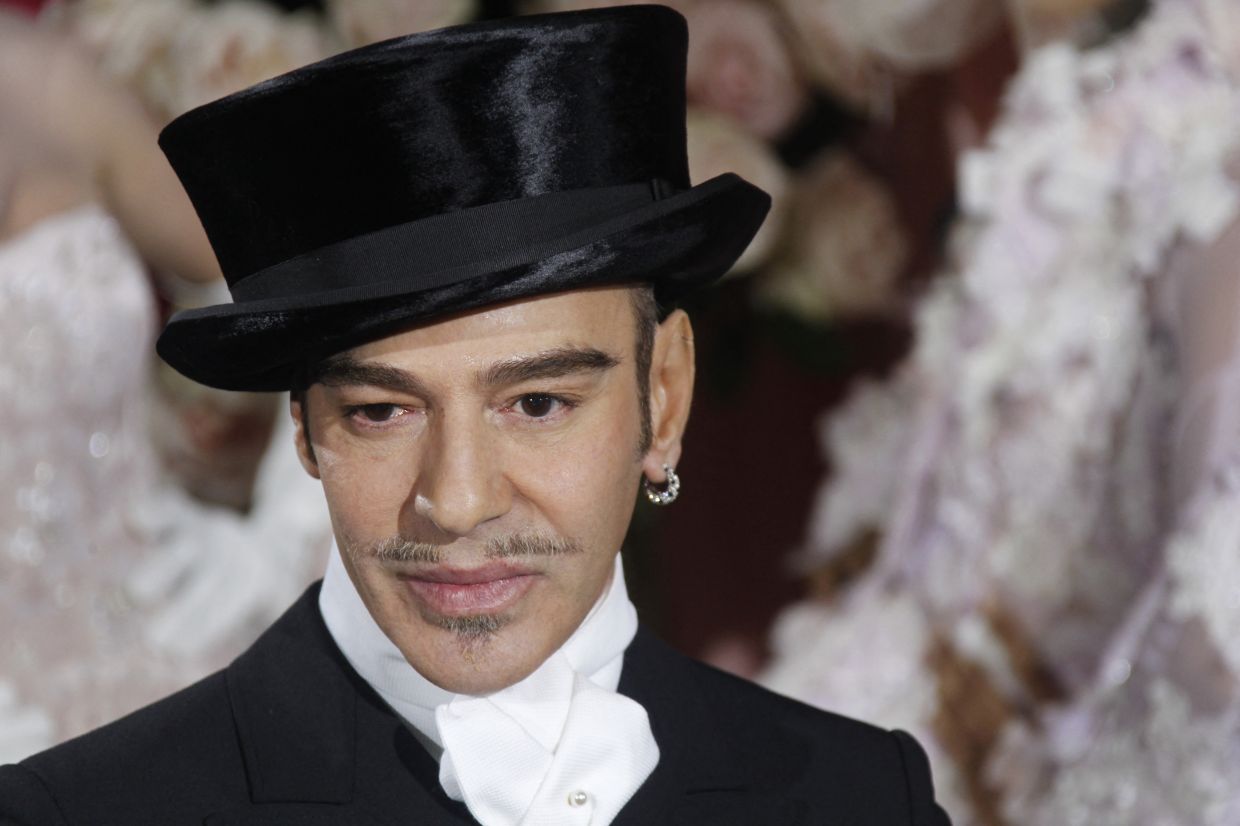
Next May's Met Gala will turn the spotlight on one of fashion's most complex figures: John Galliano, the British designer whose career trajectory mirrors the industry's reckoning with accountability. The Metropolitan Museum of Art's Costume Institute has selected Galliano as the subject of a major solo exhibition, making him only the third living designer to receive this honour. The decision represents both a validation of his undeniable creative contributions to fashion and an acknowledgment that the fashion world must grapple honestly with the consequences of his past misconduct.
Galliano's rise to prominence reached its apex during his nearly fifteen-year tenure as creative director at Christian Dior, where he commanded one of the most prestigious positions in global fashion. His work at the storied French house was marked by theatrical flair, meticulous craftsmanship, and an ability to reinvent the brand while respecting its heritage. Yet this pinnacle of professional achievement came to an abrupt end in 2010 and 2011 when a series of antisemitic and racist remarks emerged publicly, including a viral video of him expressing admiration for Hitler. These statements prompted a Paris court conviction and led Dior to terminate his employment, effectively exiling him from the industry's highest echelons.
What followed was a period of professional wilderness and personal rehabilitation. Galliano withdrew from public view and undertook treatment for substance addiction, eventually engaging in both public and private efforts to address the harm caused by his words and to demonstrate genuine change. The fashion world largely kept its distance during these years, a cautionary tale about the cost of crossing fundamental ethical lines. However, in 2014, Parisian fashion house Maison Margiela offered him an opportunity for professional resurrection, hiring him as creative director. His decade-long tenure there demonstrated that rehabilitation and artistic excellence were not mutually exclusive, yielding collections that won critical acclaim and restored his reputation among design peers and fashion critics.
The Met Gala exhibition, scheduled for May 2025, cannot be divorced from this complicated narrative. The museum has been explicit that the show will not shy away from the problematic dimensions of Galliano's history. A statement issued by the institution emphasises that the exhibition will directly address the misconduct that damaged his career and public standing, framing the presentation as an exploration of how artistic achievement must be evaluated alongside ethical accountability. This approach signals a maturation in how cultural institutions engage with creators whose personal conduct has been deeply troubling.
Preparing the exhibition required considerable diplomatic work. Museum officials, including chief curator Andrew Bolton and editor-in-chief Anna Wintour, held meetings with Jewish community leaders in New York to ensure the exhibition would be respectful and contextually appropriate. These consultations reflect an understanding that the fashion industry, like all creative fields, must demonstrate sensitivity when celebrating figures with controversial pasts. The conversations likely shaped how the museum frames Galliano's story, ensuring the exhibition balances recognition of achievement with unflinching examination of harm.
The exhibition structure itself embodies this complexity. The first section, titled "Bearings", will confront the rupture directly, detailing the antisemitic, racist, and anti-Asian remarks Galliano made in 2010 and 2011, his resulting expulsion from Dior and his eponymous label, and his subsequent conviction by a Paris court. This section will also explore his substance abuse treatment and his gradual public acknowledgment of his actions. Rather than burying this history or treating it as prelude, the museum is placing it front and centre, demanding that visitors reckon with it before encountering his creative work.
The second component, "Horizons", shifts focus to Galliano's creative sources and inspirations, examining how he draws from history, geography, fine art, narrative forms, and performance. This section contextualises his design methodology and demonstrates the intellectual depth behind his aesthetic choices. The third part, "Atlas Of Transformation", celebrates his technical mastery, experimental approach, and innovations in craftsmanship. This tripartite structure allows the exhibition to hold multiple truths simultaneously: that Galliano's misconduct was serious and inexcusable, that his rehabilitation efforts merit acknowledgment, and that his design contributions represent genuine artistic achievement.
For Southeast Asian fashion enthusiasts and industry observers, this exhibition carries particular resonance. The region has witnessed its own debates about how to reckon with cultural figures whose personal conduct contradicts their professional accomplishments. The Met's approach offers a model for how institutions can address such tensions without either canonising problematic behaviour or dismissing artistic merit wholesale. It suggests that accountability and celebration need not be mutually exclusive propositions.
The 2025 Met Gala red carpet itself promises to be intensely scrutinised, given Galliano's historical role in shaping haute couture's theatrical aesthetic. Attendees will likely navigate complex feelings as they encounter designs that exemplify both his creative brilliance and the conversation he now inevitably triggers. The exhibition ultimately poses a question that extends beyond fashion: whether individuals who cause significant harm can genuinely transform, and whether society should acknowledge both the seriousness of their misconduct and the authenticity of their efforts at redemption. By confronting rather than concealing this tension, the Met Gala exhibition stakes a claim that the fashion world has matured enough to hold these competing truths in view simultaneously.

