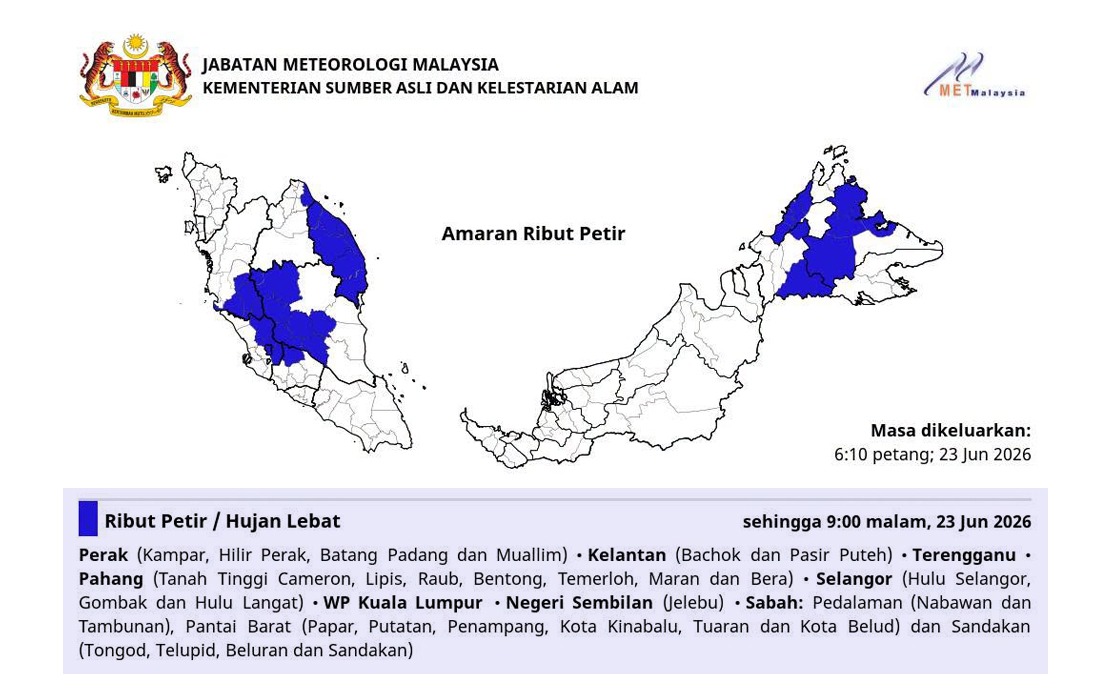
The Malaysian Meteorological Department has reassured the public that Typhoon Mekkhala, currently tracking across the northwestern Pacific region, will not bring significant weather impacts to Malaysia. The National Weather and Geophysics Operations Centre identified the typhoon at a considerable distance from Malaysian shores, positioned approximately 1,616 kilometres to the northeast of Kudat in Sabah, while simultaneously locating it roughly 460 kilometres northeast of Luzon in the Philippines.
At the time of the advisory issued on June 23, observational data collected at 5 pm local time indicated that Typhoon Mekkhala was moving in a northwesterly direction at a measured velocity of 10 kilometres per hour. This relatively slow forward speed suggests a measured progression rather than a rapid approach toward populated regions. The system has developed considerable strength, with meteorological instruments recording potential maximum wind speeds reaching up to 185 kilometres per hour in its most intense bands, characteristic of a system operating at typhoon-level classification.
The geographical positioning of the typhoon places it firmly in the Philippine domain of influence, with the Philippines being the nation most directly affected by the system's projected track and development. Malaysia's substantial distance from the storm centre, combined with its location south and west of the primary danger zone, provides natural protection from the most hazardous elements of the disturbance. The northwesterly movement vector further reduces the likelihood of any direct or indirect impact on the Malaysian peninsula or Malaysian Borneo.
For Malaysian residents accustomed to seasonal weather variability across the region, the advisory represents a standard meteorological assessment during the southwestern monsoon season when tropical cyclogenesis becomes more frequent across the western Pacific. The issuance of such advisories forms part of MetMalaysia's routine monitoring protocols, ensuring that the public remains informed about significant weather systems regardless of their proximity to national territory. This transparency allows residents and maritime operators to make informed decisions about travel and outdoor activities.
The timing of such typhoons during June falls within the period when the Philippine archipelago and areas to its north experience heightened vulnerability to tropical cyclone formation and impact. Malaysia's geographic position, straddling equatorial and tropical waters south of the main storm-generation zones, historically affords it protection from the most severe manifestations of western Pacific typhoons, though the country remains subject to peripheral effects including enhanced rainfall and strengthened winds during active monsoon periods.
MetMalaysia's confirmation of no significant impact carries particular importance for maritime industries operating across the region, including shipping routes that connect Malaysian ports with Southeast Asian neighbours. While major typhoon tracks typically steer vessels toward alternative routing, the availability of authoritative meteorological guidance ensures that shipping companies and offshore operations can maintain schedules without unnecessary precautions for systems that will remain at considerable distance from their operational areas.
The department's monitoring of Typhoon Mekkhala exemplifies the regional cooperation and information-sharing that characterises modern meteorological practice across Southeast Asia. As weather systems that develop in the western Pacific can influence patterns across multiple nations, the Malaysian meteorological community maintains continuous surveillance of significant disturbances even when direct impacts on Malaysian territory appear unlikely. This preparedness reflects the understanding that atmospheric conditions can shift unexpectedly, necessitating updated assessments as new observational data becomes available.
For those in the Philippines dealing with the typhoon's proximity, the system's northwest movement trajectory is relatively favourable, potentially steering it away from direct landfall on major population centres depending on its exact track adjustments. However, the substantial wind speeds associated with Typhoon Mekkhala ensure that areas within its periphery will experience significant weather disruptions, reinforcing the importance of preparedness measures for Philippine communities in the potentially affected zones.
Looking forward, MetMalaysia will continue routine monitoring of Typhoon Mekkhala's evolution and trajectory, releasing updated assessments should any changes emerge that might alter the current evaluation regarding impacts on Malaysia. The department's commitment to timely, accurate information provision ensures that Malaysian authorities, businesses, and residents have access to reliable meteorological intelligence for operational planning and safety decision-making, particularly as the region enters peak season for tropical cyclone activity.

