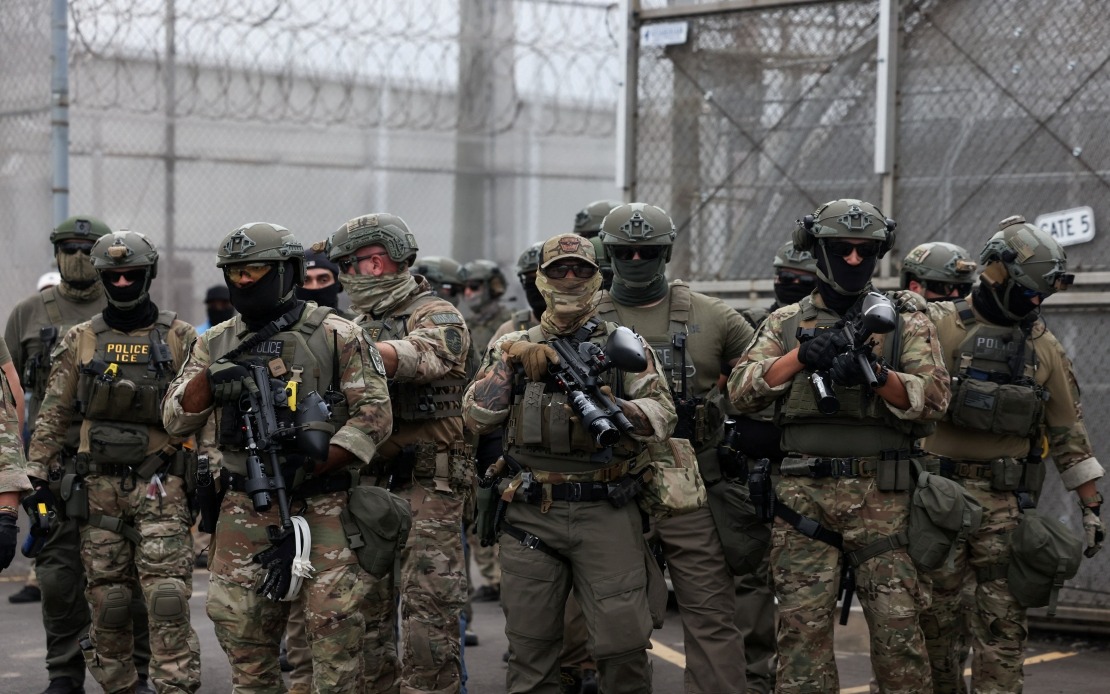
An Immigration and Customs Enforcement (ICE) officer in the United States fatally shot a Mexican national during a confrontation that allegedly began when the man refused to comply with officers' instructions while seated in his vehicle, according to the Department of Homeland Security. The incident, which unfolded in the early hours of the morning, has now prompted formal investigations from multiple federal agencies concerned with scrutinising the circumstances surrounding the use of deadly force.
According to the department's account of events shared via social media, the sequence of actions escalated rapidly once agents approached the vehicle. The man reportedly first drove his car directly into a vehicle occupied by federal agents, then manoeuvred toward an officer with apparent intent to strike him. It was at this juncture that the officer discharged his firearm. The individual was subsequently transported to a hospital, where he succumbed to injuries sustained during the shooting.
The Department of Homeland Security has characterised the man as someone residing unlawfully in the country, though no explanation was provided regarding the circumstances that led to his illegal status or the nature of the enforcement operation underway when the incident occurred. The identification of the deceased as Lorenzo Salgado Araujo emerged from official statements, though additional details about his background remain limited in public disclosures.
The shooting has prompted a dual investigative response reflecting heightened federal attention to officer-involved incidents. Homeland Security announced an internal investigation into the shooting itself, while the Federal Bureau of Investigation's Houston office opened a separate inquiry focused specifically on the alleged assault of a federal officer. This division of investigative responsibilities represents standard protocol for incidents involving potential criminal conduct by enforcement personnel.
Witness documentation of the encounter may prove significant to understanding what transpired. Multiple individuals present at the scene captured photographic and video footage of the incident, according to reporting from NBC News. Such independent recordings have historically provided crucial context in cases where official narratives regarding use of force have subsequently faced serious challenges or contradictions.
The incident arrives amid growing national scrutiny regarding law enforcement's deployment of lethal force. The January shooting deaths of United States citizens Renée Good and Alex Pretti by federal agents sparked widespread public outcry and intensified debate about accountability mechanisms within federal enforcement agencies. Those cases demonstrated how video evidence obtained by bystanders can substantially complicate or undermine initial official explanations of confrontational incidents.
For Malaysian readers, this development underscores broader questions about immigration enforcement practices and accountability that resonate internationally. Malaysia, as a nation with substantial numbers of citizens abroad and foreign residents within its borders, maintains interest in how receiving countries treat immigration matters and the safeguards available to foreign nationals. The incident highlights the vulnerability faced by undocumented migrants during enforcement actions, irrespective of nationality.
The shooting also reflects deeper tensions within American immigration enforcement between operational demands and civil liberties protections. ICE operations frequently involve split-second decision-making in volatile situations, yet the pattern of incidents—particularly those resulting in fatalities—has prompted calls from advocacy groups and legislators for enhanced training protocols, clearer rules of engagement, and more rigorous oversight mechanisms.
The investigation's outcome remains pending, though the presence of multiple recorded perspectives suggests that forensic examination of available footage will likely feature prominently in both the internal and FBI inquiries. Given precedents established in recent high-profile cases, any significant discrepancies between official accounts and documentary evidence could trigger additional scrutiny from civil rights organisations and legislative bodies.
For the broader Southeast Asian region, particularly countries with significant diaspora populations in North America, such incidents carry implications regarding citizen protection and diplomatic engagement. While the United States maintains robust legal frameworks theoretically protecting individuals from excessive force, practical enforcement and accountability remain contentious issues that occasionally demand intervention from consular authorities.
The ramifications of this shooting extend beyond the immediate circumstances. Each incident involving law enforcement fatalities shapes public perception of enforcement agencies and influences policy discussions surrounding use-of-force protocols, training standards, and investigative transparency. The involvement of independent video documentation suggests that emerging accountability mechanisms—citizen-recorded evidence—are becoming increasingly consequential in shaping public understanding of enforcement encounters.
As investigations proceed through Homeland Security's internal process and the FBI's criminal inquiry, the findings may influence broader policy conversations within the United States regarding immigration enforcement operations and officer safety training. The incident serves as a reminder of the inherent dangers confronting both enforcement officers and individuals subject to enforcement actions during high-tension encounters.

