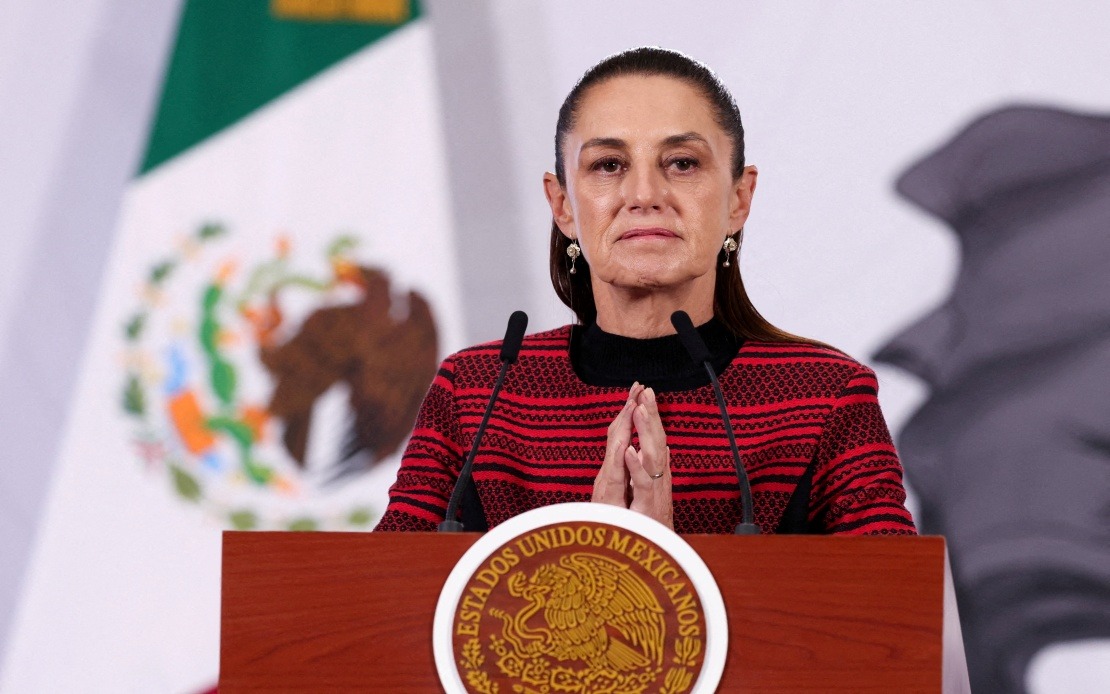
In a notable diplomatic development, Mexican President Claudia Sheinbaum has confirmed she will attend the World Cup final this weekend at the personal invitation of United States President Donald Trump. The Mexican leader disclosed the arrangement to journalists on Friday, revealing that Trump had extended a direct invitation for her presence at the championship match in East Rutherford, near New York. The decision marks an unexpected turn given the ongoing friction between Mexico and the United States over trade policies and security matters.
Sheinbaum's acceptance of Trump's invitation carries particular significance because the two leaders have met in person only once previously—during the World Cup draw ceremony held in Washington last December. That previous encounter occurred in a formal, pre-arranged diplomatic setting, making this weekend's meeting at a high-profile sporting event a more casual interaction that suggests a degree of warmth between the two administrations despite their policy disagreements.
The Canadian Prime Minister Mark Carney will also be in attendance at the final, as the third co-hosting nation in this tournament. This creates an unusual scenario where the leaders of all three co-host countries will be present to witness Argentina face Spain for the championship, turning the stadium into a gathering place not just for football enthusiasts but also for continental leadership.
Sheinbaum's participation stands in contrast to her earlier decision regarding the World Cup's opening ceremony. When the inaugural match took place at Mexico's Azteca Stadium in June, the Mexican president chose not to attend in person. Instead, she donated her ticket to an indigenous woman known for her passion for football, a gesture that reflected her stated priorities rather than any diplomatic absence. This earlier decision had raised questions about her level of engagement with the tournament, making her weekend appearance in New Jersey somewhat unexpected.
The bilateral relationship between Mexico and the United States has remained notably strained throughout this period. Trade negotiations and cross-border security challenges have dominated recent diplomatic discourse, with both nations grappling with complex issues that affect millions of citizens on both sides of their shared frontier. Against this backdrop, Sheinbaum's acceptance of Trump's personal invitation could signal a willingness to engage on a less contentious platform, even as substantive policy disputes persist.
To accommodate her appearance at the final, Sheinbaum has reorganised her schedule that was originally planned for Quintana Roo, a state on Mexico's Caribbean coast. Mexican media outlets reported that she restructured her engagements to create the necessary time for the journey to New Jersey, demonstrating a clear commitment to accepting the invitation despite existing commitments. This logistical adjustment underscores the importance placed on this diplomatic engagement.
Spain's royal family has also confirmed their attendance at the stadium, with King Felipe VI, Queen Letizia, Crown Princess Leonor, and Infanta Sofía planning to support their national team. The presence of the Spanish monarchy adds another layer of international prestige to the event, turning it into a significant gathering of world leaders and dignitaries beyond just the football competition itself.
Argentina's President Javier Milei will notably be absent from the stadium, a decision rooted in what Argentines refer to as superstitious rituals or cultural sporting traditions. While Milei will not be physically present to watch the match from the stands, his nation's team will be competing for the championship. This contrast highlights how leaders of different nations approach major international sporting events through distinct cultural and personal lenses.
For Malaysian and Southeast Asian observers, this gathering of leaders at a major sporting event illustrates the enduring capacity of football to serve as a neutral diplomatic ground where nations with tensions can still engage constructively. The World Cup final has historically functioned as more than a sporting spectacle—it represents a moment where international relationships can be recalibrated and where leaders find informal settings to build personal rapport. Sheinbaum's acceptance of Trump's invitation, despite US-Mexico tensions, demonstrates that even in an era of significant bilateral disagreements, opportunities for dialogue and face-to-face engagement remain valuable. For regional leaders in Asia, the example reinforces how major sporting platforms can facilitate diplomatic outreach without requiring either party to compromise on substantive policy positions.

