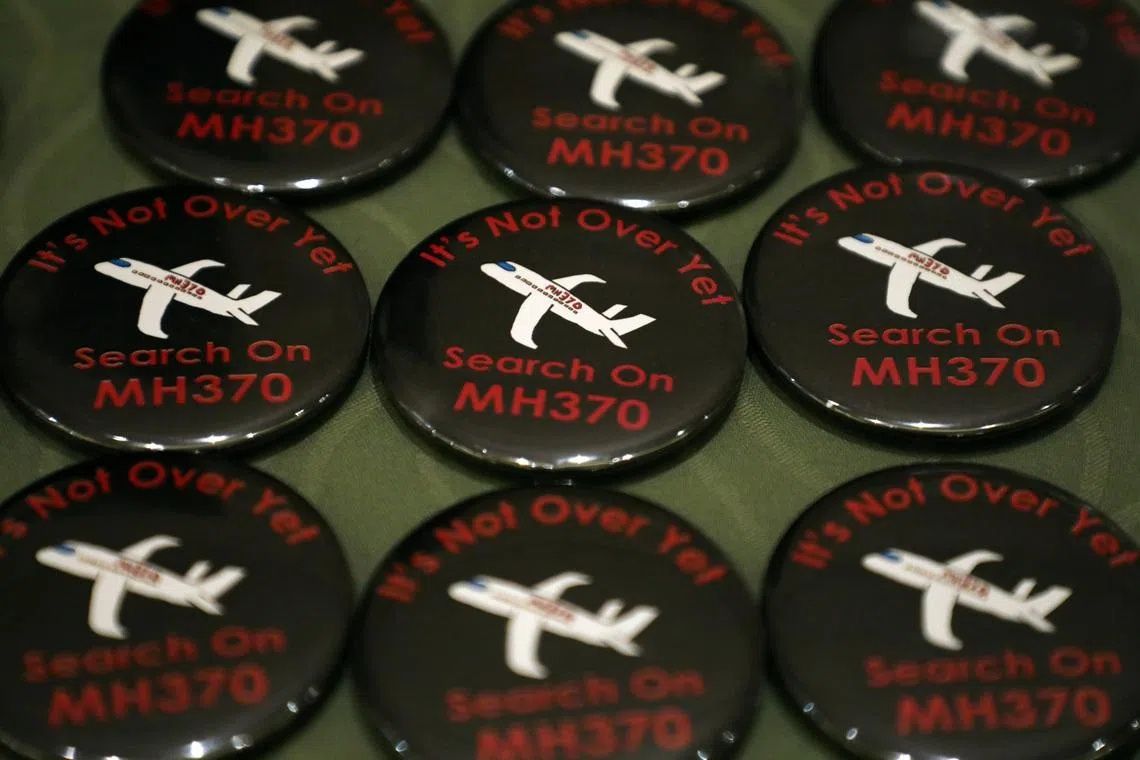
The mystery of Malaysia Airlines flight MH370 returned to a Beijing courtroom on Tuesday as grieving relatives of Chinese passengers mounted a fresh legal challenge, signalling their unwillingness to accept compensation as a substitute for truth. Two families appealed against a December ruling that ordered Malaysia Airlines to pay 2.9 million yuan (approximately $410,000) each to eight families of Chinese nationals aboard the Boeing 777. The hearing, closed to media scrutiny, represents another chapter in the prolonged anguish of those seeking definitive answers about what happened on March 8, 2014, when the aircraft carrying 239 people vanished while flying from Kuala Lumpur to Beijing.
The compensation judgment, which many relatives view as hollow and inadequate, has become a focal point of their frustration. Li Eryou, 69, whose son was a passenger, articulated the depth of family anger outside the courtroom, describing the initial ruling as insulting and demeaning. His remarks captured a sentiment shared across the grieving families: the court's decision to treat the disappearance as a straightforward commercial dispute rather than an unprecedented aviation catastrophe. In his view, the judge had reduced an international tragedy involving nationals from 14 countries to nothing more than a local traffic accident, producing a settlement that felt not merely insufficient but almost contemptuous.
What distinguishes this appeal from typical compensation cases is the families' explicit prioritisation of factual clarity over financial recovery. Jiang Hui, whose mother was aboard MH370, articulated this demand with striking clarity when speaking to international media representatives. He emphasised that the establishment of facts—understanding precisely what befell the aircraft and its occupants—remains the paramount objective for the families. While the Beijing court's ruling provided monetary compensation without adequately investigating or determining what actually happened, this outcome leaves the fundamental questions unresolved and the families' emotional and psychological needs unmet.
The passage of twelve years without formal apology or accountability compounds the families' sense of abandonment. The aircraft remains missing, along with its 239 passengers and crew members and the critical black box flight recorders that might illuminate the sequence of events. No credible evidence has emerged despite the world's largest aviation search operation, and the focus of investigation has gradually shifted from the waters surrounding Southeast Asia toward the remote Indian Ocean, where sophisticated detection becomes exponentially more challenging. This geographical uncertainty itself becomes emblematic of the broader mystery that has confounded aviation experts and investigators worldwide.
Scientific speculation about potential causes has filled much of the informational vacuum. Various hypotheses have circulated among experts over the years, ranging from deliberate actions such as pilot suicide or hijacking to catastrophic technical failures. One compelling theory suggests that an electrical fire within the aircraft's electronic systems could have generated smoke that incapacitated passengers and crew through oxygen deprivation. Under this scenario, the plane would have continued flying under autopilot across the Indian Ocean until fuel exhaustion caused it to plunge into the sea, far from inhabited land or easily searched shipping lanes. Yet without physical evidence or confirmed wreckage, such theories remain speculative rather than conclusive.
The families' frustration extends specifically toward Malaysia Airlines' apparent inaction since the disappearance. Jiang Hui pointed out that the first-instance court judgment failed to establish the facts of the case or to criticize and correct the airline's passive response over twelve years. From the families' perspective, the airline, as the operator of the aircraft and employer of the crew, bears responsibility for providing substantive answers to grieving relatives. Instead, a financial settlement has been imposed without Malaysia Airlines facing pressure to participate actively in establishing what actually occurred. This dynamic transforms the legal process into what families perceive as a mechanism for closure without understanding.
Malaysia's recent decision to extend the search for MH370 through June 2027, through a contracted arrangement with private firm Ocean Infinity, provides at least some indication of continued official commitment to the mystery's resolution. The extended search operation represents Malaysia's acknowledgment that the disappearance remains unresolved and worthy of sustained investigation. However, the most recent Ocean Infinity search, which took place in two stages beginning in March 2025, returned without locating any wreckage or new evidence, underscoring both the technical difficulty of deep-ocean search operations and the vastness of the area in which the aircraft might have descended.
The families' response to the extended search announcement revealed measured appreciation for Malaysian authorities' persistence, yet simultaneously highlighted the limitations of official operations. Jiang Hui expressed gratitude for the search extension while simultaneously advocating for family-organized search initiatives, suggesting that privately-coordinated efforts might succeed where large institutional operations have failed. His observation that the aircraft would not spontaneously rise to the surface reflected both pragmatism and a subtle critique of passive approaches—the families must actively pursue answers rather than waiting for them to materialise. This stance positions the families not merely as victims seeking compensation but as determined investigators unwilling to accept permanent mystery as their inheritance.
The appeal hearing in Beijing carries significance extending beyond the immediate families involved. The case embodies broader questions about corporate accountability, international aviation liability, and the relationship between financial compensation and moral responsibility in catastrophic disasters. For Malaysian readers and Southeast Asian observers, MH370 remains more than an historical event; it represents a continuing challenge to the region's aviation infrastructure, search and rescue capabilities, and capacity to investigate complex transnational incidents. The case also illustrates how legal systems in different jurisdictions address unprecedented disasters and the varying expectations of victims' families regarding corporate and governmental responsibility.
Beyond the specific circumstances of flight MH370, this appeal illuminates fundamental tensions in how societies address unresolved tragedies. The families' insistence on truth-seeking rather than financial settlement reflects a conviction that understanding possesses moral and psychological value that money cannot provide. Their determination to continue pursuing answers twelve years later, despite exhaustive official searches, suggests that closure through investigation matters more profoundly than closure through monetary compensation. For Malaysia Airlines, the airline industry, and international aviation authorities, the case remains a sobering reminder that commercial considerations cannot substitute for transparency and accountability when lives are lost under extraordinary circumstances.
The extended timeline through 2027 provides additional opportunity for technological advancement in deep-ocean detection to yield results previously impossible. New equipment and methodologies may emerge that could locate wreckage in waters where conventional searches proved unsuccessful. Yet ultimately, the families' pursuit of answers suggests that resolution will require not merely the discovery of physical evidence but a comprehensive, transparent investigation that satisfies the demand for factual clarity. The Beijing court's decision on the appeal may determine not only the financial compensation these families receive but also signal whether legal systems regard establishing truth about unprecedented disasters as equally important as providing monetary remedies.

