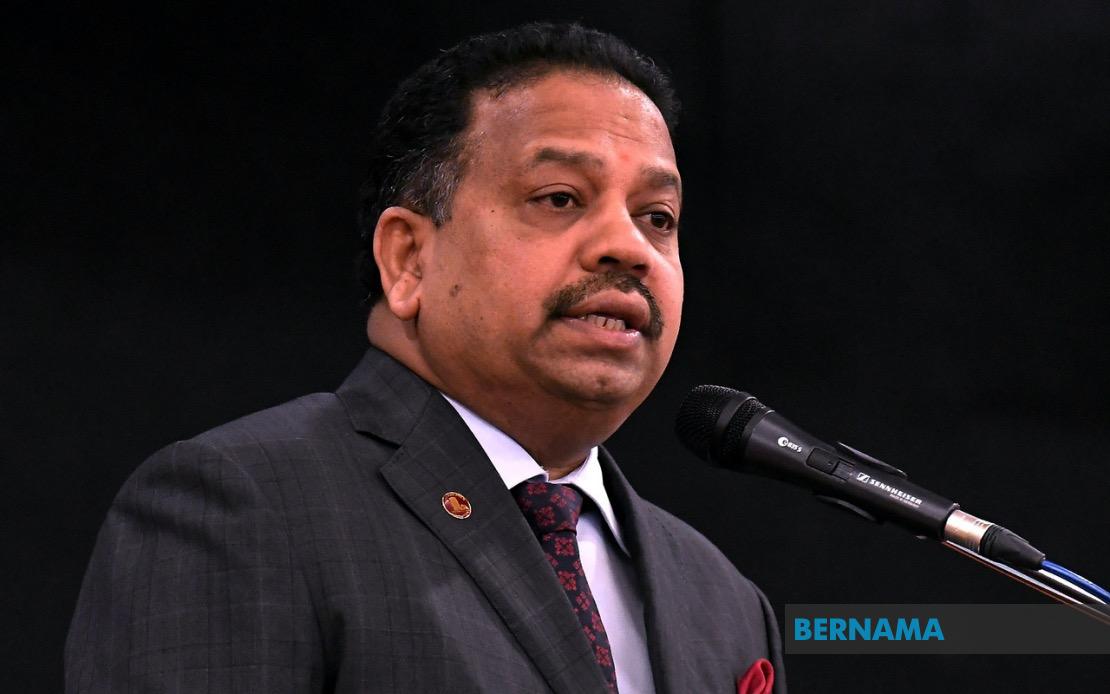
The Malaysian Indian Congress is heading into tomorrow's Johor state election with what its leadership describes as a strong foundation of community backing, buoyed by what party officials characterise as productive engagement with both federal and state administrations on matters affecting Indian voters. MIC president Tan Sri S.A. Vigneswaran articulated this optimism during a press conference in Kulai on July 10, emphasising that the party's track record of collaborative problem-solving gives it reason to anticipate continued electoral support, particularly in constituencies where MIC candidates are competing.
The upcoming 16th Johor state election marks another pivotal moment for MIC to demonstrate its relevance within the broader Barisan Nasional coalition. The party is fielding four candidates in this round: K. Raven Kumar contesting the Kemelah seat, V. Rugendran in Kahang, P. Pannir Selvam in Perling, and R. Kumaran in Bukit Batu. These nominations reflect MIC's continuing role as the primary vehicle for Indian representation within BN's electoral framework, a position the party has maintained for decades despite broader political volatility and demographic shifts across Malaysia's peninsular states.
Vigneswaran's confidence appears anchored in what he described as effective governance partnerships at the state level. He articulated a vision wherein elected representatives function as bridges between constituents and government machinery, translating community grievances into concrete policy responses. This framing positions MIC not merely as a political party seeking votes, but as an intermediary institution whose legitimacy rests on demonstrable delivery of services and advocacy outcomes for the Indian community. The emphasis on collaborative governance reflects broader trends in Malaysian politics, where electoral performance increasingly hinges on perceptions of administrative competence rather than purely ideological positioning.
The party's campaign strategy appears to have prioritised solutions-oriented messaging over confrontational opposition tactics. Vigneswaran explicitly noted that MIC adopted what he termed a mature approach during the campaign period, deliberately eschewing personal attacks on rival candidates to maintain focus on substantive policy proposals. This restraint strategy may appeal to voters fatigued by acrimonious political exchanges, though it also carries electoral risk if opponents successfully deploy more aggressive messaging that resonates with particular voter segments. The political calculus here suggests MIC believes its traditional voter base responds more favourably to constructive engagement than to adversarial positioning.
A significant portion of Vigneswaran's public remarks centred on rebutting allegations regarding government funding purportedly directed to MIC. A Tamil-language portal had claimed the party received RM221 million in government assistance, a figure Vigneswaran categorically denied as inaccurate and misleading. This controversy highlights the precarious position minority representation parties occupy in Malaysia's political landscape, where any appearance of preferential government treatment can trigger scrutiny from rival communities and opposition groups seeking to portray such arrangements as inequitable resource distribution.
The clarification Vigneswaran provided offers important context for understanding the financial relationships between Malaysian political parties and state institutions. The funding in question actually comprises annual grants to AIMST University, a non-profit higher education institution administered through a foundation structure with MIC linkages. Since Prime Minister Datuk Seri Anwar Ibrahim assumed office in 2023, the government has allocated RM25 million annually to the university, including the current financial year. These allocations undergo standard audit processes and purportedly finance specific infrastructure improvements and operational cost reduction measures including dormitory upgrades, solar system installations, and general operational efficiency enhancements.
The university funding arrangement illustrates how Malaysian political parties maintain institutional infrastructure and financial bases beyond their direct electoral operations. Higher education institutions affiliated with political parties serve multiple functions simultaneously: they provide genuine educational services to Malaysian students, generate revenue streams through fees and government allocations, and create employment opportunities within party networks. In the case of AIMST University, the explicit justification for government support centres on reducing student financial burdens and maintaining facilities standards, framing the allocation as a public benefit rather than partisan privilege. This rhetorical strategy attempts to position such funding as consistent with broader government educational policy objectives.
Vigneswaran's decision to invoke legal remedies further demonstrates how Malaysian political actors respond to perceived media misrepresentation. He instructed MIC's legal counsel to issue a letter of demand to the Tamil portal requiring retraction and correction of the allegedly defamatory report. This escalation reflects the stakes involved in controlling narratives around party finances and government relationships, particularly when such narratives could influence minority voter decision-making. The legal approach also signals confidence in the party's underlying position, suggesting Vigneswaran believes the facts, when properly articulated and legally pressed, support MIC's characterisation of the funding arrangement as legitimate.
For Malaysian and broader Southeast Asian observers, the Johor election carries significance beyond its immediate state-level implications. It tests whether minority representation mechanisms within multiethnic coalition frameworks remain viable and electorally productive. MIC's performance in this election will provide indicators of whether traditional Indian voter allegiances to BN persist or whether demographic and political shifts have fundamentally altered minority electoral behaviour. The outcome will likely influence subsequent calculations about minority party positioning within coalitional arrangements across the region, where comparable power-sharing frameworks structure electoral competition.
The timing of this election also occurs against a backdrop of broader Malaysian political recalibration following the 2023 federal elections. The government's composition and resource allocation priorities remain subject to ongoing adjustment as different coalition partners negotiate their respective roles and benefits within the ruling structure. MIC's ability to deliver electoral returns in Johor will substantially influence its bargaining power in future negotiations over ministerial portfolios, financial allocations, and policy priority setting. Conversely, disappointing results could pressure the party's leadership and prompt wider questioning about its continued utility within BN architecture.
Vigneswaran's public statements ultimately reflect confidence grounded in institutional relationships rather than grassroots mobilisation metrics. The emphasis on government collaboration, infrastructure improvements, and administrative effectiveness suggests MIC believes Indian voters prioritise tangible governance outcomes over other electoral considerations. Whether this confidence proves warranted will become apparent as ballots are counted tomorrow, providing concrete data about whether MIC's relationship-based political strategy continues resonating with the Indian community in Johor's competitive electoral environment.

