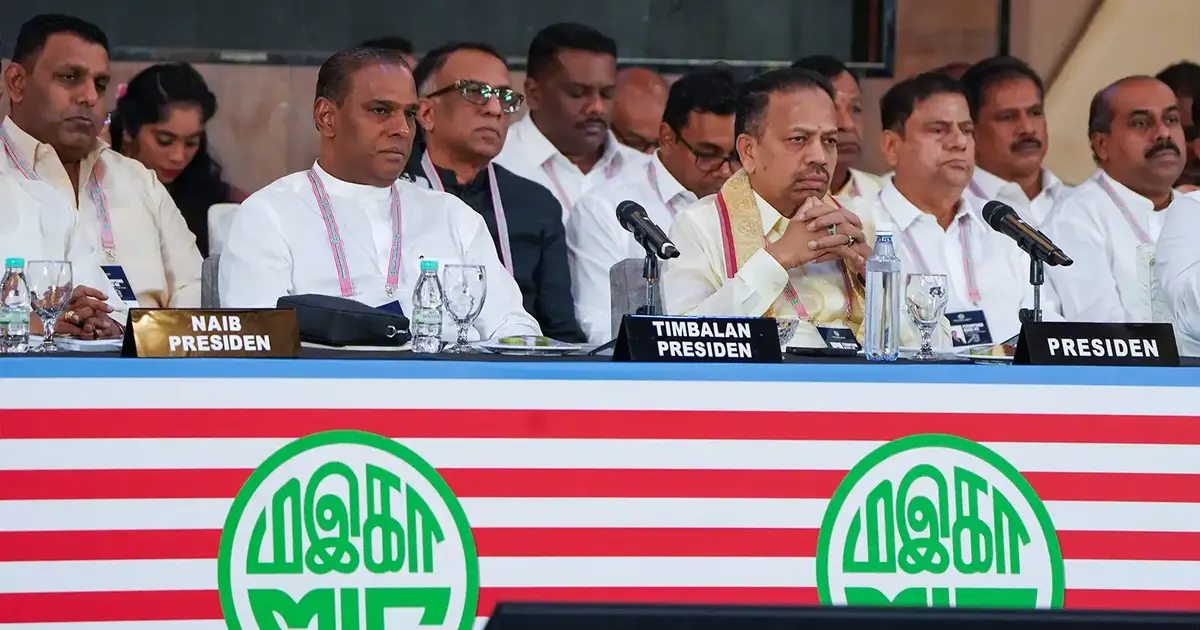
The Malaysian Indian Congress (MIC) has mapped out a selective contest strategy for the forthcoming Johor state elections, preparing to defend two existing constituencies while surrendering one to its Barisan Nasional alliance partner, Umno. The move represents a broader strategic recalibration within BN's internal seat allocation, with MIC fielding candidates across a total of four seats in the state assembly race, including the closely watched Bukit Batu division.
As a component party within the Barisan Nasional coalition that has long dominated Malaysian politics at both federal and state levels, MIC's electoral footprint has historically reflected the broader power dynamics within the alliance. The decision to contest four seats—whilst retaining direct responsibility for only two—underscores the delicate balance BN must maintain between maximising electoral competitiveness and preserving coalition harmony. Johor, as Malaysia's second-largest state and home to significant Indian-majority and Indian-plurality constituencies, has consistently served as a litmus test for communal representation within BN's framework.
The consolidation strategy appears aimed at concentrating MIC's organisational resources and campaign momentum in constituencies where the party maintains established ground support and voter networks. By defending rather than aggressively expanding its seat count, MIC signals a pragmatic approach to Johor's competitive political landscape, where opposition parties and rival BN component Umno have increasingly intensified their own campaigns. The defensive posture also allows MIC to allocate manpower and financial resources more efficiently, focusing energy on retaining incumbent representatives and their established voter relationships rather than attempting to breach unfamiliar territories.
The decision to yield one seat to Umno reflects broader negotiations within BN's upper leadership regarding optimal vote efficiency and coalition unity. Umno, as the numerically dominant partner within BN, has sought to expand or consolidate its Johor presence in recent years, particularly following internal party reforms and leadership transitions. This seat arrangement potentially allows Umno to strengthen its position in a state where it has faced sustained challenges from rival Malay-Muslim parties and where internal party factionalism has sometimes complicated candidate selection and campaign coherence.
Bukit Batu, which remains within MIC's contested portfolio, carries particular significance as a constituency with substantial Indian and mixed-race demographics. The seat's inclusion in MIC's four-seat target reflects the party's determination to maintain presence in constituencies where Indian voters constitute meaningful portions of the electorate, affirming MIC's role as the Indian-oriented voice within Barisan Nasional. Historically, such constituencies have served as important touchstones for measuring BN's credibility among the Indian community, particularly given competition from opposition parties that have increasingly cultivated appeals to Indian concerns around economic mobility, educational access, and social welfare.
For Malaysian observers, MIC's Johor positioning takes on additional significance given broader trends in Indian-community political representation. Over successive election cycles, Indian voter participation and turnout have fluctuated considerably, influenced by perceptions of whether major political coalitions adequately address Indian-specific grievances and opportunities. MIC's ability to retain and expand presence in Johor carries implications not merely for the state assembly, but for the party's credibility as a negotiating force within BN at the federal level, where portfolio allocation and ministerial positions often reflect electoral performance and constituency control.
The swap arrangement with Umno also illustrates how coalition mathematics in Malaysian politics operate beneath the surface of formal electoral rules. Rather than contesting all seats where parties might theoretically compete, BN's component parties have long observed informal understandings about territorial allocation, designed to prevent three-way contests that might inadvertently advantage opposition challengers. This strategic choreography, while sometimes opaque to voters, reflects the transactional foundations upon which Malaysia's coalition-based political system has historically functioned.
For Johor's broader electoral narrative, MIC's four-seat involvement represents approximately one-fifth of the state assembly's total seats if election observers extrapolate proportionally. The party's restrained approach contrasts with more aggressive positioning adopted in some previous election cycles, suggesting either diminished organisational capacity, declining electoral expectations, or—more charitably—a maturation toward focused, achievable targets rather than expansive ambitions. This modesty may also reflect realistic appraisals of voting intentions within targeted constituencies, where demographic shifts and migration patterns have sometimes altered the composition of Indian-majority areas.
The ramifications of MIC's Johor positioning extend beyond state-level politics. Successful defence of two seats would provide the party with improved leverage in potential post-election federal coalition negotiations, should BN win overall control. Conversely, losses in its targeted seats would undermine MIC's claims to significant communal representation and potentially weaken the party's position within BN's internal hierarchy. These calculations inevitably influence how MIC deploys its organisational machinery, selects candidates, and frames campaign messaging throughout the election period.
Looking forward, MIC's Johor electoral strategy will likely serve as a template for how the party positions itself in other state-level contests and the eventual federal election. The four-seat approach represents neither aggressive expansion nor complete withdrawal, but rather a consolidationist middle path that attempts to balance credibility with realism. For Indian-Malaysian voters in Johor and beyond, the seat arrangement offers an opportunity to assess whether their concerns receive adequate attention from both MIC campaigning locally and Barisan Nasional at the broader coalition level.