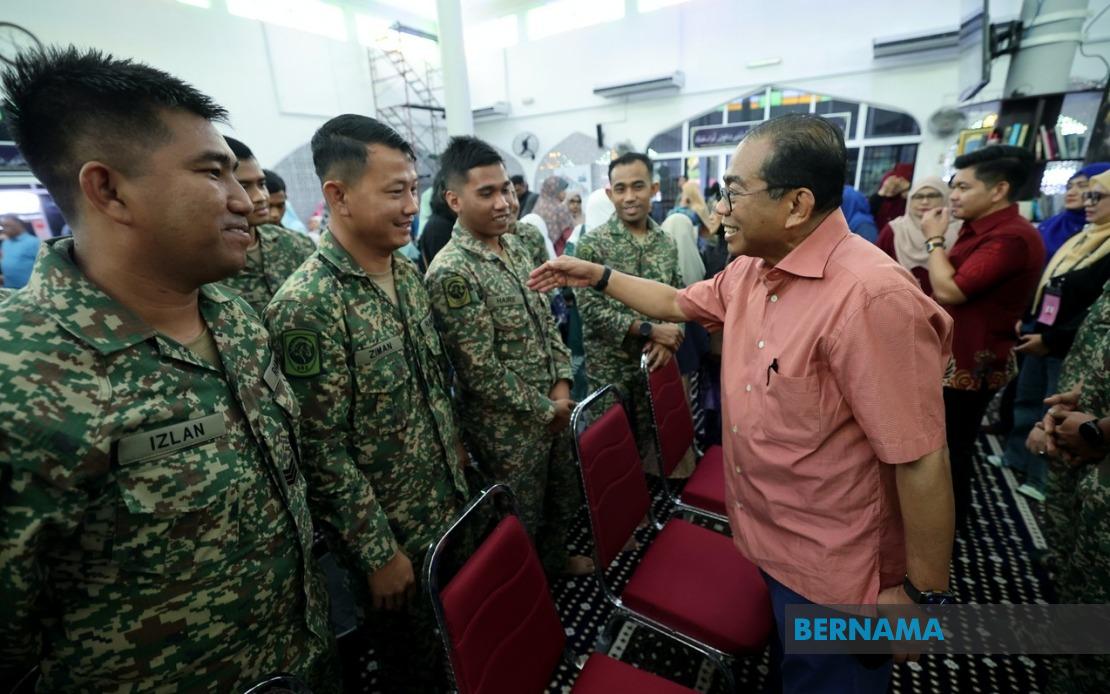
Defence Minister Datuk Seri Mohamed Khaled Nordin has signalled that the investigation into a tragic grenade explosion at Hobart Camp in Gurun should reach completion by the middle of this month, with the formal report then submitted to the Defence Ministry for review and any necessary follow-up action. Speaking at an event in Kota Tinggi, the minister confirmed that investigators have been working to finalise their findings before the documentation is delivered to his ministry, allowing officials to determine what corrective measures might be required going forward.
The blast occurred on June 16 at approximately 10.57 am during a scheduled training exercise. Two military personnel were caught in the explosion and sustained severe injuries. Corporal Norazmi Abu Bakar, serving with the Sixth Battalion of the Royal Malay Regiment, and Private Siti Khadijah Sungip, attached to the First Squadron of the Royal Engineers Regiment, were both evacuated by emergency services to Sultan Abdul Halim Hospital in Sungai Petani. Despite receiving medical treatment during transport, both died before reaching the facility, marking a sobering loss for the Malaysian military.
The gravity of the situation intensified when a second incident unfolded at the same location just two weeks later. On June 29, during a combat enhancement training exercise, a firearm unexpectedly discharged at 6.15 pm, catching two soldiers in the resulting shrapnel. Sergeant Mohamad Firdaus Che Shaharudin and Corporal Felix Franchis, both members of the Fourth Battalion of the Royal Ranger Regiment, suffered leg injuries from fragments. While both survived with wounds described as non-fatal, the second occurrence within a fortnight at Hobart Camp raised immediate concerns about facility safety protocols and training supervision standards.
The clustering of two serious incidents within fourteen days at a single military training location has prompted Defence Ministry leadership to order a comprehensive examination of how the Malaysian Army conducts its training operations. Mohamed Khaled emphasised that the military has been directed to assess whether systemic weaknesses or procedural shortcomings contributed to either incident. The review extends beyond simply determining what went wrong during the June 16 explosion to encompassing broader questions about equipment handling, supervision ratios, emergency response procedures, and the physical safety infrastructure at the camp itself.
For Malaysian military personnel and their families, such incidents represent a stark reminder of the occupational hazards inherent in armed forces training. Unlike combat situations abroad, deaths or injuries occurring during domestic preparation exercises carry particular resonance, as they occur within controlled environments where safety standards should theoretically be most robust. The occurrence of two major incidents in quick succession has likely prompted internal discussions within military command structures about whether current training protocols adequately account for human error, equipment malfunction, and environmental factors.
The Defence Ministry's cautious approach to releasing findings reflects standard practice in institutional investigations involving fatalities. By reserving judgment until the complete investigation report arrives, Mohamed Khaled positions the ministry to respond proportionately to whatever recommendations emerge. This measured stance contrasts with any rush to implement quick fixes or assign blame before all facts are established. The minister's reference to making decisions only after receiving full investigation findings suggests the ministry understands that premature conclusions could overlook root causes or implement ineffective remedies.
Hobart Camp in Gurun, situated in Kedah, serves as a significant training facility for Malaysian military units. The incidents there have implications beyond the immediate personnel involved, potentially affecting training schedules, resource allocation, and confidence in facility management across the armed forces. If investigation findings identify systemic issues, the ministry may need to suspend certain training activities or implement costly safety upgrades, with ripple effects across military readiness and preparedness timelines.
The broader Southeast Asian context is relevant here. Regional military forces consistently prioritise operational readiness and training intensity, sometimes creating tension with safety culture. Malaysia's transparent commitment to investigating these incidents and implementing findings contrasts with less scrutinised training environments in some neighbouring countries. How the Defence Ministry responds to the investigation findings will signal to personnel and their families whether institutional commitment to safety extends beyond rhetoric to substantive operational changes.
For families of Corporal Norazmi and Private Siti Khadijah, the investigation's completion may provide clarity on circumstances surrounding their deaths, potentially informing bereaved relatives about whether preventable failures occurred. The upcoming report thus carries human weight beyond its technical military implications. Equally, the injuries sustained by Sergeant Mohamad Firdaus and Corporal Felix Franchis underscore that even non-fatal training incidents can inflict lasting consequences on military personnel and their service trajectories.
The mid-month deadline Mohamed Khaled cited provides a specific timeframe for accountability, creating public expectation that findings will be disclosed and discussed. Whether the ministry chooses to release investigation details publicly or restrict them to internal channels remains to be seen, though increasing military transparency globally suggests at least summary findings may eventually emerge. The Defence Ministry's handling of this report will influence how Malaysian military culture evolves regarding safety consciousness and institutional learning from critical incidents.

