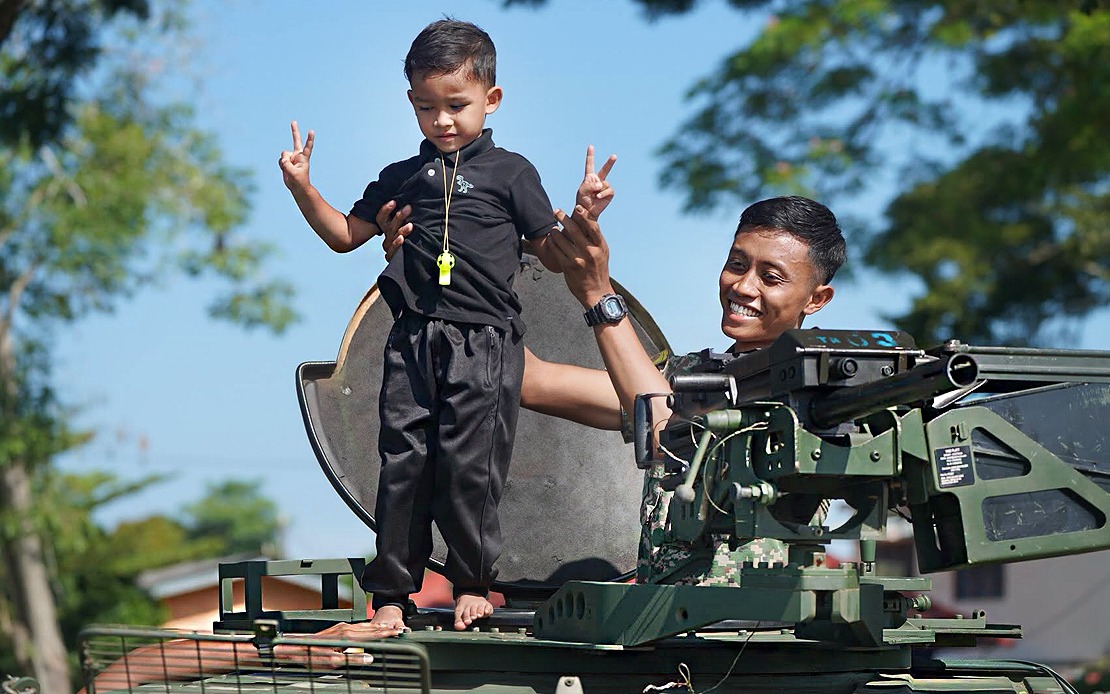
The Ministry of Defence has extended its community engagement strategy to Alor Gajah, launching a series of welfare-focused programmes designed to strengthen the relationship between the Malaysian Armed Forces and local residents. Held at Padang Awam Kampung Gadek, the initiative represents a broader effort to embed military institutions within civilian communities through sustained development work and social service delivery.
The 'Program Jiwa Murni MADANI' represents a structured approach to civil-military cooperation that moves beyond traditional security functions. By positioning the armed forces as active participants in community welfare, the ministry signals a shift towards more integrated societal engagement. The programme encompasses health services, employment opportunities, business support, subsidised goods distribution, recreational activities, and administrative assistance—creating multiple touchpoints between military personnel and ordinary residents. This multi-faceted approach responds to contemporary expectations that security institutions contribute visibly to everyday life and development rather than remaining isolated from civilian concerns.
Infrastructure improvements formed a tangible component of the initiative, with the 9th Squadron of the Royal Engineers Regiment undertaking five distinct projects totalling RM179,200. These works targeted essential community facilities including a playground at the Multi-Purpose Hall in Kampung Baru Pondok Batang, boundary fencing for Sekolah Jenis Kebangsaan (Tamil) Durian Tunggal, a futsal court at Taman Seri Kelemak in Rembia, roof repairs at Madrasah Seri Kemuning in Kampung Kemuning, and renovation of the Surau Madrasah Khairiah in Kampung Paya Datuk Hilir. The selection of religious institutions, schools, and recreational spaces reflects an attempt to address needs that cut across different segments of the diverse Alor Gajah population.
Deputy Defence Minister Adly Zahari's presentation of RM133,000 in funding through the Service Centre Initiative underscored governmental commitment to sustained community investment. Eight organisations received support for their own development projects and operational needs, including multiple religious establishments serving both Muslim and non-Muslim communities. The beneficiaries—suraus in Kampung Ulu Batang Melaka, Taman Dimensi, Taman Sri Sutera, and Taman MAIM Rumbia; temples and shrines in Machap Baru and Batang Pondok; a surau committee in Kampung Gubah Nyalas; and Sekolah Jenis Kebangsaan Tamil Batang Melaka for environmental education infrastructure—demonstrate deliberate inclusivity across religious and ethnic lines.
The distribution of 500 RAHMAH baskets to military veterans' associations and residents signifies continued attention to welfare support mechanisms. RAHMAH, the government's subsidised goods initiative, has become a visible component of state welfare outreach. By channelling these supplies through military associations alongside general distribution, the ministry reinforces both support for its veteran community and broader social safety nets during periods of economic strain affecting ordinary households.
Complementing material assistance, the Religious Corps of the Malaysian Armed Forces organised the 'Program Ilmu dan Muafakat MADANI' at Masjid Kelemak the previous day. This spiritual-focused activity combined congregational prayers, religious instruction, charitable contributions, and community dialogue. The integration of religious activities within military programming reflects Malaysia's specific context where Islam holds constitutional significance and military institutions are expected to reinforce spiritual and moral dimensions of national cohesion alongside security functions.
The sequential implementation of PIKAT and PJM programmes reveals a coordinated strategy blending spiritual engagement with material welfare. Rather than treating these dimensions separately, MINDEF presents them as complementary elements of a comprehensive community approach. The messaging emphasises that civil-military relations strengthen through shared commitment to both moral development and practical improvement in residents' daily lives. This integration responds to Malaysian expectations that state institutions, particularly security-focused ones, demonstrate commitment to holistic community wellbeing.
The alignment with the National Defence Strategic Plan 2026-2030, specifically Core 4 objectives, situates these grassroots activities within long-term strategic defence thinking. Rather than isolated outreach, the initiatives represent implementation of formal doctrine regarding how defence institutions should engage civilian populations. This alignment suggests the activities will likely continue and expand, as they reflect official policy rather than ad-hoc community relations efforts. The explicit linkage between local programming and national strategic frameworks legitimises resource allocation and signals commitment beyond single events.
For Alor Gajah residents, the practical outcomes are concrete: improved facilities at schools and religious institutions, enhanced recreational infrastructure, streamlined access to government services, and targeted financial support for community organisations. Schools gain enhanced physical infrastructure, religious communities receive facility improvements and direct funding, and residents benefit from subsidised goods and free health screening. The cumulative effect creates visible evidence of state attention and resource commitment to the district, particularly important in areas that may perceive themselves as peripheral to urban-centred development.
From a broader Malaysian perspective, these activities illustrate how defence institutions operationalise the MADANI concept—the government's framework for achieving shared prosperity and inclusive growth. By positioning the armed forces as welfare delivery mechanisms, the state leverages existing military infrastructure, personnel, and organisation for civilian benefit. This approach potentially improves public perception of defence institutions while addressing real community needs, though success depends on sustained follow-through rather than one-off events. The emphasis on religious institutions across different faiths also demonstrates deliberate efforts to maintain communal harmony through equitable resource distribution in a multi-religious society.
The initiative's long-term significance lies in whether it establishes sustainable mechanisms for ongoing military-community engagement or remains periodic activity. The appointment of Deputy Defence Minister to present cheques suggests governmental prioritisation, yet maintenance of facilities, continuity of programmes, and responsiveness to emerging needs will determine lasting impact. Alor Gajah residents' sustained engagement with these initiatives, measured through attendance patterns and expressed satisfaction, will ultimately indicate whether MINDEF's strategic shift toward comprehensive community welfare proves effective in its stated objective of strengthening civil-military relations.

