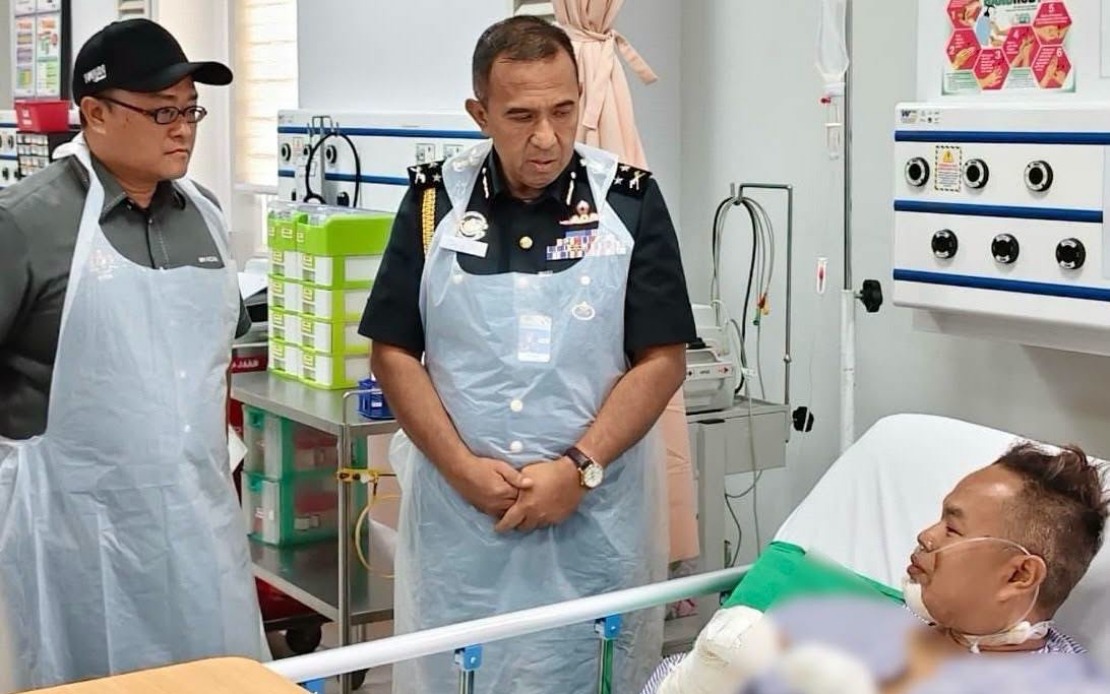
Two enforcement officers from the Domestic Trade and Cost of Living Ministry sustained injuries while conducting fieldwork in Selangor on operations designed to combat the illegal diversion of subsidised liquefied petroleum gas through decanting. The incident highlights the occupational hazards routinely encountered by Ministry personnel engaged in enforcement activities across the country.
Minister Datuk Armizan Mohd Ali disclosed that Assistant Enforcement Officer Mohammad Fauzi Baharuddin received more substantial injuries and remained under medical care at the time of the announcement. In contrast, Enforcement Assistant R. Yoghanath suffered minor wounds and was discharged following initial treatment. The injuries occurred during Ops Tiris 4.0, a targeted initiative aimed at preventing the misappropriation of government-subsidised LPG through unauthorised decanting operations.
The Minister used the occasion to publicly acknowledge the dedication of those affected, offering personal prayers for Mohammad Fauzi's recuperation and wishing him strength throughout the treatment journey. His message extended to Yoghanath, expressing hope for continued good health and swift recovery. Beyond the individual cases, Armizan reflected on the broader implications of the incident, recognising it as emblematic of the genuine dangers that enforcement teams encounter in their regular operations.
LPG subsidy abuse through decanting represents a significant challenge for the Malaysian authorities. The practice involves transferring subsidised domestic LPG cylinders to large industrial containers, effectively diverting government support intended for household consumers to commercial operators. This diversion imposes substantial costs on the state budget and creates market distortions that can affect legitimate businesses and consumer access to affordable fuel. Ops Tiris 4.0 represents the government's continuing effort to tighten controls and prevent such leakage within the subsidy system.
Armizan's statement underscored the sacrifices required of Ministry personnel who must navigate unpredictable circumstances and confront potentially dangerous situations during raids and enforcement campaigns. These officers regularly depart their homes and families to perform duties that involve confronting individuals engaged in illegal activities, often without advance certainty regarding conditions they will encounter. The Minister's acknowledgement of this reality served to elevate public awareness of the personal costs borne by those working in regulatory enforcement.
The incident also illustrates vulnerabilities in how enforcement operations are conducted. While the specific circumstances surrounding the injuries were not detailed, such incidents frequently arise when enforcement teams encounter resistance or when operations occur in environments controlled or frequented by those benefiting from illegal activities. The risks escalate particularly in decanting operations, where large volumes of flammable gas and improvised equipment create inherent safety hazards beyond the possibility of direct confrontation.
For Malaysian policymakers and the public, such incidents underscore the importance of ensuring that enforcement agencies possess adequate training, equipment, and support to execute their mandates while minimising personal risk. Resource constraints have historically affected the Ministry's capacity to conduct thorough operations, and personnel injuries sometimes reflect inadequate preparation or backup during high-risk activities. The government's commitment to sustained enforcement against LPG diversion must be balanced against the need to protect those tasked with implementation.
The broader context of fuel subsidy management remains pertinent to Southeast Asia, where several nations maintain subsidised energy programmes and face analogous challenges with diversion and smuggling. Malaysia's experience with LPG decanting parallels regional patterns of subsidy abuse that drain government resources and benefit limited commercial interests. How the government responds to incidents affecting enforcement personnel, including through improved support structures and operational procedures, may influence the effectiveness of long-term control strategies.
Armizan's statement also served a diplomatic purpose within the Ministry, recognising employee contributions and attempting to sustain morale among personnel who work under conditions that occasionally produce injury. Public ministerial acknowledgement of sacrifice can reinforce organisational culture and communicate that individual safety and wellbeing remain priorities alongside operational objectives. This becomes particularly significant in government agencies where compensation arrangements and support systems for injured staff may remain limited compared to private sector standards.
The incident occurred against a backdrop of persistent subsidy management challenges requiring sustained enforcement attention. Despite previous operations and regulatory adjustments, illegal LPG decanting continues to represent a revenue drain and policy implementation failure. Achieving meaningful reduction requires not only continued raids and prosecutions but also intelligence gathering, market monitoring, and cooperation from retailers and distributors who interface with the supply system. Injuries to enforcement personnel, while commanding immediate compassion, also signify the substantial effort required to address structural subsidy vulnerabilities.
Looking forward, the government faces decisions regarding how to balance enforcement intensity with officer safety. This might encompass enhanced intelligence work to reduce operational uncertainty, improved coordination with police and other agencies to provide tactical support, better protective equipment and training, or shifts toward market-based mechanisms that reduce incentives for diversion. The incident serves as a reminder that effective subsidy governance extends beyond regulatory rules to encompass realistic assessment of implementation costs and risks.

