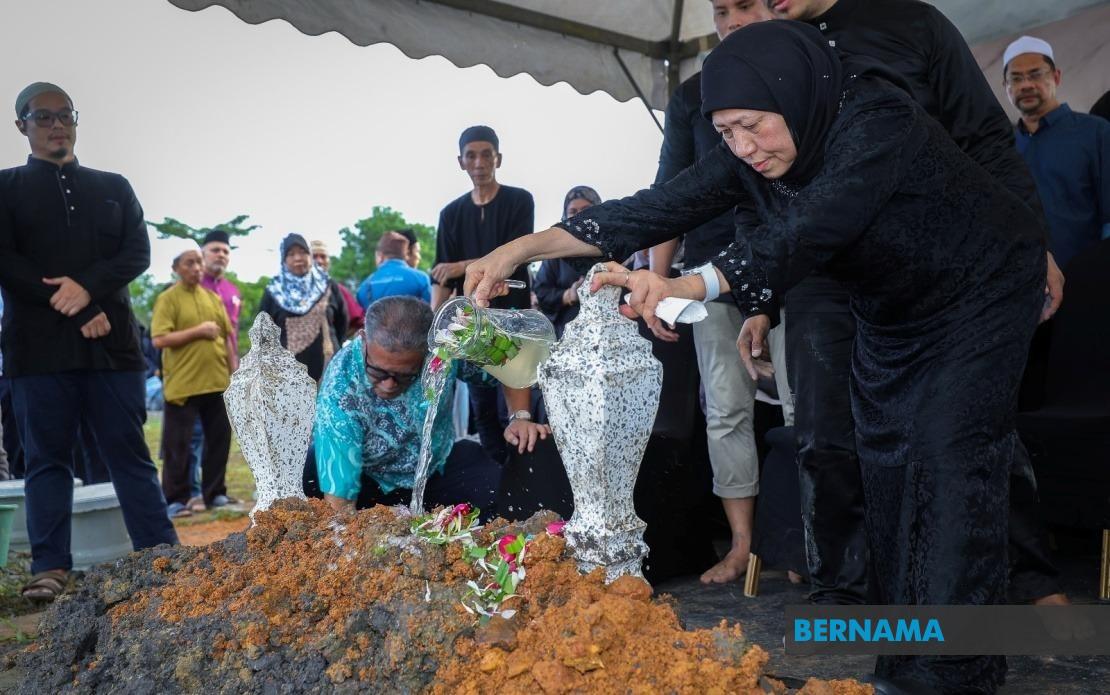
Datuk Kamil Misuari, the husband of Women, Family and Community Development Minister Datuk Seri Nancy Shukri, was laid to rest on June 19 at Samariang Muslim Cemetery in Kuching at 5.15 pm, marking the conclusion of funeral rites for the 65-year-old. The funeral brought together approximately 100 family members and close friends who gathered to pay their respects and bid farewell to the deceased.
Kamil's final journey began from Kuala Lumpur, where he had passed away at a hospital. His remains were transported by air to Kuching International Airport, arriving at 12.50 pm on the day of the burial. Upon landing in his home state, the body was immediately conveyed to the family residence where Islamic funeral prayers were conducted before the committal service at the cemetery.
The passing of Kamil represents a significant personal loss for Minister Nancy Shukri, who has held several prominent positions within Malaysia's federal government structure overseeing women's affairs, family matters, and community development. The couple had been married for nearly four decades, having tied the knot in 1985. Their long partnership produced three children, who now survive alongside their mother following Kamil's death.
The funeral ceremony itself reflected the traditional protocols and customs observed within Malaysian Muslim communities, particularly in Sarawak where such occasions typically draw extended family networks and community members. The attendance of 100 guests, while modest compared to some state funerals, demonstrated the respect accorded to the family within Kuching society and the broader acknowledgment of the minister's standing in national affairs.
For public figures in Malaysia, the loss of a spouse often carries implications beyond the immediate family sphere, as such events tend to garner media attention and public sympathy. Minister Shukri's position within the cabinet means her personal circumstances may influence how she manages her ministerial responsibilities in the period following her bereavement. Government officials typically continue their duties whilst observing appropriate periods of mourning in accordance with Islamic tradition and cultural expectations.
The transportation of Kamil's remains from the nation's capital to Sarawak underscores the importance the family placed on ensuring he was interred in his home state, a practice that remains significant in Malaysian culture regardless of where individuals have spent much of their professional lives. Kuching, as the capital of Sarawak, holds particular importance for families tracing their roots to East Malaysia.
Samariang Muslim Cemetery, where the burial took place, is one of the established burial grounds serving the Muslim community in Kuching and surrounding areas. The choice of this location reflects both practical considerations and the family's connection to the locality, ensuring that Kamil's final resting place would be accessible to his family for visits and observance of Islamic traditions relating to the deceased.
The announcement of Kamil's death came through an official statement released by Minister Shukri's office, following which arrangements for the funeral proceeded swiftly according to Islamic requirements, which typically necessitate burial within 24 hours of death. This adherence to religious protocol meant that despite the distance between Kuala Lumpur and Kuching, the family was able to organize a timely and dignified funeral service.
The circumstances surrounding Kamil's death at a Kuala Lumpur hospital suggest that he may have been receiving medical treatment in the capital, which is common for Malaysians from other states who seek specialist healthcare facilities available in the federal territory. The decision to transport his remains to Kuching for burial indicates the family's preference for observing final rites in the ancestral homeland rather than in Kuala Lumpur where his wife maintains her ministerial office.
For the broader Malaysian public and political community, such events often serve as reminders of the personal dimensions of public service and the challenges that members of the government face in balancing their professional obligations with family matters. Minister Shukri's continuation in her portfolio following this loss reflects the expectations placed on senior government officials to maintain their responsibilities whilst managing personal grief within culturally appropriate frameworks.

