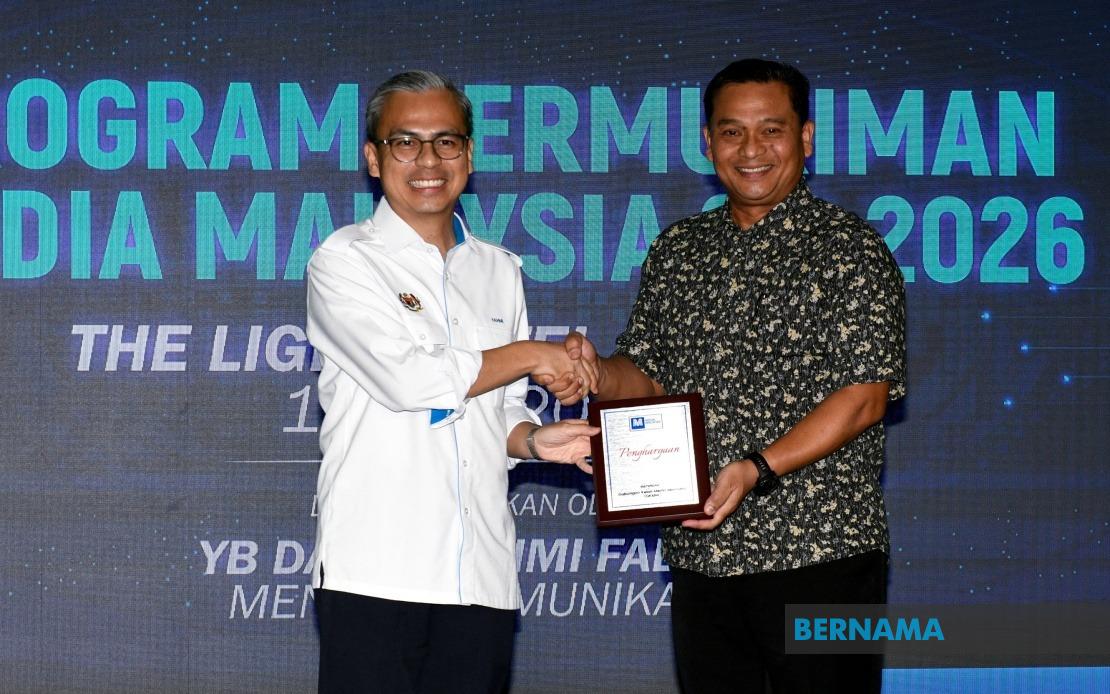
Communications Minister Datuk Fahmi Fadzil has unveiled a financial support package aimed at strengthening Malaysia's journalism sector through targeted assistance to media clubs and their umbrella organisation. The Ministry of Communications is channelling RM10,000 to every state media club affiliated with the Malaysian Media Clubs Association, commonly known as GKMM, while simultaneously providing RM30,000 directly to the national association to fund activities and initiatives prioritising journalist welfare. The announcement came during the Malaysia Media Retreat Programme 2.0 in Butterworth on June 19, underscoring the government's commitment to supporting the fourth estate during an increasingly challenging period for traditional news outlets.
Fahmi emphasised that these contributions represent more than symbolic gestures, urging recipients to deploy the resources strategically for maximum impact. The minister's statement reflected an understanding that state-level media clubs, often operating on limited budgets, require tangible financial support to organise meaningful activities that address the practical concerns facing working journalists. By distributing funds across multiple state clubs rather than concentrating resources at the national level, the ministry's approach acknowledges the importance of grassroots engagement and regional representation in the media community's broader ecosystem.
The Malaysian Media Clubs Association serves as a crucial intermediary between individual journalists and policymakers, despite its status as a non-union organisation. GKMM functions primarily as a platform where journalists can collectively raise concerns, discuss industry challenges, and articulate shared aspirations regarding the profession's future. Fahmi recognised this intermediary role, noting that the association enables the government to understand pressures and difficulties affecting media practitioners across different sectors and regions. This recognition positions GKMM as an essential channel for government consultation on media-related matters, particularly when developing legislation or regulatory frameworks.
The minister's comments on artificial intelligence reveal growing concerns within government circles about technology's potential impact on journalism employment. Fahmi made an unambiguous assertion that artificial intelligence cannot replicate the work of human journalists, emphasising that newsgathering requires disciplined sourcing from primary sources, experienced analysis, and skilled presentation—attributes uniquely human in character. This statement carries particular weight in Malaysia, where the debate over AI's role in newsrooms remains relatively nascent compared to discussions unfolding in Western media markets. By positioning the preservation of journalist employment as an explicit ministerial commitment, Fahmi signalled that government policy would prioritise human journalism over technological substitution.
The financial support package arrives during a period when Malaysian media organisations face significant structural pressures. Advertising revenue has migrated progressively toward digital platforms controlled by global technology companies, whilst circulation revenue from print publications has contracted steadily. Regional publications, particularly at the state level, operate with particularly constrained budgets, making external funding from government sources or civil society increasingly important for maintaining editorial operations and staff welfare. The ministry's allocation directly addresses this challenge by providing supplementary resources that state clubs can deploy for professional development, social events, and advocacy initiatives.
Fahmi's broader statement about journalism's societal role reflected an official position that views the profession as fundamentally irreplaceable within democratic systems and informed citizenry. The minister characterised journalists as witnesses to events who transform raw information into comprehensible news through systematic methodology and professional judgment. This framing positions journalism as a public good rather than merely a commercial enterprise, a perspective that potentially influences government attitudes toward media support and regulatory policy. Such language suggests official recognition that journalism requires protection and support beyond ordinary market mechanisms.
The government's referenced consultation process during the Malaysian Media Council Act's development illustrates a deliberate strategy to incorporate industry input into major policy initiatives. The minister noted that media practitioners' suggestions substantially shaped the legislative framework, indicating that government listened to substantive concerns from journalists and news organisations. This collaborative approach represents a departure from purely top-down policymaking and suggests a willingness to treat the media industry as a legitimate stakeholder deserving consultation on matters directly affecting its operations and practitioners' livelihoods.
GKMM's status as a non-union organisation paradoxically strengthens its usefulness as a government interlocutor. Unlike formal labour unions bound by confrontational bargaining protocols, GKMM can maintain working relationships with officials whilst advocating for journalist interests. This positioning enables the association to communicate concerns about working conditions, compensation levels, and job security without the adversarial framework that traditional union-management relations sometimes entail. The ministry's framing of GKMM as an essential platform explicitly acknowledges this dual function.
The participation of senior ministry officials at the retreat programme—including permanent secretary Datuk Abdul Halim Hamzah and Malaysian National News Agency leadership—reinforced the government's commitment to engagement with the journalism community. This high-level attendance signals that media concerns receive serious consideration at senior policy levels rather than being relegated to junior ministerial responsibilities. For journalists and media club representatives, such visible senior engagement can substantiate claims that their professional advocacy achieves tangible policy recognition.
Looking forward, the effectiveness of this funding initiative depends significantly on how state media clubs utilise allocated resources and whether the financial commitment continues beyond this fiscal year. Sustainable improvement in journalist welfare requires consistent, multi-year support rather than isolated annual allocations. The RM30,000 provided to GKMM will determine whether the national association can meaningfully coordinate activities across diverse state clubs operating in different economic and social contexts. Clubs in wealthier states may experience greater capacity to supplement government contributions, whilst those in less developed regions face greater resource constraints requiring more substantial public support.
The announcement also reflects broader Southeast Asian trends regarding government-media relations. Across the region, governments increasingly recognise that sustainable journalism serves public interests and national development objectives, leading some administrations to experiment with direct financial support mechanisms. Malaysia's approach through media clubs avoids direct ownership or editorial control whilst still channelling resources to journalists, positioning the model as potentially replicable in other regional contexts navigating similar pressures on traditional media sustainability.

