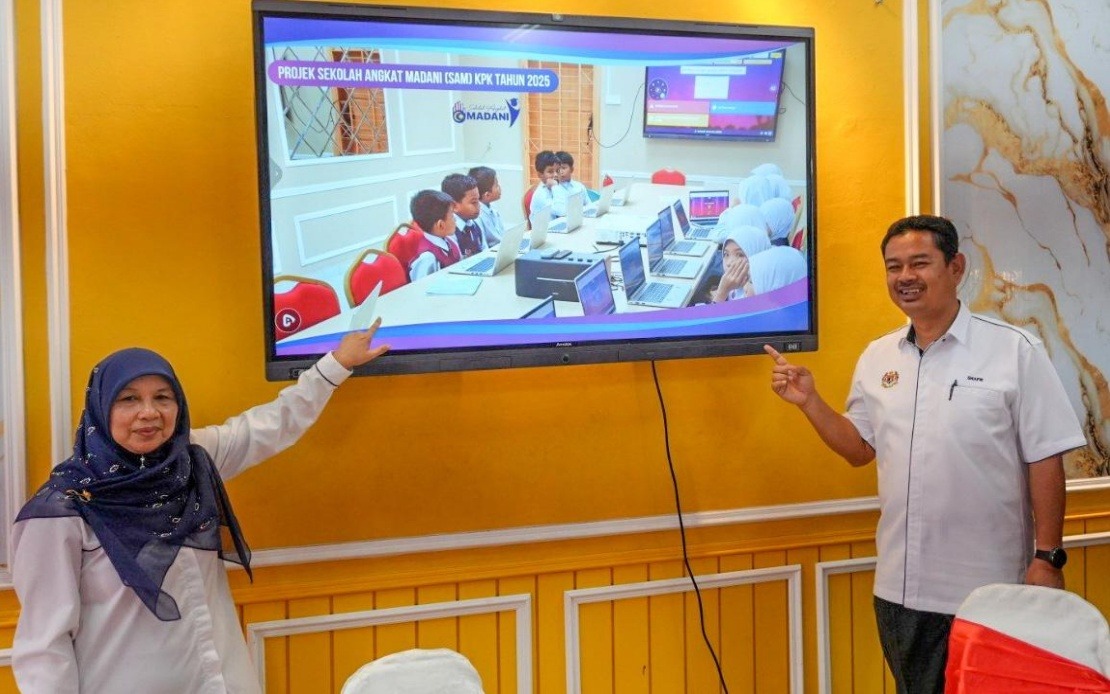
The Ministry of Plantation and Commodities (KPK) has committed RM100,000 towards a comprehensive modernisation programme at Sekolah Kebangsaan Bendang Kering in Kuala Kangsar, Perak, marking another step in the government's broader initiative to strengthen educational infrastructure across Malaysia's countryside. The handover ceremony, held at the school premises in Ipoh on June 19, was officially conducted by the ministry's deputy secretary-general for Strategic Planning and Management, Shafie Taib, signalling institutional priority for the initiative.
This investment represents part of a deliberate policy thrust to narrow the educational divide between urban and rural communities. The Malaysian Rubber Board (LGM) has been designated as the implementing partner for the adoption scheme, placing responsibility squarely within the ministry's ecosystem and ensuring technical oversight of fund allocation and project execution. The arrangement demonstrates how government agencies can collaborate to extend resources beyond their traditional operational boundaries when addressing national priorities such as educational equity.
The funding has already catalysed tangible improvements across multiple dimensions of the school's physical plant. Renovation of the assembly area and main hall provides better spaces for whole-school gatherings, whilst the establishment of dedicated reading corners encourages literacy development among younger learners. Investment in upgraded preschool classrooms reflects recognition that early childhood education requires appropriate environmental conditions to succeed, acknowledging that foundational learning experiences significantly influence longer-term academic trajectories.
Technology integration forms a centrepiece of the modernisation strategy. Interactive smartboards now feature in teaching spaces, facilitating more dynamic pedagogical approaches that move beyond traditional chalk-and-board instruction. Complementary infrastructure improvements—including air conditioning units that combat Malaysia's tropical climate's impact on concentration and comfort, alongside educational signage that reinforces learning messages throughout the campus—create a cohesive learning environment. New furniture upgrades ensure ergonomic appropriateness for developing students, addressing practical concerns that administrators in under-resourced schools frequently encounter.
Beyond physical infrastructure, the programme encompasses substantive academic interventions designed to elevate student performance. A structured academic scheme targeting proficiency in Malay, English, Science, and Mathematics has been introduced, with recognition systems and incentives motivating high achievers. This approach combines material rewards with public acknowledgment, creating positive reinforcement mechanisms that research consistently demonstrates influence student motivation and persistence.
Character development and leadership cultivation receive parallel emphasis through programmed initiatives. The Student Leadership Motivation Camp and Student Talent Development Camp represent structured opportunities for learners to cultivate non-academic competencies increasingly regarded as essential in contemporary labour markets. By intentionally developing soft skills alongside disciplinary knowledge, the programme acknowledges that educational quality encompasses more than examination performance, preparing students for citizenship and economic participation in ways that narrow technical training cannot.
The selection of SK Bendang Kering reflects deliberate targeting of rural educational disadvantage. Kuala Kangsar and its surrounding districts have historically experienced resource constraints relative to urban counterparts, creating disparity in facility quality and teaching resource availability. By positioning this investment as demonstrating government commitment to ensuring countryside students access contemporary educational conditions, the ministry articulates a redistributive educational philosophy that prioritises equity alongside excellence.
This initiative carries implications extending beyond Bendang Kering itself. As an exemplar of the school adoption model, successful implementation may establish precedent and methodology for scaling similar interventions across other under-resourced rural schools. The combination of infrastructure investment, curriculum support, and student development activities represents a comprehensive approach that education specialists often recommend but which proves resource-intensive to implement systematically.
For Malaysian policymakers, the programme exemplifies how commodity-sector ministries can be mobilised toward educational goals, potentially offering a replicable model for channelling corporate and sectoral resources toward social objectives. The Malaysian Rubber Board's involvement suggests that relevant industry bodies possess capacity and interest in contributing beyond their immediate commercial remits, a recognition increasingly important as fiscal constraints limit government education budgets.
Stakeholders in rural regions will likely scrutinise implementation quality closely. Successful execution of this Bendang Kering programme—visible improvements in student learning outcomes, sustained engagement with academic and developmental initiatives, and genuine enhancement of school conditions—will influence receptiveness to comparable initiatives elsewhere. Conversely, incomplete implementation or inadequate ongoing support could undermine confidence in adoption-scheme models more broadly.
The timing and scope of this investment signal government responsiveness to rural education advocacy. Educational researchers and civil society organisations have long documented disparities in facility provision and professional development access between rural and urban schools, creating constituencies that welcome tangible government response. This RM100,000 commitment, whilst significant for a single school, represents symbolic acknowledgment of the issue alongside material contribution.
Looking forward, sustainability merits attention. Physical infrastructure requires maintenance and eventual replacement; smartboards demand technical support and content development; academic initiatives require trained facilitators and continuous curriculum refinement. The ministry's ongoing commitment to supporting implementation will ultimately determine whether this investment catalyses lasting educational transformation or represents a one-time facility upgrade with diminishing benefits over time. Establishing clarity regarding post-project support mechanisms will be essential to maximising returns on this public investment.

