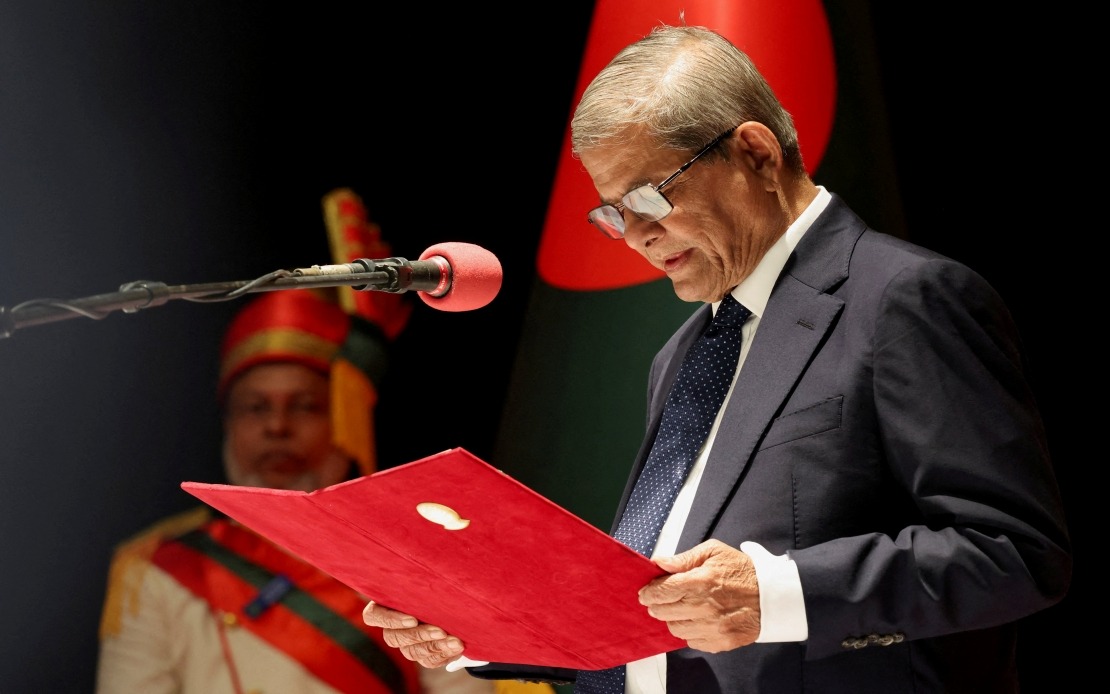
Mirza Fakhrul Islam Alamgir has assumed office as Bangladesh's 23rd President following his formal swearing-in ceremony on Friday evening at Bangabhaban, the nation's presidential residence. The inauguration marks a significant transition in Bangladesh's political leadership and elevates one of the country's most prominent political figures to the nation's highest ceremonial post. The oath-taking proceedings took place at 7.30 pm local time in the Darbar Hall, with Acting Speaker Barrister Kayser Kamal administering the constitutional oath of office.
The ceremony witnessed attendance from the full spectrum of Bangladesh's political and administrative establishment. Prime Minister Tarique Rahman, along with the Chief Justice, Cabinet members, and senior parliamentary representatives, graced the occasion. The presence of foreign diplomats underscored the international dimension of the presidency, while civil and military officials formed part of the ceremonial gathering. This broad attendance reflected the institutional importance of the presidential inauguration and signalled continuity in Bangladesh's governmental transitions.
Fakhrul's election to the presidency represents recognition of his decades-long service in Bangladesh's political arena. As a former secretary-general of the Bangladesh Nationalist Party (BNP), he brings extensive experience in party politics and governance structures. His elevation through parliamentary procedure adheres strictly to constitutional requirements, with members of parliament formally electing him to the position. This adherence to constitutional norms carries particular significance for Bangladesh's democratic framework, especially given the country's complex political history.
The formal transfer of power was marked by ceremonial protocols that have defined presidential transitions in Bangladesh. Upon Fakhrul's arrival at Bangabhaban, senior officials provided formal reception before Acting President Hafiz Uddin Ahmad Bir Bikram received the president-elect. Following the administration of the oath, the new President and his predecessor exchanged seats in a symbolic gesture that crystallised the transfer of authority. This choreographed handover, though largely ceremonial in nature, reinforces the constitutional continuity of the presidency.
The constitutional proceedings were completed when Fakhrul signed both the oath of office and the accompanying oath of secrecy. These dual oaths represent the formal legal binding of the President to uphold the Constitution and maintain confidentiality in matters of state security and governance. The ceremony concluded with the performance of the national anthem, a customary finale that reinforces national identity and unity at moments of governmental transition.
For Malaysian observers of South Asian politics, Fakhrul's assumption of the presidency offers insights into how established political figures navigate transitions within their systems. Bangladesh's BNP has long maintained significant political influence, and the party's prominent members reaching the highest state offices demonstrates the continued relevance of traditional power structures in the nation's democracy. The peaceful transfer of authority through constitutional means, despite Bangladesh's history of political turbulence, represents steady institutional development.
The presidency in Bangladesh, while primarily ceremonial in executive function, carries substantial symbolic weight and serves as custodian of constitutional values. As a senior party politician transitioning to this non-partisan institutional role, Fakhrul will be expected to transcend factional politics and serve as a unifying figure. This separation of ceremonial authority from executive power is a feature shared with Malaysia's own constitutional monarchy system, where figurehead authority is distinct from operational governance.
The timing of this transition occurs within Bangladesh's broader political context. The succession of political events and leadership changes in recent years have kept questions of democratic governance and institutional stability at the forefront of public discourse. Fakhrul's appointment signals confidence in the constitutional processes that govern such transitions, providing some assurance of predictable, lawful progression through the political system.
Regionally, this development in Bangladesh contributes to understanding how South Asian democracies manage political succession. Malaysia, along with other ASEAN nations, maintains keen interest in the stability and constitutional health of neighbouring Bangladesh. Smooth presidential transitions, underpinned by clear constitutional procedures and broad institutional participation, serve as indicators of systemic resilience in democratic frameworks.
Looking forward, Fakhrul's presidency will involve diplomatic responsibilities and ceremonial functions that connect Bangladesh to the international community. His engagement with foreign dignitaries present at the ceremony signals openness to international relations and cooperation. These dimensions of the presidency, though less visible than executive governance, carry importance for a nation seeking to strengthen its regional and global partnerships. His background and extensive political experience position him to navigate these aspects of the role effectively.
The constitutional and procedural aspects of Fakhrul's swearing-in demonstrate institutional adherence to established frameworks. In democracies where constitutional norms are sometimes tested or bent, Bangladesh's formal adherence to prescribed procedures offers a counterpoint. The specificity of timings, the prescribed roles of officials, and the symbolic exchanges all reflect commitment to constitutional governance. For students of comparative politics and democratic development, such observations matter considerably.

