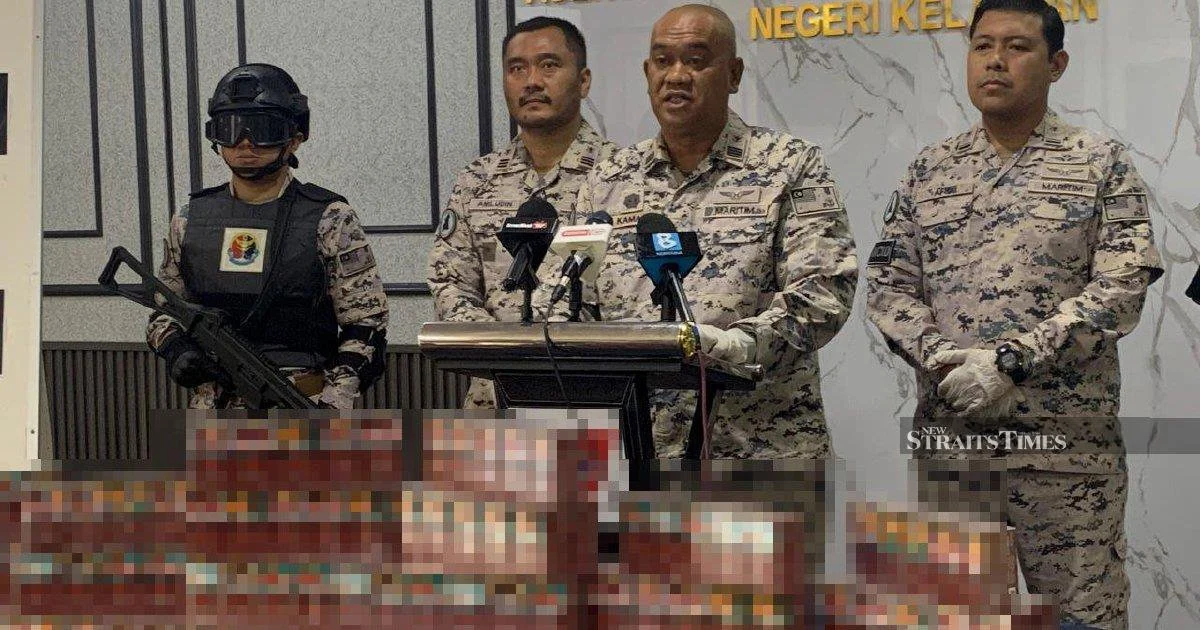
The Malaysian Maritime Enforcement Agency (MMEA) has successfully intercepted a significant shipment of smuggled cigarettes following a targeted enforcement operation in the Kelantan coastal region. During the operation at Kampung Penambang, maritime officers recovered 24 boxes of contraband cigarettes with an estimated street value of approximately RM212,000. The seizure underscores the agency's ongoing commitment to disrupting illegal trafficking networks that exploit waterways along Malaysia's eastern seaboard.
Cigarette smuggling remains a persistent challenge across Southeast Asia, with illicit trade networks leveraging maritime routes to bypass customs checkpoints and tax authorities. These contraband operations directly undermine government revenue streams while funding broader criminal enterprises that often engage in money laundering and organised crime. The eastern coast of Peninsular Malaysia, with its complex network of rivers, channels, and coastal access points, has become a particularly vulnerable corridor for such activities. Local communities near smuggling routes frequently experience secondary criminal spillovers, including petty theft and resource conflicts, making these enforcement actions a matter of public safety rather than merely commercial concern.
The MMEA's enforcement capacity in maritime zones has expanded considerably in recent years, reflecting recognition of the agency's critical role in securing Malaysia's exclusive economic zone and territorial waters. River operations such as this one demonstrate the agency's ability to conduct inland enforcement beyond their primary ocean-going mandate. The Kelantan region, which borders Thailand and sits adjacent to major shipping lanes, presents particular vulnerabilities for contraband movements. Coordination between MMEA, customs authorities, and state-level law enforcement has improved, enabling more frequent interceptions of smuggling attempts.
The monetary value assigned to seized contraband represents the potential black-market price rather than taxation evasion alone. This distinction is significant when calculating the true impact of smuggling on national revenue. Excise duties on tobacco products constitute a meaningful portion of indirect taxation revenue allocated to health and social services. When illicit cigarettes circumvent these levies, they create cascading effects throughout public health budgets and enforcement priorities. Malaysia's commitment to anti-tobacco messaging and smoke-free public spaces faces undermining when cheap contraband alternatives flood local markets.
Smuggling networks operating within the Kelantan sector typically source products from neighbouring jurisdictions where manufacturing costs differ substantially from Malaysian retail pricing. The price differential creates economic incentive for organised crime groups to invest in sophisticated smuggling operations. Transport routes shift dynamically in response to enforcement patterns, compelling agencies like MMEA to maintain adaptive strategies and intelligence-gathering capabilities. The scale of this seizure—24 boxes—suggests either a mid-level operation or part of a larger distribution effort currently under investigation.
The timing of enforcement operations often reflects intelligence gathered through informant networks, customs data analysis, and inter-agency communication. MMEA's operational focus on areas like Kampung Penambang typically follows preliminary indicators of trafficking activity. The agency maintains patrols and checkpoint systems designed to create unpredictability in enforcement timing, thereby reducing organisers' ability to schedule smuggling runs with confidence. However, smuggling networks continue to evolve their tactics, including use of faster vessels, nighttime operations, and multiple smaller shipments distributed across numerous routes.
The broader regional context involves competing priorities among enforcement agencies stretched across multiple jurisdictions. Thailand and Malaysia have implemented joint maritime patrol agreements in recent years, recognising that transnational trafficking requires coordinated responses. Cigarette smuggling, while appearing less serious than narcotics trafficking, often shares operational infrastructure with more dangerous criminal enterprises. Intelligence gathered during cigarette interceptions frequently yields information relevant to investigations into weapons trafficking, human smuggling, and other serious crimes.
Local economic factors also influence smuggling prevalence in specific regions. Kelantan's demographics, employment patterns, and income distribution create both supply-side incentives—communities willing to work in smuggling networks—and demand-side conditions favouring contraband products. Public education campaigns emphasising health risks and supporting legitimate taxation frameworks have shown mixed results, particularly in communities where informal employment and underground economy participation are widespread.
Moving forward, MMEA's success in this operation reflects institutional learning and resource allocation decisions made across multiple government levels. Sustained enforcement requires continued investment in maritime surveillance technology, personnel training, and inter-agency coordination mechanisms. The RM212,000 seizure will likely result in asset forfeiture and potential criminal charges against involved parties, though identification and prosecution of mid-level smuggling operatives presents ongoing challenges within Malaysia's justice system. Ultimately, disrupting smuggling networks requires not only enforcement activity but also addressing the fundamental economic and regulatory conditions enabling illicit trade to flourish.

