Malaysia's maritime law enforcement has achieved substantial gains in combating cross-border crime and smuggling operations, with the Malaysian Maritime Enforcement Agency (MMEA) recording RM2.29 billion in asset seizures and 516 arrests during the first half of this year. The figures underscore intensifying pressure on illicit traders operating in Southeast Asian waters, a region historically vulnerable to sophisticated smuggling networks exploiting vast maritime boundaries and competing territorial claims.
MMEA director-general Maritime Admiral Datuk Mohd Rosli Abdullah attributed the enforcement success to the agency's renewed focus on protecting Malaysian waters and upholding national sovereignty. He characterised the results as evidence of institutional commitment to safeguarding strategic maritime interests at a time when regional waters face mounting pressures from organised crime syndicates engaged in multiple illicit trades simultaneously. The scale of seizures reflects not merely reactive policing but a systematic approach to deterring criminal networks contemplating operations in Malaysian jurisdiction.
The composition of seized assets reveals the multifaceted nature of maritime contraband operations. Illegal vessels constituted the largest portion at RM2.11 billion in value, suggesting organised trafficking groups maintain substantial maritime infrastructure. Narcotics confiscations totalled RM86.06 million, followed by foreign fishing vessels worth RM66 million, indicating that drug trafficking and unregulated fishing represent persistent enforcement priorities. Smaller seizures of cigarettes (RM25.16 million), prawns (RM5.2 million), and diesel (RM3.33 million) demonstrate that smuggling networks exploit diverse commodities, adapting supply chains to evade detection across different product categories.
The seizure data illuminates a critical economic dimension affecting Malaysia's tax revenues and domestic industries. Controlled goods flowing out of Malaysian jurisdiction represent lost tax revenue, while subsidised products extracted illegally undermine government support mechanisms intended for legitimate domestic consumers. Mohd Rosli's emphasis on preventing export of regulated and subsidised commodities suggests MMEA operations increasingly target the outbound smuggling pipeline, not merely interdicting foreign contraband entering Malaysian waters. This represents a strategic shift acknowledging that Malaysian territorial waters serve as transit routes for regional smuggling operations targeting third countries.
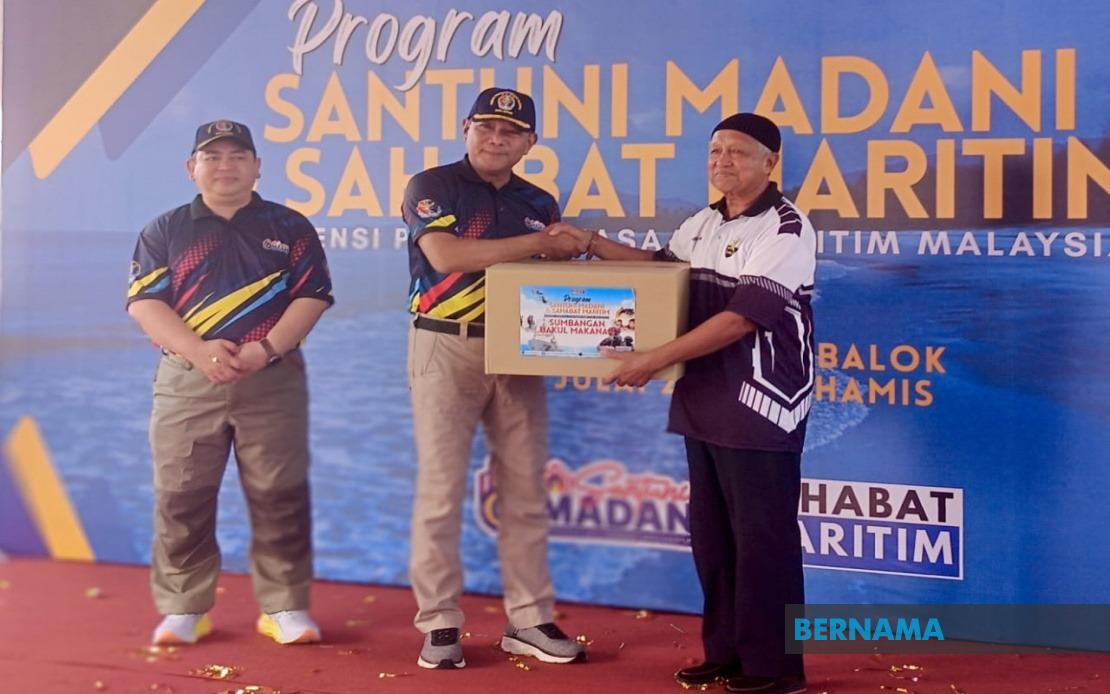
The agency's engagement with coastal communities through programmes such as Santuni MADANI and Sahabat Maritim reflects recognition that maritime enforcement cannot succeed through enforcement operations alone. Building intelligence networks within fishing communities and port areas strengthens situational awareness while establishing early warning systems for suspicious vessel movements. Community-based approaches prove particularly valuable in Malaysia's context, where thousands of small boats operate legitimately alongside smuggling networks, making visual identification and risk profiling essential complementary tools.
Integrated operations conducted in partnership with other enforcement agencies represent another strategic development. The reference to involvement in Ops Tiris indicates multi-agency coordination against cross-border criminal activities, pooling resources and intelligence across maritime, customs, police, and other enforcement bodies. Such integrated approaches prove essential for combating sophisticated smuggling operations managed by criminal organisations commanding substantial financial resources and operational flexibility. The June 23 cigarette smuggling operation in Tawau, Sabah, resulting in RM64 million in seizures, exemplifies effectiveness when multiple agencies coordinate enforcement efforts with precision timing.
The magnitude of cigarette smuggling detected—RM25.16 million across the six-month period—underscores this particular commodity's attractiveness to organised crime. Tax differentials between Malaysia and neighbouring jurisdictions create lucrative opportunities for coordinated smuggling networks. The Tawau operation suggests that major smuggling ventures continue despite enforcement escalation, indicating that profitability calculations still incentivise criminal involvement despite rising interdiction risks. Maritime smugglers operating sophisticated vessels can absorb occasional losses as operational costs, necessitating sustained enforcement pressure to tip economic calculations toward risk avoidance.
Search and rescue operations represent an often-overlooked dimension of maritime agency mandates. By maintaining robust SAR capabilities while conducting law enforcement activities, MMEA balances regulatory responsibilities with humanitarian obligations. This dual mandate reflects Malaysia's commitment to maritime safety standards, particularly relevant given regional history of maritime incidents involving smuggling vessels operating in dangerous conditions with inadequate safety equipment. Effective SAR capacity also builds public confidence in maritime governance, distinguishing legitimate enforcement from pure regulatory punishment.
The RM66 million in seized foreign fishing vessels addresses illegal, unreported, and unregulated (IUU) fishing—a persistent problem across Southeast Asian waters. Foreign vessels operating without licences deplete shared fish stocks while evading resource management protocols designed to ensure sustainability. Malaysia's interdiction of such vessels serves broader regional interests, as overfishing in shared waters threatens food security and livelihoods across Southeast Asia. Prawn seizures valued at RM5.2 million likely reflect aquaculture product smuggling, a less publicised but economically significant trade targeting regional markets.
Diesel seizures of RM3.33 million indicate enforcement attention extending to fuel smuggling, frequently linked to maritime criminal networks. Subsidised domestic fuel creates price differentials exploitable through illegal maritime trade, with smugglers supplying neighbouring economies or illicit industrial operations. Controlling fuel smuggling proves important for environmental protection and maritime safety, as unregulated fuel supplies may lack quality standards, potentially damaging vessels and contributing to pollution.
The detention figures warrant analytical attention, as 516 arrests across six months suggests high personnel turnover in criminal networks. Some detainees may represent repeat offenders cycling through enforcement systems, while others represent new recruitments, indicating continued recruitment capacity within smuggling organisations. This pattern suggests demand for maritime enforcement personnel actually exceeds current supply in criminal economies, making interdiction increasingly resource-intensive as networks maintain operational capacity despite personnel losses.
Looking forward, MMEA's commitment to enhanced integrated operations and community engagement addresses both supply-side enforcement and demand-side intelligence development. The emphasis on preventing subsidised goods smuggling acknowledges government fiscal interests, while narcotics and illegal fishing interdiction demonstrates commitment to national security and resource management. Regional cooperation mechanisms, implicit in references to cross-border criminal activity prevention, remain essential given maritime boundaries' porosity and criminal networks' transnational operational patterns throughout Southeast Asia.

