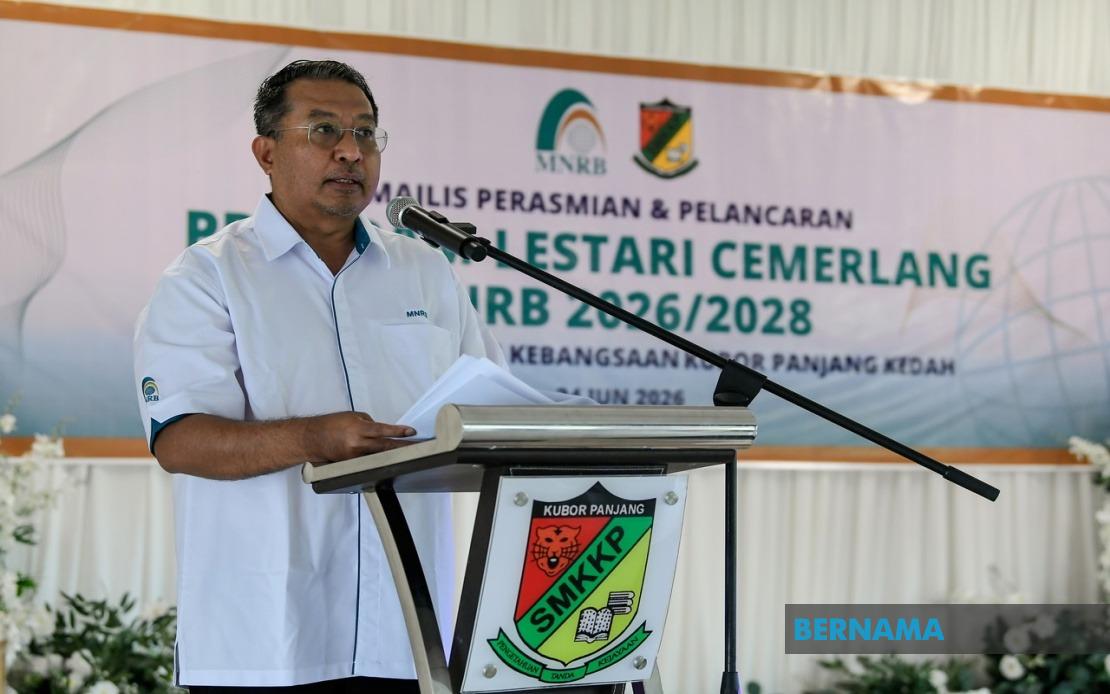
MNRB Holdings Berhad, an investment holding company, has allocated nearly RM600,000 through its Lestari Cemerlang Programme to support six schools across Malaysia, reinforcing its commitment to educational development and community welfare. The latest school to join the initiative is Sekolah Menengah Kebangsaan Kubor Panjang in Pendang, Kedah, which was formally launched into the programme during a ceremony held on June 24.
Datak Rudy Rodzila Che Lamin, interim president and group chief executive officer of MNRB, explained that the adopted school programme represents a cornerstone of the company's corporate social responsibility strategy. Initiated in 2011, the initiative has evolved to encompass comprehensive support mechanisms designed to strengthen educational outcomes in selected institutions, particularly those serving communities outside urban centres. The strategic focus on rural schools reflects the company's recognition that geographic disadvantage often correlates with limited access to learning resources and developmental opportunities.
The Lestari Cemerlang Programme operates on a multi-dimensional framework that extends beyond conventional academic support. Rather than concentrating solely on examination results, MNRB's approach integrates character development and institutional excellence as equally important pillars. This holistic philosophy acknowledges that sustainable educational progress requires simultaneous attention to student discipline, ethical grounding, and school infrastructure. By addressing these dimensions concurrently, the programme aims to create environments where students can flourish intellectually and morally.
Since the programme's inception, MNRB has systematically expanded its reach across the peninsula. Previous beneficiary schools have been located in Perak, Pahang, Negeri Sembilan, Melaka, and Selangor before SMK Kubor Panjang's inclusion as the sixth institution. This geographic diversification ensures that the company's educational interventions serve multiple demographic contexts, building an evidence base for what works in different state-level systems and community settings.
The tangible initiatives deployed within the programme reveal the breadth of MNRB's engagement. Additional classes targeting Form Five students represent direct academic reinforcement, addressing the critical final year of secondary education when students face crucial examination challenges. Motivational camps and student development programmes attend to the psychological and social dimensions of adolescent growth, recognising that confidence and interpersonal skills significantly influence academic outcomes. Simultaneously, facility upgrades and sports jersey sponsorships address the material conditions necessary for effective teaching and student participation in co-curricular activities.
A particularly innovative component involves the MNRB Smart e-Learning Room, which furnishes schools with digital infrastructure including smart televisions and internet connectivity. This intervention speaks directly to Malaysia's broader digital transformation agenda and addresses the connectivity gap that often disadvantages rural schools. By creating interactive learning spaces equipped with contemporary technology, MNRB facilitates pedagogical approaches aligned with twenty-first century skill development while simultaneously demonstrating technology's potential in educational settings.
Complementing the school-wide initiatives is the Tabung Biasiswa MNRB scholarship scheme, which targets exceptional individual students from partner institutions. Under this vertical programme, MNRB provides financial sponsorship to outstanding learners pursuing further education in disciplines aligned with the company's business operations, particularly insurance, takaful, and finance sectors. For SMK Kubor Panjang, five top-performing students have been selected as initial scholarship recipients, a recognition that blends merit with opportunity.
The scholarship programme demonstrates a sophisticated human resource strategy that extends beyond traditional corporate philanthropy. By nurturing talented students in finance-related fields and providing support through diploma, bachelor's, and master's-level studies, MNRB effectively creates a pipeline of qualified professionals familiar with the company's organisational culture. The data that eight of fourteen scholarship recipients from previous schools have been subsequently employed by MNRB underscores the programme's practical efficacy in talent development and acquisition.
For Malaysian readers and policymakers, the MNRB initiative illustrates how private sector engagement can meaningfully complement government educational provision, particularly in underserved communities. The investment model demonstrates that corporate social responsibility need not remain symbolic or superficial but can instead deliver sustained, measureable contributions to school infrastructure, student opportunities, and institutional capacity. Given Malaysia's ongoing emphasis on educational equity and quality improvement, such collaborations between government institutions and private enterprises offer a template for broader systemic advancement.
The Kedah State Education Department's participation in the SMK Kubor Panjang launch, represented by deputy director Ishak Awang, indicates alignment between MNRB's initiatives and official state education priorities. This institutional coordination suggests that such programmes function most effectively when corporate investments synchronise with government strategic planning rather than operating independently. For other Malaysian companies considering educational investments, the MNRB model provides evidence that structured, long-term commitment to specific schools generates more substantial returns than diffuse charitable contributions.
Looking forward, the Lestari Cemerlang Programme's expansion to six schools raises questions about scalability and sustainability. Whether MNRB intends to continue extending the initiative to additional institutions or to deepen interventions at existing partner schools remains significant for both the company's strategic trajectory and broader conversations about private-sector contributions to education. As Malaysia navigates challenges around rural-urban educational disparities and digital literacy gaps, initiatives like MNRB's demonstrate that corporate capital, when thoughtfully deployed, can accelerate progress toward national educational objectives while simultaneously building workforce capacity in sectors critical to economic competitiveness.

