Indian Prime Minister Narendra Modi and Indonesian President Prabowo Subianto held high-level discussions in Jakarta on Tuesday, signalling a renewed commitment to deepening bilateral relations at a time when Asia's two largest democracies are navigating significant geopolitical uncertainties. The meeting, held at Indonesia's Merdeka Palace following an elaborate ceremonial reception, underscores the strategic importance New Delhi and Jakarta place on their partnership as regional powers seek to strengthen cooperation amid global economic headwinds.
The bilateral agenda encompasses eight formal agreements and several memorandums of understanding spanning multiple critical domains. Defence and security matters feature prominently alongside trade investment frameworks, with both nations prioritising food and energy security arrangements. The negotiations also address capacity building initiatives in health and education sectors, reflecting a comprehensive approach to deepening ties beyond traditional military and commercial partnerships. Critical minerals cooperation—a particularly sensitive issue in the current era of supply chain competition—is expected to receive substantial attention during the discussions.
Indonesian Foreign Minister Sugiono indicated that the visit represents a significant diplomatic moment for Jakarta's external relations strategy. Modi's presence marks only his second visit to Indonesia since becoming Prime Minister, the previous occasion occurring in 2018. The timing carries additional weight given that Prabowo himself attended India's Republic Day celebrations as chief guest the previous year, establishing a pattern of reciprocal high-level engagement that suggests both leaderships view their connection as increasingly central to regional stability.
The ceremonial dimensions of Modi's arrival conveyed clear diplomatic messaging. Three Indonesian fighter jets escorted the Indian Prime Minister's plane into Indonesian airspace, while Prabowo personally greeted Modi on the tarmac at Halim Perdanakusuma Air Force Base. Such protocol underscores how Jakarta publicly demonstrates its valuation of the New Delhi relationship, a gesture particularly meaningful given Indonesia's role as the current chair of ASEAN and a major regional balancer. Both nations maintain membership in the Group of 20 and BRICS, positions that amplify their influence in discussions about global economic governance and development priorities.
Indian Ambassador Sandeep Chakravorty emphasised that the broader context for this engagement reflects deliberate positioning by leading Global South nations. He stressed that strengthened coordination between major Asian democracies carries symbolic and practical importance, enabling these powers to articulate a unified voice in international forums and demonstrate mutual solidarity. The ambassador's remarks suggest New Delhi views the Indonesia visit as part of a larger strategy to consolidate alignment among developing nations on matters ranging from trade rules to security arrangements, particularly as traditional Western-led institutional frameworks face questioning.
Defence cooperation is poised to assume heightened prominence in the bilateral relationship. Indonesia has signalled substantial interest in acquiring India's BrahMos supersonic cruise missile system, with negotiations reportedly reaching advanced stages. Such procurement would represent a tangible manifestation of strengthened military ties and mark a significant technology transfer from one Global South power to another. Beyond specific weapons systems, both countries share overlapping strategic interests in maritime security, particularly given their position astride critical shipping corridors connecting the Indian and Pacific oceans. Enhanced coordination on these routes would address shared concerns about freedom of navigation and regional stability.
A notable innovation in the partnership involves launch of the Indonesia Open Network, a digital commerce platform conceptually derived from India's pioneering digital public infrastructure model. This initiative reflects evolving recognition that strategic competition in the modern era encompasses technological and digital domains alongside conventional military capabilities. By exporting its approach to digital governance and commerce infrastructure, India positions itself as a source of innovation and institutional design for fellow Global South nations, while simultaneously creating platforms that bind participating economies more closely together through commercial and technological interdependence.
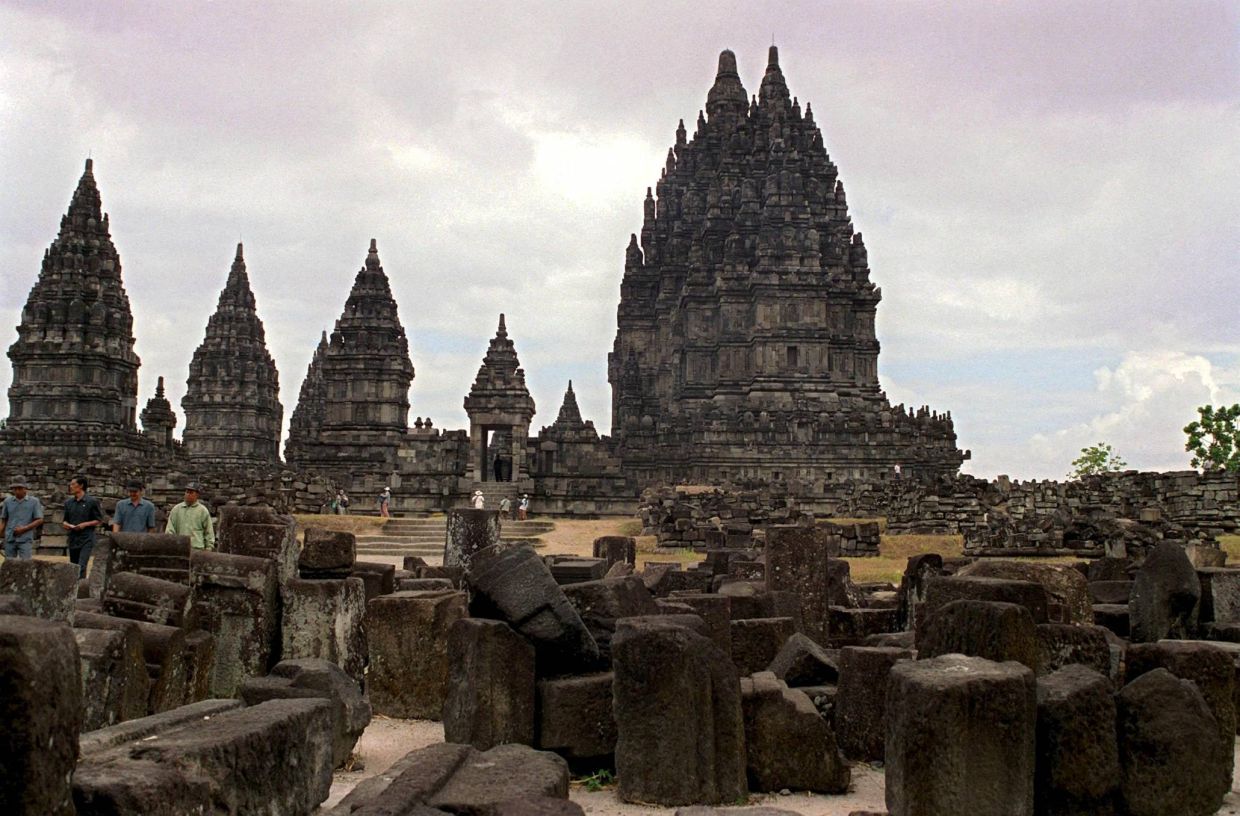
Cultural diplomacy will complement security and economic discussions during Modi's sojourn. The Indian leader is expected to travel to Yogyakarta on Wednesday, where he may inaugurate an Indian-backed restoration initiative at Prambanan temple, one of Indonesia's most culturally significant Hindu heritage sites. This project, emerging from commitments made during Prabowo's Indian visit, demonstrates how both governments integrate cultural exchange into their broader strategic frameworks. Heritage conservation projects carry political significance by nurturing people-to-people connections and underscoring India's historical ties to the Indonesian archipelago.
Modi's parliamentary address before the Indonesian legislature on Tuesday represents another diplomatic high point, offering opportunity to articulate India's vision for Indo-Pacific stability and development directly to Indonesian lawmakers. Such platform access reflects the esteem in which New Delhi is held in Jakarta's political circles and enables the Indian leader to build support for bilateral initiatives among influential parliamentarians who shape domestic opinion and policy priorities.
The timing of Modi's Indonesia visit as the opening chapter of his broader Indo-Pacific tour—subsequently including Australia and New Zealand—reveals a deliberate strategic sequencing. Beginning in Jakarta, Asia's most significant maritime power and ASEAN anchor, positions the Indian leader to build momentum for coordinated approaches among major democracies in the region. Each subsequent stop in the tour compounds the diplomatic messaging, as these nations collectively represent the constellation of powers most invested in preserving liberal democratic governance and rules-based international order in the Indo-Pacific domain.
For Malaysia and other Southeast Asian observers, Modi's Indonesia visit carries implications for regional architecture and power balancing. As ASEAN grapples with questions about maintaining centrality amid great power competition, successful India-Indonesia coordination demonstrates that bilateral relationships among major regional players need not undermine ASEAN's central role but rather can complement it by strengthening foundational partnerships. The emphasis on maritime security cooperation, critical minerals coordination, and digital infrastructure development reflects issues of direct concern to all ASEAN members navigating complex great power relationships.
The substance of Modi and Prabowo's discussions illuminates a broader recalibration underway among Global South powers. Rather than viewing their positions as subordinate to Western-led institutions, these nations increasingly assert agency in constructing alternative frameworks for economic coordination, technology transfer, and security partnerships. The India-Indonesia partnership, anchored in shared democratic institutions and considerable economic weight, exemplifies this shift toward multipolar engagement patterns that may reshape regional and global governance for years ahead.

