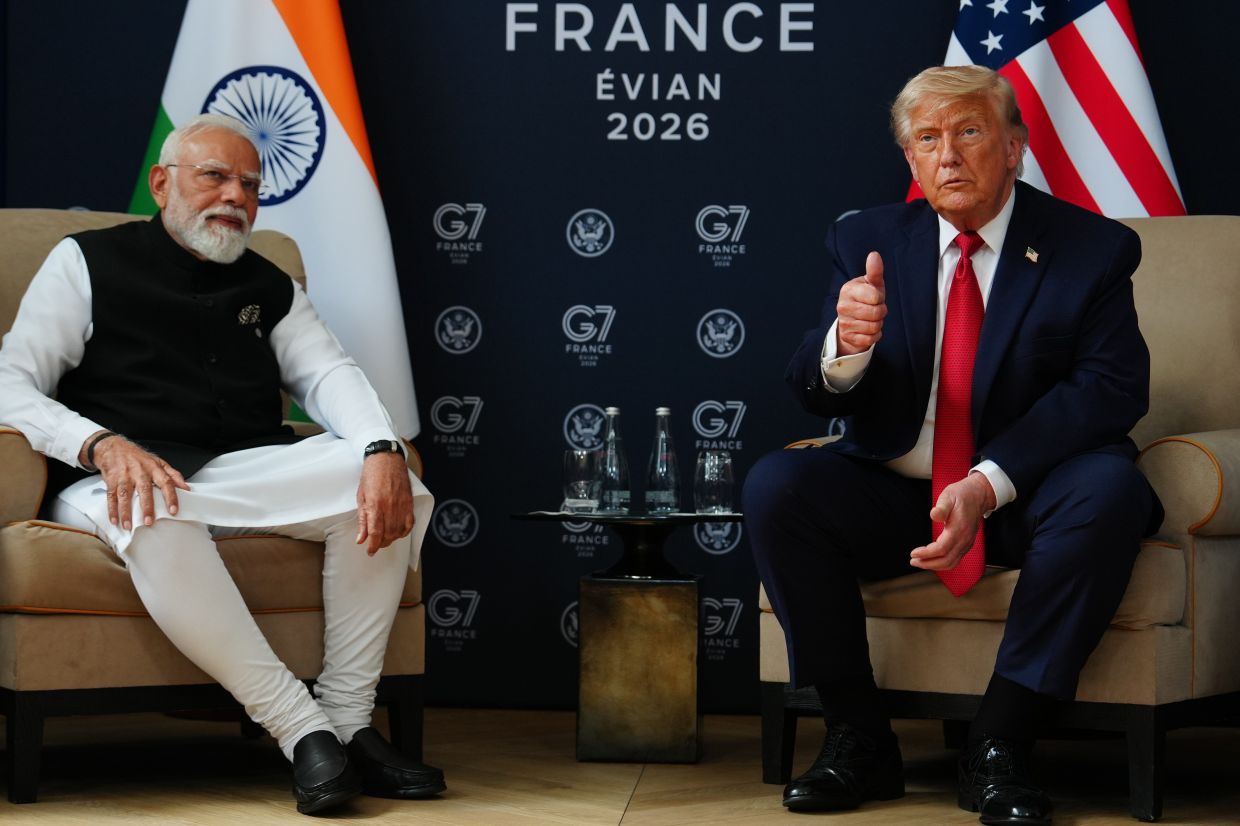
Indian Prime Minister Narendra Modi has signalled substantial headway in the prolonged trade negotiations between New Delhi and Washington, announcing the development following a meeting with President Donald Trump at the G7 summit in Evian, France. The encounter marked the first in-person discussion between the two leaders since their February 2025 talks in the American capital. According to a statement released by India's foreign ministry on Thursday, June 18, the discussion yielded what both governments characterised as "significant progress" in their efforts to craft an interim bilateral trade agreement, a development that carries considerable weight for both economies and their growing strategic partnership.
Trump's assessment of the negotiations was notably upbeat, telling reporters at the summit venue that the two nations stood "very close" to reaching a comprehensive deal. The American president's comments reflected an unusually personal tone, describing Modi as simultaneously tough and charming—characterisations that underscore the importance Washington attaches to strengthening economic ties with New Delhi at a time of increasing global trade fragmentation. The remarks, while unconventional in diplomatic language, signal the Trump administration's commitment to moving the trade agreement forward despite recent complicating factors.
The pursuit of expanded commercial ties between the United States and India has been a multiyear effort, driven by both countries' strategic interests in deepening economic integration while managing longstanding disputes over market access and tariff structures. Washington and New Delhi established an ambitious goal of elevating bilateral trade to US$500 billion by 2030, a target that would represent a substantial jump from current levels and reflect the broadening nature of their economic engagement. Multiple negotiating rounds over recent years have aimed at resolving thorny issues surrounding agricultural products, pharmaceuticals, and industrial goods, areas where both nations have significant domestic constituencies with particular interests.
The momentum captured in recent weeks should be understood against the backdrop of complications that arose following Trump's initial tariff initiatives. The US Supreme Court's intervention to strike down several of those measures forced a recalibration of the Trump administration's trade strategy, leading to fresh investigations into alleged unfair trading practices by various nations, including India. Concurrently, a blanket 10 percent tariff was imposed across multiple trading partners, creating uncertainty for Indian exporters and manufacturers dependent on access to American markets. These developments had threatened to derail the bilateral trade discussions, making the reported progress all the more significant.
India's Commerce Minister Piyush Goyal offered a more granular assessment in early June, indicating that negotiators had completed approximately 99 percent of the first phase of the trade agreement. Such specificity suggests that technical teams on both sides have been working methodically through the various sectoral components and tariff schedules required for a comprehensive accord. The focus now appears to be on finalising the remaining details and establishing an implementation timeline that both governments can accept. The stated intention to reach a "commercially meaningful agreement at the earliest" reflects recognition among senior officials that prolonged uncertainty serves neither economy well.
The visit planned by US Trade Representative Jamieson Greer to India in the coming week signals renewed momentum in the negotiating process. High-level trade representatives typically undertake such missions when discussions have reached critical junctures where senior officials can make binding commitments on behalf of their governments. Greer's presence in New Delhi will provide an opportunity for face-to-face resolution of any outstanding technical matters and to establish clear benchmarks for finalising the agreement. For Indian stakeholders, particularly exporters in pharmaceuticals, information technology services, and agricultural goods, the trajectory of these talks carries direct implications for market access and competitive positioning.
Beyond the immediate trade agenda, Modi utilised his platform at the G7 meeting to raise a pressing concern that directly affects India's strategic interests and maritime safety. The Prime Minister urged Trump to implement safeguards for Indian seafarers as part of the broader implementation of an agreement aimed at de-escalating tensions in the Middle East. This request followed the deaths of three Indian sailors in a United States military strike on a commercial vessel off the coast of Oman on June 10, an incident that highlighted the vulnerability of merchant mariners caught in geopolitical crossfires. The safety of Indian nationals working on international shipping routes remains a priority for New Delhi, particularly in volatile regions where military operations are active.
The Middle East conflict has created cascading economic disruptions that reverberate throughout South Asia and particularly affect India's development prospects. Iran's closure of the Strait of Hormuz, one of the world's most critical chokepoints for energy transport, has constricted supplies of crude oil and liquefied natural gas upon which India heavily depends. Beyond energy, the regional instability has disrupted supply chains for fertilisers and food products, sectors where India maintains significant interdependencies with Middle Eastern and global trading partners. For a developing economy managing inflation and seeking to maintain growth momentum, these supply-side shocks pose genuine macroeconomic challenges.
Modi's warning that the ramifications of the Middle East conflict would extend across an extended timeframe resonates particularly in the context of developing nations' vulnerabilities to external shocks. The Prime Minister explicitly cautioned that disruptions to fuel, fertiliser, and food supply chains caused by the regional crisis would continue imposing constraints on the Global South for an indefinite period. This framing positions India not merely as a bilateral trading partner to the United States but as a representative voice for developing economies facing disproportionate costs from geopolitical instability. The comments reflect New Delhi's diplomatic strategy of elevating development equity issues on international forums while simultaneously advancing its own commercial interests.
For Malaysia and other Southeast Asian nations, the trajectory of US-India trade negotiations carries indirect but meaningful implications. A robust bilateral trade agreement between Washington and New Delhi would reshape competitive dynamics in several sectors where Southeast Asian exporters operate, from electronics and semiconductors to pharmaceuticals and agricultural products. The agreement may also influence how the United States approaches regional trade arrangements and its broader Indo-Pacific economic strategy. Additionally, the emphasis on maritime safety and regional stability highlights shared concerns among Asian nations about protecting freedom of navigation and ensuring that supply chains remain resilient amid geopolitical tensions.
The reported progress in US-India trade talks also reflects broader shifts in how major powers are approaching economic relationships in an era of strategic competition. Rather than wholesale protectionism, there appears to be recognition among key actors that selective bilateral agreements with strategic partners can serve national interests while maintaining some framework for commercial exchange. India's position as a crucial democratic partner in Asia, combined with its substantial market size and manufacturing potential, makes it a natural focus for American trade policy under the Trump administration. The willingness of both governments to prioritise completing negotiations suggests that the relationship has weathered recent tensions and both sides perceive mutual benefit in a formal trade agreement.
As negotiations advance toward finalisation, Indian businesses across multiple sectors will be watching closely for details regarding market access commitments, tariff reduction schedules, and rules of origin provisions that will determine their competitive position in American markets. Services sector firms, particularly in information technology and business process outsourcing, have particular stakes in ensuring that the agreement facilitates the movement of skilled professionals and preserves India's longstanding advantages in these domains. Similarly, pharmaceutical companies and agricultural producers will scrutinise which sectors receive preferential treatment and what compliance standards they must meet to access American consumers. The commercial viability of any agreement ultimately depends on its ability to create tangible benefits for businesses and workers on both sides.