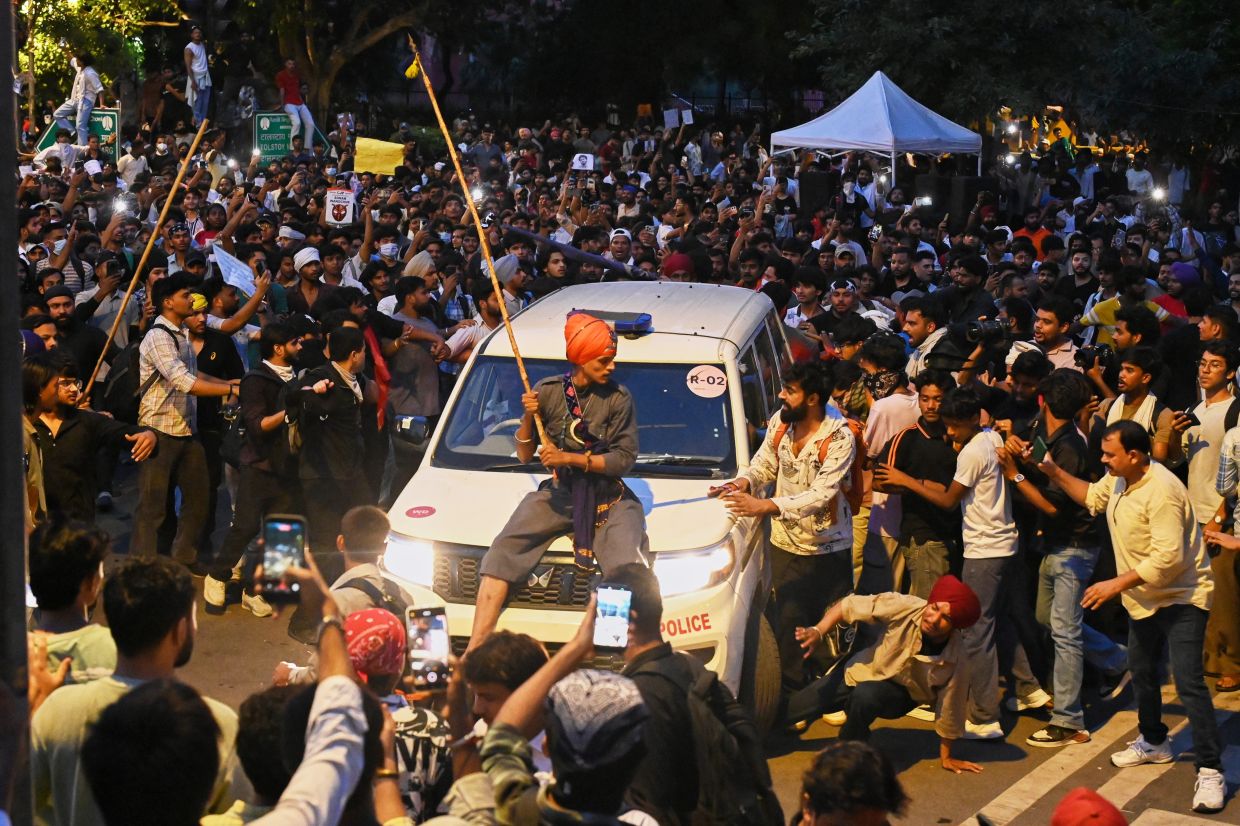
India's Prime Minister Narendra Modi has publicly committed to imposing "stringent punishment" on those responsible for widespread examination fraud, marking his first substantive response to an unprecedented wave of street demonstrations that have tested his political authority since his re-election in 2024. The pledge came via social media on Thursday, delivered as security forces continued managing unrest in the capital following violent confrontations between police and protesters that left at least 178 people injured.
The examination irregularities triggering the unrest have exposed serious structural vulnerabilities in India's education system. A leaked medical entrance examination question paper forced over two million candidates to sit the test again, while disputes over the online marking of examinations taken by nearly two million secondary school students have compounded public disenchantment. These cascading failures have crystallised longstanding frustrations among young Indians over educational standards and career prospects, transforming administrative lapses into a flashpoint for broader discontent with governance.
The protest movement, substantially mobilised through the Cockroach Janta Party network on social platforms, emerged initially as a satirical response in May after the Chief Justice reportedly characterised young people using dehumanising language during proceedings. The movement has since evolved into a broader indictment of what participants view as systemic neglect of youth welfare, chronic unemployment, limited economic opportunity, and what they describe as increasingly authoritarian governance under Modi's administration. With millions of social media followers, the movement has demonstrated the capacity to translate online activism into sustained street mobilisation—a capability that poses novel challenges for traditional political management.
The scale and intensity of the unrest has proven substantial. On Monday, as parliament convened for its monsoon session, demonstrators attempted to march toward the legislative complex, prompting police to deploy tear gas and resort to baton charges against tens of thousands. The subsequent stone-throwing by protesters marked the capital's most significant street upheaval in approximately five years, with violence extending late into Wednesday evening at the Jantar Mantar protest site. The authorities subsequently implemented internet shutdowns while dispersing crowds, measures that have themselves become focal points of criticism.
Opposition political parties have strategically leveraged the unrest to intensify pressure on the Modi government. Congress Party leader Rahul Gandhi directly challenged the Prime Minister's assertions regarding youth welfare, contending that Modi's policies have enabled the "capture and destruction" of the education system while allowing officials responsible to escape accountability. Parliamentary proceedings have been disrupted as opposition figures demand a formal apology for the police action on opening day. This convergence between grassroots activism and organised political opposition creates a compound challenge for the administration.
The movement's geographic spread signals deepening discontent beyond the capital. Demonstrations have surfaced in Mumbai, Bengaluru, and Patna, suggesting that grievances over education quality and youth opportunity resonate across India's urban centres. The movement has also attracted international attention and solidarity. In neighbouring Bangladesh, students organised a "torch rally" Thursday evening to express support for their Indian counterparts, drawing parallels to the youth-led upheaval that toppled Sheikh Hasina's government in 2024. This transnational dimension underscores how education and employment anxieties transcend borders across South Asia.
Modi's response strategy—promising fast-track courts and swift retribution for those implicated in paper leaks—attempts to address immediate procedural failures while sidestepping deeper institutional critiques. The government has framed the issue primarily as one of criminal malfeasance requiring judicial remedies rather than systemic educational reform. However, this narrower framing may struggle to satisfy demonstrators whose grievances extend beyond individual corruption to encompass broader questions about government prioritisation of youth development and the state's capacity to deliver equitable educational access.
The political stakes have escalated considerably for the Modi administration. These protests represent the most substantial domestic challenge since his third-term election, potentially signalling eroding support among younger demographics who constitute India's demographic majority. The movement's emphasis on youth welfare, unemployment, and governance quality strikes at vulnerabilities in the electoral coalition that returned Modi to power. Unlike earlier campaigns centred on religious nationalism or development promises, these demonstrations frame the government's record on grounds of tangible benefit realisation.
The intersection of examination fraud, youth unemployment, and perceived administrative indifference has catalysed a movement that transcends single-issue politics. For Malaysian and broader Southeast Asian observers, the Indian experience illustrates how education system failures can rapidly mobilise youth activism, particularly when young people perceive systemic neglect. The rapid scaling of the Cockroach Janta Party from satirical commentary to mass mobilisation demonstrates the potency of social media in aggregating and channelling diffuse grievances into coordinated political action. As India's examination system undergoes scrutiny, the government faces mounting pressure not merely to punish individual wrongdoers but to demonstrate comprehensive commitment to educational excellence and youth opportunity—promises that will likely dominate political discourse through the coming months.

