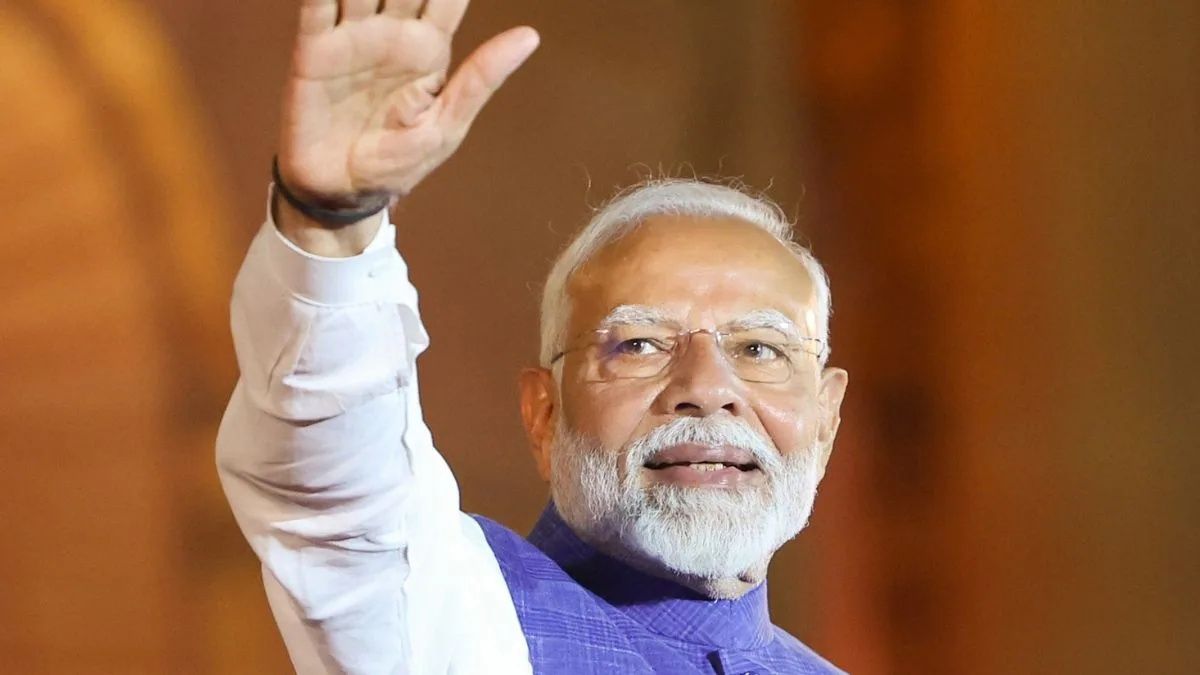
Prime Minister Narendra Modi will spearhead India's 12th International Day of Yoga celebrations from the historic Red Road in Kolkata on Sunday, June 21, reinforcing his administration's commitment to the philosophy of "Healthy Body, Healthy Mind." The main national event will begin at dawn, featuring mass yoga demonstrations based on the Common Yoga Protocol, with dignitaries and thousands of citizens expected to participate in what organisers anticipate will be a record-breaking gathering.
The Centre's choice of Kolkata as the venue carries significant political messaging. The decision arrives shortly after the Bharatiya Janata Party secured an overwhelming electoral victory in West Bengal's Assembly elections, unseating the long-ruling Trinamool Congress. Senior BJP leaders have indicated that the state will command considerable attention from the Modi government over the coming years, with commitments to accelerate development in a region that they characterise as having been inadequately managed previously.
Red Road itself represents a symbolically potent choice as the event's epicentre. One of Kolkata's most prominent public spaces, it embodies the city's civil heritage, military history, and environmental consciousness. The venue's selection underscores the government's intent to connect yoga celebrations with the broader civic infrastructure and public identity of West Bengal's capital, rather than confining the event to a specialised facility.
The preparations in Kolkata have already generated considerable momentum. The city witnessed enthusiastic participation in "Daud Se Dhyan 2026 – From Movement to Stillness," a preparatory initiative conducted under the Swachhata Se Swagat Programme, which merged wellness objectives with cleanliness and civic responsibility. This layering of health, environmental, and community values reflects the government's attempt to position yoga not merely as a wellness practice but as a comprehensive framework for social development.
Union Minister of State for Ayush Prataprao Jadhav articulated the year's theme—"Yoga for Healthy Ageing"—as addressing a fundamental contemporary challenge. As global life expectancy extends, he emphasised, the critical issue becomes ensuring that additional years translate into active, independent, and fulfilling existence rather than merely prolonged existence. Yoga, according to the minister, provides a time-tested and comprehensive pathway to healthy ageing by integrating physical strength, mental wellness, and overall quality of life into a coherent practice.
The scale of the initiative extends far beyond Kolkata. The Ministry of Ayush has organised approximately 2,500 events globally, with participation coordinated through 211 Indian missions abroad. Within India, the participation framework has achieved unprecedented dimensions, with the Yoga Sangam Portal registering over 600,000 organisations—a milestone reflecting institutional and community enthusiasm across the nation. These registered entities will mobilise participants to practice yoga simultaneously with the Prime Minister, creating a nationwide synchronised movement.
The Ministry of Culture has complemented the main event by organising yoga programmes at 100 iconic locations throughout India, deliberately intertwining cultural heritage with contemporary wellness practices. This approach seeks to demonstrate that yoga's roots lie embedded within India's civilisational traditions while remaining entirely relevant to modern health challenges, potentially broadening yoga's appeal beyond those primarily motivated by fitness considerations.
For Southeast Asian readers, the yoga initiative holds particular relevance. Across the region, governments increasingly recognise wellness and preventive health as policy priorities, particularly given ageing populations and rising healthcare costs. India's mobilisation of yoga as both a health intervention and a soft power tool offers a case study in how traditional practices can be adapted to contemporary demographic and health challenges. The scale of organisation—600,000 registered entities—demonstrates how bottom-up institutional participation can amplify public health messaging far beyond traditional government announcements.
The West Bengal government has mandated participation for all state employees, requiring them to join celebrations at their offices, residential complexes, or designated public venues including Red Road and Milan Mela grounds. This administrative integration transforms what might otherwise remain a symbolic national event into a concrete workplace and community experience, embedding yoga practice into state apparatus functioning.
The thematic emphasis on healthy ageing particularly resonates within Asia's demographic context. Nations throughout the region face rapidly ageing populations, straining healthcare systems and compelling policymakers to investigate preventive and maintenance-focused health approaches. Yoga's positioning as a holistic practice addressing physical capability, cognitive function, and psychological resilience aligns with growing evidence that integrative approaches to ageing may prove more cost-effective than pharmaceutical-dependent models, though further rigorous research remains necessary.
The International Day of Yoga, now in its twelfth year, has evolved from a ceremonial observance into an expansive institutional framework involving governments, educational bodies, healthcare organisations, and civil society groups. The participation architecture created through the Yoga Sangam Portal—connecting hundreds of thousands of discrete entities into coordinated action—illustrates how contemporary governance leverages digital platforms to mobilise dispersed populations around shared objectives, whether health-focused or politically symbolised.
The Kolkata celebration also reflects broader positioning within Indian governance narratives. By anchoring a major national event in a state recently brought under saffron party rule, the Modi administration signals sustained engagement with electoral constituencies and demonstrates intent to translate political victories into development initiatives. Simultaneously, the yoga framework itself remains sufficiently universal in health messaging to transcend narrow political positioning, allowing the government to advance political consolidation while maintaining the event's ostensible focus on public wellness.
As the June 21 event approaches, Kolkata's transformation into the nerve centre of India's annual yoga celebration represents a convergence of wellness promotion, cultural assertion, political symbolism, and institutional mobilisation. For Malaysia and other regional nations navigating similar challenges of ageing populations and healthcare resource constraints, the Indian initiative offers instructive examples of how traditional wellness practices might be systematically integrated into contemporary public health frameworks and governance structures, regardless of one's assessment of the political dimensions accompanying such integration.

