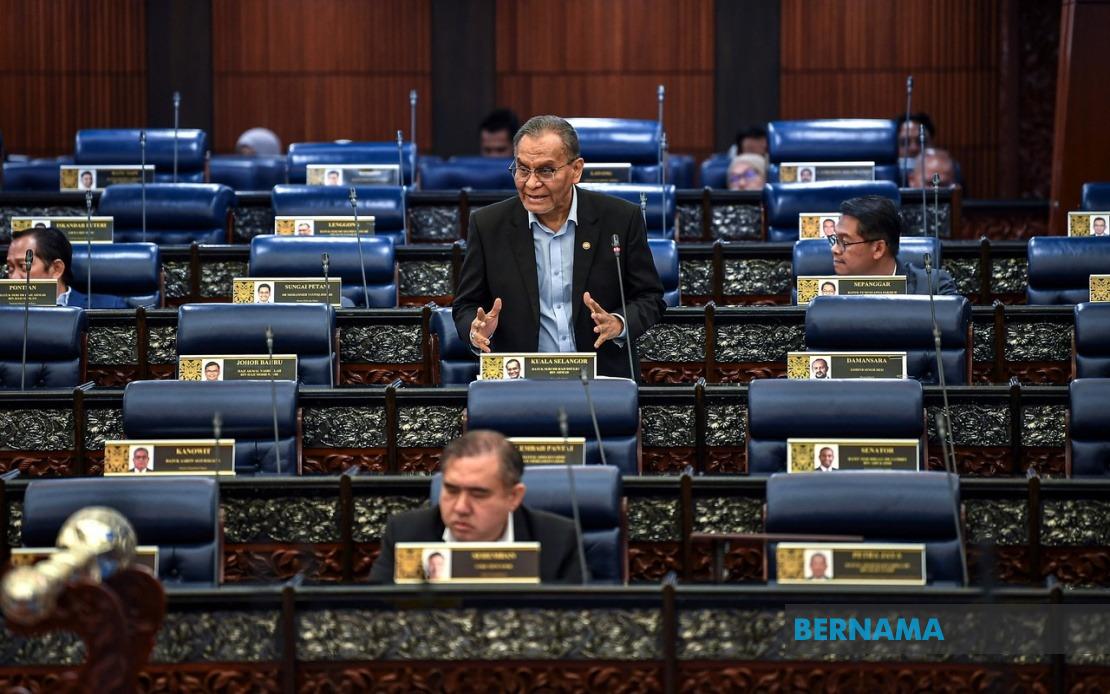
Health Minister Datuk Seri Dr Dzulkefly Ahmad has reaffirmed the government's commitment to bolstering private clinic operations, announcing that intervention measures including outsourcing arrangements will be deployed to keep these facilities economically viable and competitive. His remarks, delivered during ministerial questioning in Parliament, acknowledge the precarious position facing Malaysia's private general practitioner sector, which has experienced significant contraction over the past decade and plays an outsized role in the nation's primary healthcare delivery.
Dzulkefly stressed that private medical practitioners form the backbone of Malaysia's primary healthcare infrastructure, operating alongside government facilities to create a dual-tiered system that manages patient demand across the nation. The scale of this partnership is substantial: Malaysia's primary healthcare network comprises 2,916 Ministry of Health health clinics working in tandem with 10,208 private GP clinics, collectively serving as the frontline of disease prevention, health promotion, and management of common illnesses. This integrated approach has historically allowed the public system to focus resources on more complex cases while private providers absorb routine consultations and minor ailments.
The concerning trend prompting ministerial intervention centres on the closure of private general practitioner clinics at an alarming rate. Since 2013, approximately 2,034 private medical clinics have shuttered nationwide, creating gaps in healthcare accessibility and reducing competition in the market. This closure pattern reflects broader pressures on private practitioners, including declining house officer placements within private facilities, which threatens the sector's ability to maintain service capacity and train new healthcare professionals. The cumulative effect threatens to shift excessive burden onto already-strained public facilities and compromise healthcare accessibility in areas where private clinics previously operated.
To directly address financial sustainability, the government has implemented a regulatory adjustment elevating the minimum consultation fee for private medical practitioners to RM80, up from RM10 previously. This sevenfold increase represents a significant intervention aimed at improving the income viability of private clinic operations without resorting to wholesale deregulation. The adjustment acknowledges that fee structures set decades ago have become economically unworkable given rising operational costs, including rental, utilities, medications, staff wages, and compliance expenses. By formalising a higher minimum threshold, the government attempts to ensure that private practitioners can operate at sustainable margins while remaining accessible to middle and lower-income patients who depend on their services.
Beyond fee adjustment, the ministry plans to facilitate outsourcing arrangements whereby private clinics can partner with government agencies or larger healthcare systems to secure steady patient flows and operational contracts. Such outsourcing models enable smaller private practices to achieve economies of scale, secure bulk medication purchasing arrangements, and reduce administrative burdens through shared services. This approach mirrors successful models employed in other countries where government contracts with private providers create financial predictability and allow practitioners to maintain operations without excessive fee increases that might price out vulnerable populations.
The strategic context for these measures extends into Malaysia's longer-term health planning framework. The 13th Malaysia Plan explicitly incorporates non-communicable disease management through coordinated public-private collaboration, recognising that conditions including hypertension, diabetes, and chronic respiratory disease increasingly dominate healthcare demand. Private clinics are positioned as crucial partners in managing these conditions at the primary care level, preventing disease progression, and reducing hospitalisation rates. By sustaining private clinic capacity, the government effectively distributes NCD management across the healthcare system, easing congestion at government hospitals where emergency and specialist services remain concentrated.
Dzulkefly acknowledged his direct familiarity with private clinic challenges, having witnessed multiple closures during the COVID-19 pandemic when private practitioners faced simultaneous revenue declines and enhanced compliance costs. The pandemic exposed structural vulnerabilities in the private primary care sector, demonstrating that without deliberate support mechanisms, private clinics lack the financial resilience of government facilities supported by general taxation. This experience informed the ministry's current approach, which seeks to ensure that private practitioners not merely survive economically but can expand and improve service delivery to fully realise their potential within the healthcare ecosystem.
The government's emphasis on structured public-private collaboration reflects international experience. Healthcare systems in the United Kingdom and Taiwan, which Malaysia has studied, demonstrate that integrated primary care models combining public and private provision can reduce hospital admissions, improve chronic disease outcomes, and enhance overall system efficiency. These international examples show that formal coordination mechanisms, shared clinical protocols, and financial arrangements encouraging private practitioners to manage routine cases prevent overwhelming public hospital systems with conditions suitable for primary care management.
However, the sustainability challenge extends beyond fee adjustments and outsourcing contracts. Private clinics require consistent patient demand, which depends on population health literacy, adequate insurance coverage facilitating private healthcare access, and geographic distribution ensuring private practitioners locate where populations exist. The government's approach must therefore encompass not only support for existing clinics but also strategies attracting younger doctors to primary care practice and building demand through insurance schemes and public health messaging that directs appropriate cases toward private practitioners. Without addressing these upstream factors, fee increases and outsourcing alone may prove insufficient to reverse closure trends.
The policy announcement carries implications for healthcare accessibility across Malaysia's diverse socioeconomic spectrum. Private clinics historically serve middle-income populations and employed individuals with insurance coverage, but fee adjustments must balance practitioner viability against affordability for these consumers. The RM80 minimum consultation fee represents meaningful cost to unemployed individuals, informal sector workers, and pensioners. Policymakers must ensure that fee adjustments do not inadvertently drive vulnerable patients away from private clinics and toward already-overburdened public facilities, potentially worsening rather than improving overall system performance.
For private medical practitioners themselves, the government's commitment signals recognition of their sector's contribution and acknowledgment that market forces alone cannot sustain primary care provision at socially acceptable price points. This recognition may encourage practitioners to remain in the sector and younger doctors to enter primary care rather than migrating toward specialisation or emigration. However, sustained policy support requires consistent funding and political will across multiple election cycles, as healthcare systems function on timescales longer than political administrations. Private practitioners will likely monitor whether promised outsourcing arrangements materialise and whether government health clinics genuinely coordinate with private facilities or compete for the same patient populations.
Moving forward, the MOH's strategy for private clinic sustainability requires integration with broader healthcare system strengthening initiatives. Public-private coordination mechanisms must be formalised through clear contractual arrangements, clinical governance frameworks, and regular performance monitoring. Training initiatives must prepare both public and private sector professionals for collaborative practice. Investment in health information systems must enable data sharing between public and private facilities while respecting patient privacy. Only through comprehensive policy implementation extending beyond fee increases can Malaysia effectively harness its private primary care sector to build the resilient, accessible healthcare system that policymakers envision.

