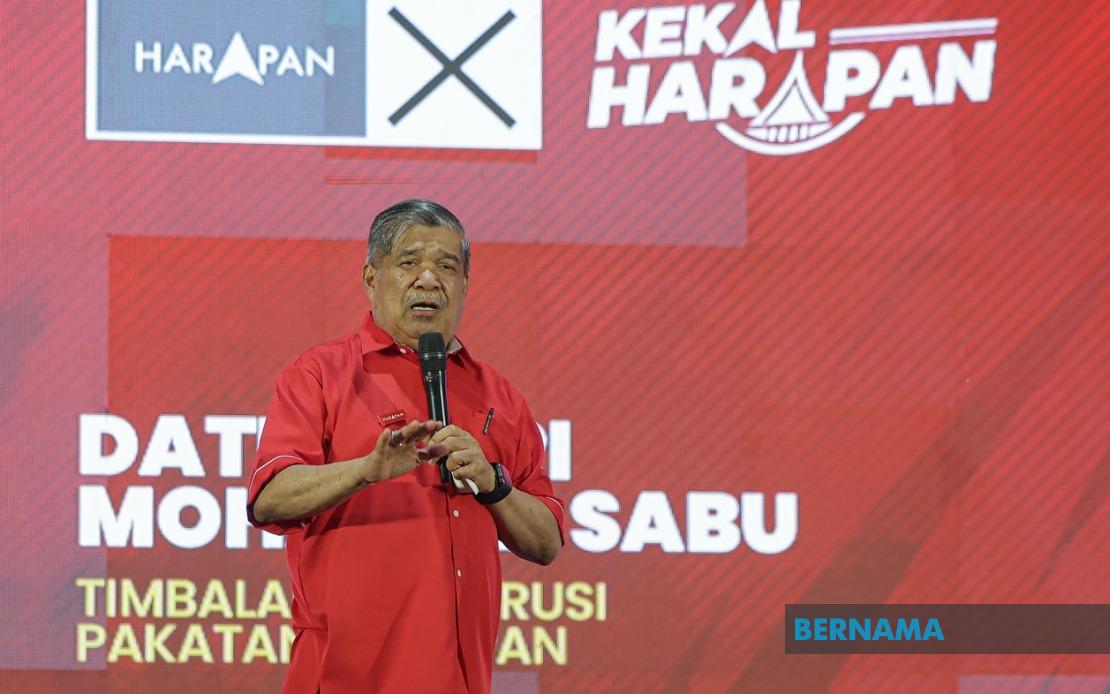
Datuk Seri Mohamad Sabu, president of the Malaysian Islamic Party Amanah, has launched a pointed critique against what he characterises as the destructive cycle of 'marriage-divorce' politics, using the imagery of repeated marital breakdowns to describe the opportunistic shifting of alliances that he believes threatens Malaysia's political stability. Speaking in Seremban on July 22, the veteran politician urged voters in Negeri Sembilan to reject parties that engage in such behaviour, framing the issue as fundamental to preserving the integrity of the nation's democratic institutions.
The Amanah leader's comments address a recurring pattern in Malaysian politics where parties and politicians frequently abandon their coalitions in pursuit of power and ministerial positions. This phenomenon has become increasingly visible over the past two decades, with several significant political parties switching allegiances multiple times within relatively short intervals. Such conduct, Mohamad Sabu argues, corrodes public trust in political institutions and creates uncertainty about governance, as elected representatives appear to prioritise personal advancement over constituent interests or ideological consistency.
In his remarks, Mohamad Sabu painted a vivid picture of serial political betrayals, referencing what he described as a specific party's cyclical pattern of coalition-hopping. He outlined a sequence beginning with alignment to Barisan Nasional, followed by departure to Pakatan Rakyat, then returning to UMNO-BN after just over a year before moving again to Bersatu and subsequently departing once more. This catalogue of shifting partnerships illustrated his broader point about the instability created when politicians prioritise tactical advantage over principled governance or long-term commitment to voters and party members.
The implications of such political fluidity extend beyond mere party dynamics. When politicians demonstrate willingness to abandon coalitions repeatedly, it sends a troubling signal about the value placed on electoral mandates and voter choice. Negeri Sembilan residents, like Malaysians across the nation, deserve clarity about which parties truly represent their interests and remain committed to implementing policy platforms they campaigned on. The constant reconfiguration of political alliances undermines this fundamental democratic principle, leaving voters uncertain about what their votes actually represent.
Moreover, Mohamad Sabu's intervention reflects broader concerns within the reform-minded faction of Malaysian politics about the personalisation and institutionalisation of political instability. When party-hopping becomes normalised and widespread, it reduces the barriers to further defections, creating a vicious cycle where ambitious politicians see constant coalition-switching as a viable path to advancement. This behaviour particularly disadvantages voters who lack the connections and resources to benefit from insider political maneuvering, as policy priorities become subordinate to elite power calculations.
The Amanah president's framing of this phenomenon as incompatible with Malaysian political culture carries particular weight given his party's positioning as part of the reformist Pakatan Harapan coalition. Amanah itself emerged from the Islamic Party Malaysia (PAS) and represents an attempt to chart an alternative course emphasising ideological consistency and principled governance. By explicitly warning against the normalisation of opportunistic alliance-building, Mohamad Sabu is attempting to establish a clear distinction between his party's approach and that of competitors he perceives as driven purely by patronage considerations.
The Negeri Sembilan context adds specificity to these broader observations about Malaysian politics. The state has experienced its own share of political turbulence, with shifting coalitions affecting governance and policy continuity. Local voters in the state therefore have direct experience of how frequent changes in political alignment can disrupt development priorities and administrative consistency. Mohamad Sabu's appeal to these voters taps into genuine frustration about the instability such behaviour creates at the state level, where the consequences of political volatility are immediately visible to residents through disrupted projects and changing policy directions.
From a Southeast Asian perspective, Malaysia's struggles with political stability through constant coalition-reshuffling reflect broader regional challenges. Neighbouring democracies including Thailand and Cambodia have experienced even more dramatic political upheavals, often involving military interventions triggered partly by perceived instability in civilian politics. While Malaysia's system remains far more institutionalised and constitutionally grounded, the persistence of opportunistic party-hopping represents a vulnerability that could be exploited by those arguing for more authoritarian governance models.
The challenge for Malaysian voters, particularly in Negeri Sembilan, lies in distinguishing between legitimate tactical adjustments to political circumstances and fundamentally unprincipled opportunism. Some political realignments may reflect genuine shifts in ideology or policy priorities, warranting coalition changes. However, when such changes occur repeatedly within short timeframes and appear driven primarily by ministerial office-seeking or factional struggles, they clearly fall into the category Mohamad Sabu criticises. Voters must therefore remain vigilant about evaluating parties' track records and consistency rather than accepting each new alliance at face value.
Moving forward, the responsibility for addressing 'marriage-divorce' politics ultimately rests with Malaysian voters. Through consistently rewarding parties that demonstrate long-term commitment to their constituencies and principled governance while punishing those that engage in serial coalition-abandonment, the electorate can gradually shift incentive structures in the political system. This requires sustained voter attention beyond individual election cycles and genuine engagement with parties' historical records and demonstrated values, not merely their campaign promises.

