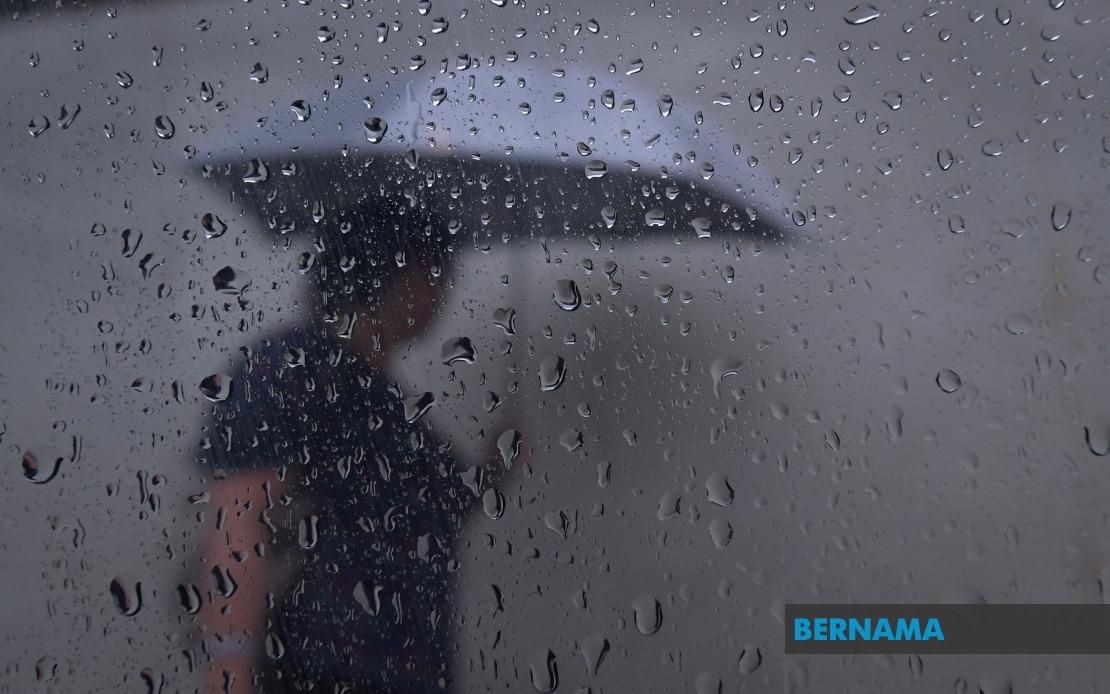
Weather forecasters have cautioned voters across Johor to prepare for wet conditions as nearly 25,000 early voters head to polling stations tomorrow for the state's 16th general election. The Johor Meteorological Department, led by director Azlai Ta'at, identified four districts—Batu Pahat, Muar, Pontian, and Tangkak—as particularly vulnerable to morning precipitation that could complicate the electoral process.
The meteorological outlook paints a divided picture across the state. Most other districts including Johor Bahru, Segamat, Kluang, Kota Tinggi, Mersing, and Kulai are expected to enjoy clear skies and sunshine during the morning hours, providing favourable conditions for the opening phase of voting. However, this temporary respite is unlikely to last, with forecasters predicting a dramatic deterioration across all districts by afternoon as thunderstorm systems move through the region.
Azlai Ta'at's advisory carries practical implications for the electoral logistics. The convergence of wet weather and the need to maintain voting centre operations suggests that morning hours represent the optimal window for early voters to cast their ballots without weather-related disruptions. His recommendation that voters complete their participation earlier in the day reflects a pragmatic approach to managing potential complications from afternoon storms that could disrupt transport networks or deter voters from reaching polling locations.
The scale of early voting tomorrow underscores why weather conditions merit serious attention. Across Johor, 24,751 individuals are registered for early voting, comprising two distinct groups. Military personnel and their spouses account for 12,041 of these early voters, while 12,710 others are drawn from the Royal Malaysia Police and General Operations Force along with their respective spouses. These early voting arrangements recognise the operational demands on security personnel who may be deployed during the main election day.
Logistical coordination will test electoral administrators across 64 voting stations distributed statewide, with operations commencing at 8 am. The staggered closing times, ranging from noon to 6 pm depending on individual centre capacity and voter registration numbers, reflect attempts to balance accessibility with operational feasibility. This flexibility suggests planners anticipated variability in voter turnout patterns and wanted to accommodate different contingencies.
The broader electoral context amplifies the significance of these early voting arrangements. The 16th Johor state election encompasses 2,727,926 registered voters participating across 1,140 polling centres in a comprehensive democratic exercise. A total of 172 candidates are competing for 56 state seats, representing the full spectrum of political competition in Malaysia's southern state. The concentration of 2.7 million ordinary voters scheduled for Saturday's main polling day means that early voting serves as a critical pressure valve, potentially moderating congestion and queuing at regular voting locations.
For Malaysian electoral observers, weather management during voting operations represents an under-discussed but consequential dimension of democratic practice. While weather disruptions rarely generate headline attention, their real-world impact on voter participation patterns, especially among vulnerable populations or those with limited flexibility in their schedules, can subtly influence electoral outcomes. The early voting mechanism itself, by allowing military and police personnel advance participation, already reflects recognition that democratic participation requires accommodating diverse occupational circumstances.
The meteorological forecast also carries implications extending beyond tomorrow's procedural smoothness. Should afternoon thunderstorms materialise as predicted, Saturday's main election day may face similar conditions, potentially affecting voter turnout across the region. Johor's coastal and low-lying areas are particularly susceptible to weather-related flooding during heavy rainfall, which could impact certain polling centres' accessibility. Electoral commissions may need contingency plans should precipitation prove more severe than currently forecast.
From a Southeast Asian perspective, Johor's electoral exercise demonstrates how sub-regional variations in weather patterns necessitate tailored administrative responses. Unlike uniform nationwide weather systems, localised precipitation affecting four districts specifically requires targeted communication and logistics adjustments rather than blanket statewide measures. This granular approach to election management reflects the sophistication of Malaysia's established democratic infrastructure.
The coordination between meteorological authorities and electoral administrators in furnishing real-time information to voters represents good governance practice increasingly expected in regional democracies. By publicising weather forecasts ahead of voting, authorities enable voters to make informed decisions about participation timing, while also signalling to polling centre operators the need for enhanced contingency preparations. Such transparency, delivered through established channels, strengthens public confidence in electoral processes even when external factors introduce complications.
Looking forward, the actual weather outcome tomorrow will provide test data for future electoral planning. If morning showers indeed materialise in the identified districts while afternoon storms affect the broader state, the experience will validate forecasting accuracy and perhaps refine future meteorological input into electoral logistics. Conversely, should predictions prove inaccurate, it may inform adjustments to consultation protocols between weather services and electoral commissions.

