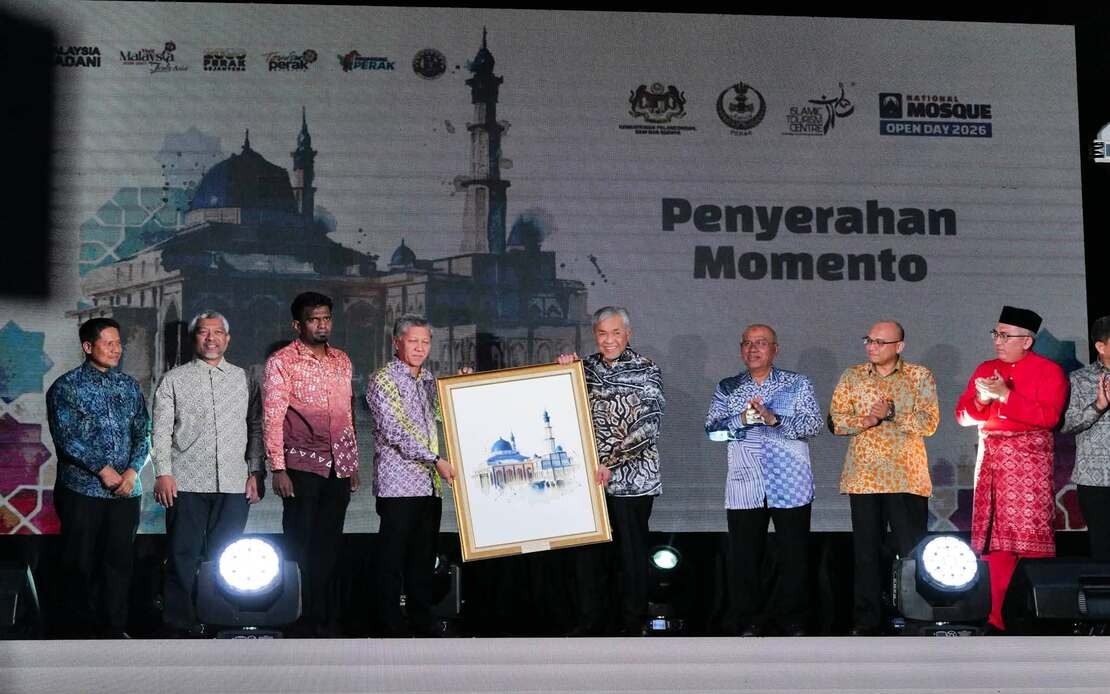
Deputy Prime Minister Datuk Seri Dr Ahmad Zahid Hamidi has outlined an ambitious vision for Malaysia's mosque network, positioning these religious institutions as key attractions within the broader tourism economy without compromising their fundamental spiritual mission. Speaking at the National Mosque Open Day 2026 in Bagan Datuk, Ahmad Zahid articulated a framework where mosques serve as gateways for international and domestic visitors to understand the nation's Islamic civilization, cultural heritage, and the values that underpin Malaysian society.
The deputy premier's proposal reflects a nuanced approach to religious tourism that balances commercial opportunity with reverence for sacred spaces. Rather than treating mosques purely as places of worship, Ahmad Zahid envisions them as multifaceted institutions that welcome visitors from diverse religious backgrounds while maintaining their core function. This positioning carries significant implications for Malaysia's tourism strategy, particularly as the nation seeks to diversify its cultural offerings and strengthen its position as a destination for heritage tourism across Southeast Asia and the Muslim world.
Ahmad Zahid emphasized that when tourists visit Malaysian mosques, they should depart carrying not only visual memories of architectural splendor but also profound experiences of the hospitality and Islamic principles they encounter. This philosophy transforms mosque visits from purely informational experiences into transformative encounters that can reshape outsiders' perceptions of Islam and Malaysian society. The deputy PM highlighted initiatives like the National Mosque Open Day as exemplifying how these institutions can create welcoming environments that foster genuine dialogue and mutual understanding across religious divides.
The expansion of mosque-based tourism programs represents a strategic opportunity for communities nationwide to engage with citizens from various age groups and faith backgrounds. By opening their doors through organized activities and structured visits, mosques create platforms where stereotypes can be dismantled through direct interaction and authentic cultural exchange. Ahmad Zahid stressed that such engagements build respect for mosques as custodians of Malaysia's heritage and identity, elevating them beyond religious spaces to become symbols of national pride and interfaith harmony.
According to Ahmad Zahid, welcoming outsiders into mosque spaces serves a dual purpose: it allows non-Muslims to deepen their knowledge of Islam while simultaneously providing Muslims an opportunity to demonstrate the religion's compassionate and benevolent character. This messaging strategy acknowledges that perception gaps regarding Islam persist globally, and direct exposure to how Muslim communities practice their faith can effectively bridge these divides. By controlling the narrative through hospitality and interaction rather than passive observation, mosques become active agents in promoting Islamic civilization's contributions to human knowledge and culture.
The Malaysian government has formalized this approach through designating specific institutions as Tourism Mosques. Masjid Tuminah Hamidi in Bagan Datuk, completed in 2023 as a family waqf, has now achieved the distinction of becoming Malaysia's 98th Tourism Mosque under the Islamic Tourism Centre designation. This recognition acknowledges the mosque's exceptional architectural design and its dedicated gallery functioning as a center for Islamic knowledge, making it particularly suitable for welcoming visitors seeking to learn about Islamic principles and history.
The Islamic Tourism Centre's Director-General Mohammad Faisal Abu Suaib Khan revealed that Malaysia's mosque landscape comprises 6,851 institutions nationwide, suggesting enormous potential for expansion of the Tourism Mosque initiative. The center has set ambitious targets to increase the number of designated Tourism Mosques, focusing particularly on institutions that possess distinctive architectural features, historical significance, or unique cultural elements warranting promotion as Islamic tourism products. This systematic approach transforms individual mosques into nodes within a coordinated national tourism network.
To operationalize this vision, the Islamic Tourism Centre is collaborating extensively with the Department of Islamic Development Malaysia and state-level Islamic religious authorities to establish comprehensive guidelines and coordinate mosque participation. These partnerships ensure consistency in standards and experiences while allowing individual institutions flexibility to showcase their particular strengths. The coordination framework prevents tourism from overwhelming religious functions and guarantees that commercial benefits align with community needs and Islamic principles.
The center has also developed complementary initiatives to strengthen the broader Muslim-friendly tourism ecosystem. Programs including the Muslim-Friendly Tourism and Hospitality Assurance and Recognition scheme and the Muslim-Friendly Tourist Guides training initiative extend hospitality principles beyond mosques into the wider travel industry. These initiatives operationalize the philosophy that Malaysia should be genuinely welcoming to Muslim travelers without excluding non-Muslim visitors, positioning the nation as an inclusive destination where diverse faith communities coexist and interact respectfully.
For Malaysia's tourism sector, mosque-based tourism represents a differentiated offering that distinguishes the nation from regional competitors and appeals to the rapidly growing Muslim travel market. With global Islamic tourism generating substantial economic activity, positioning Malaysia as a destination where visitors can authentically experience Islamic civilization and Muslim hospitality provides competitive advantages. The strategy capitalizes on Malaysia's existing strengths: a Muslim-majority population practicing moderate Islam, excellent tourism infrastructure, and established cultural institutions worthy of preservation and promotion.
The National Mosque Open Day 2026 itself exemplified this integrated approach, combining spiritual programming with community engagement, cultural activities, recreational opportunities, and family-oriented events across three days at Masjid Tuminah Hamidi and Dataran Bagan Datuk. This comprehensive programming demonstrates how mosques can serve simultaneously as devotional spaces, educational venues, community gathering points, and tourist attractions without friction or contradiction.
Implementing Ahmad Zahid's vision effectively requires careful management of several considerations. Tourism must be structured to avoid disrupting prayer times or essential religious functions, and visitor conduct must be clearly defined to maintain the sanctity of these spaces. Additionally, benefits from tourism should flow to local communities and the broader Islamic ecosystem rather than creating exploitative arrangements. When executed thoughtfully, however, mosque-based tourism can generate employment, foster interfaith understanding, strengthen Islamic institutions financially, and position Malaysia as a leader in values-driven tourism that enriches both visitors and host communities alike.

