A fatal two-vehicle collision in Muar has claimed the lives of an elderly woman and her daughter, highlighting the continuing dangers on Malaysian roads. The incident occurred at 10.30 am on Thursday along Jalan Temenggung Ahmad near Parit Unas, when a Perodua Myvi driven by a 58-year-old woman veered into the opposing traffic lane and struck an oncoming lorry. The driver died at the scene while her 83-year-old mother was pronounced dead during treatment at Sultanah Fatimah Specialist Hospital in Muar.
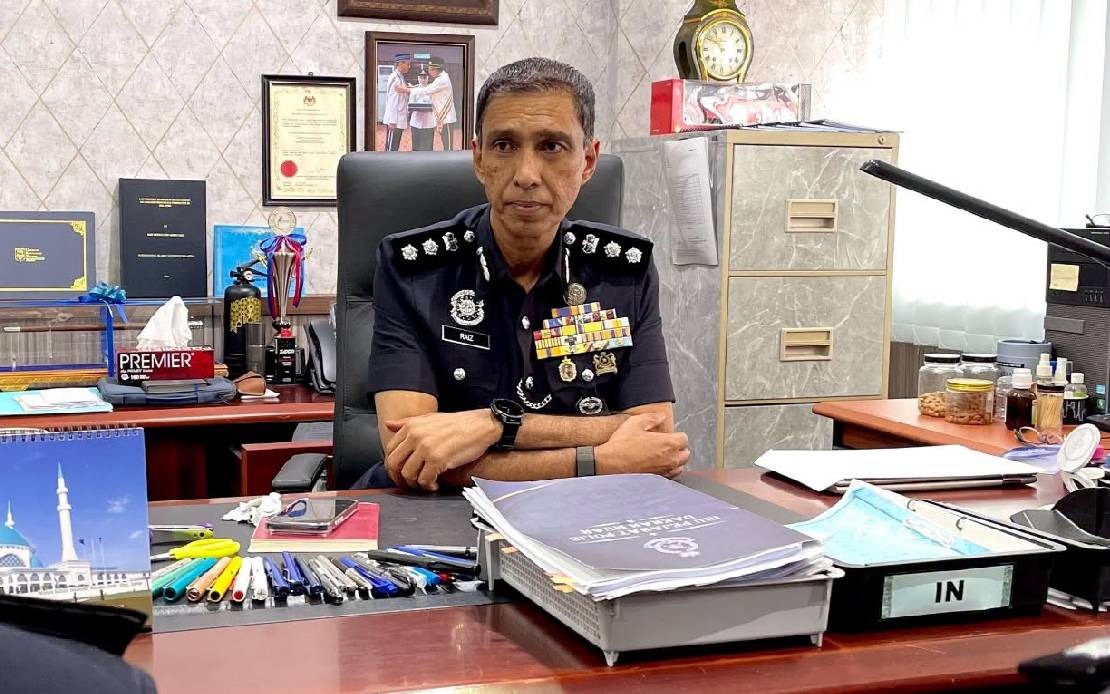
According to Muar District Police Chief ACP Raiz Mukhliz Azman Aziz, investigations indicate that the Myvi lost control and crossed into the path of the lorry, which was traveling from Muar town towards Parit Jawa. The 35-year-old lorry operator sustained injuries to both hands and legs and was admitted to the same hospital for medical care. Preliminary findings suggest the Myvi driver's loss of control triggered the collision, though the exact circumstances remain under investigation.
The tragedy underscores persistent road safety challenges in the Johor region, where accidents involving sudden lane departures have become alarmingly frequent. Jalan Temenggung Ahmad carries regular traffic between Muar and surrounding towns, and the area has recorded multiple incidents in recent years. The loss of control scenario, whether caused by mechanical failure, sudden medical events, or driver inattention, represents one of the most dangerous accident categories because of its unpredictable nature and limited reaction time for other road users.
For families traveling together on Malaysian highways, this incident serves as a sobering reminder of vulnerability when sharing the road. Single-vehicle loss of control accidents are particularly catastrophic when they involve collisions with heavy vehicles, which by nature have greater mass and momentum. The Perodua Myvi, while a popular family vehicle, offers limited protection when struck broadside by a laden lorry traveling at normal highway speeds.
The police have classified the case under Section 41(1) of the Road Transport Act 1987, which covers causing death by rash or negligent act in relation to motor vehicles. This statutory framework aims to establish culpability and determine whether contributing factors such as mechanical defects, maintenance failures, or driver negligence played a role. The investigation will likely examine the Myvi's condition, the lorry driver's actions, and road conditions at the time of impact.
Public authorities and road safety advocates consistently identify loss of control incidents as preventable through better vehicle maintenance and driver awareness. Regular servicing of steering and suspension systems, tire pressure checks, and awareness of fatigue warning signs can mitigate risks. The age of the Myvi and any recent mechanical issues will form part of the investigative focus, as sudden steering or brake failures, though rare in well-maintained vehicles, can trigger exactly such scenarios.
Johor, as Malaysia's second-largest state with significant traffic volume, regularly experiences road fatalities that ripple through communities. The Muar district, connecting multiple towns and agricultural areas, sees consistent vehicle movement throughout the day. Congestion and driver urgency during peak periods sometimes contribute to risky maneuvers, though a daytime incident near mid-morning suggests this was not rush-hour related.
The hospital admission of the lorry driver with hand and leg injuries indicates he likely attempted emergency braking or evasive action upon seeing the Myvi enter his lane. Lorry operators face unique hazards given their limited maneuverability and stopping distance, making sudden obstacles particularly dangerous. His injuries, though not immediately life-threatening, represent the collateral human cost of such collisions.
Family tragedies of this nature prompt broader reflection on Malaysia's road safety record. The country has made progress through various initiatives, yet fatality rates remain concerning relative to developed nations. Enhanced driver education, stricter vehicle inspection regimes, and better road design to prevent lane departures through physical barriers on critical sections remain ongoing priorities for transport authorities.
The police appeal for witnesses to assist investigations reflects standard practice in accident reconstruction. Information about the Myvi's movements immediately before impact, the lorry driver's compliance with safe speeds, and visibility conditions on Jalan Temenggung Ahmad at 10.30 am could establish critical facts. The Muar District Police can be contacted by members of the public holding relevant details.
This accident will be recorded as part of Johor's traffic fatality statistics, contributing to annual data that influences highway policy and enforcement priorities. The losses experienced by the families involved extend beyond the immediate grief to include broader impacts on their extended networks. Such incidents typically spark conversations about vehicle safety features, insurance adequacy, and the emotional preparedness of surviving relatives for sudden loss.
Transport safety experts emphasize that loss of control accidents, while sometimes unavoidable, can be reduced through combination approaches: improved road infrastructure with guidance markings and barriers, driver fatigue management programs, and enforcement of speed limits appropriate to road conditions. The Muar incident illustrates that accidents do not discriminate by vehicle type, age, or social standing, making universal application of safety principles essential across all road categories and user demographics.

