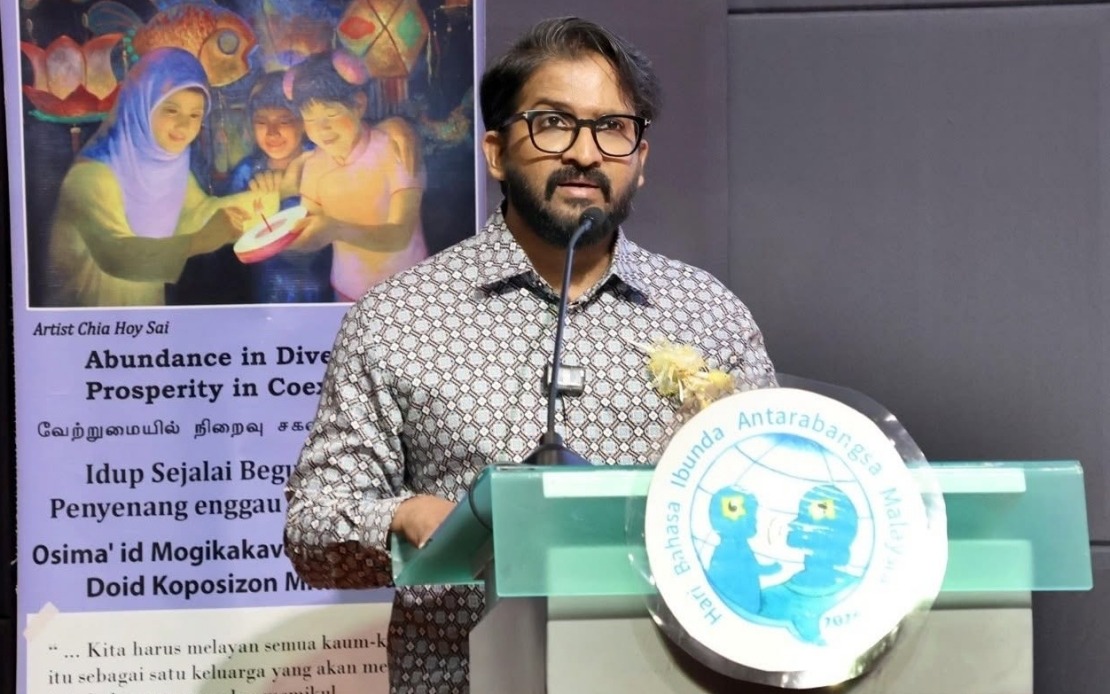
Deputy National Unity Minister R. Yuneswaran has made a compelling case for investing in mother-tongue education as a societal antidote to the growing incidence of 3R (race, religion, royalty) conflicts that dominate Malaysian social media discourse. Speaking via Facebook on June 21, Yuneswaran framed linguistic and cultural proficiency not as a divisive force but as a foundational element of national unity, arguing that stronger grounding in ancestral languages could reduce misunderstandings that fuel communal tensions online.
The minister's intervention reflects mounting concern within government circles about how social media has amplified sectarian grievances. Daily controversies involving sensitive discussions of ethnicity, faith, and the institution of royalty have become a fixture of Malaysian digital spaces, often escalating from heated debate into real-world friction. Yuneswaran's diagnosis identifies a fundamental gap: that many Malaysians, particularly younger generations, lack sufficient understanding of one another's historical narratives, linguistic expressions, and value systems—the very cultural scaffolding that underpins mutual respect.
Language, as Yuneswaran articulated, functions as far more than a communication tool. It encodes identity, transmits heritage, and crystallises the worldviews by which communities understand themselves and others. When citizens become disconnected from their own mother tongues, they lose access to the nuanced cultural contexts through which their ancestors understood concepts of belonging, loyalty, and difference. This disconnection may paradoxically increase susceptibility to inflammatory messaging that trades in crude ethnic or religious categorisations, since individuals lack the linguistic sophistication to recognise such rhetoric as distortion.
Malaysia's linguistic landscape underscores the urgency of Yuneswaran's position. The nation is home to approximately 130 languages, encompassing Malay, English, Mandarin, Tamil, Telugu, Punjabi, and numerous indigenous tongues spoken in Sabah and Sarawak. This extraordinary diversity is conventionally portrayed as either a competitive threat or a source of exotic colour in tourist marketing. Yuneswaran's reframing invites a third interpretation: that linguistic plurality, properly cultivated and celebrated, represents a structural advantage in building a cohesive nation. When citizens actively engage with linguistic variety as an expression of shared national patrimony rather than as evidence of irreducible division, the ground beneath 3R grievances shifts.
The minister drew on his own biographical experience to illustrate the point. As an Indian Malaysian educated across Chinese and national school systems, Yuneswaran argued that proficiency in Tamil or other Indian languages need not dilute commitment to Bahasa Malaysia or proficiency in English. Rather, such multilingual capability deepens one's appreciation for cultural difference and generates the cognitive flexibility required to navigate a diverse society. This argument challenges a persistent anxiety in Malaysian public discourse: the fear that emphasis on vernacular languages threatens national unity. Yuneswaran's lived experience suggests the opposite—that linguistic breadth fosters rather than undermines the capacity for intercommunal empathy.
Under the 13th Malaysia Plan, the National Unity Ministry has been assigned substantial responsibility for nation-building initiatives centred on mutual understanding, respect, and reciprocal learning. This policy architecture acknowledges that unity cannot be imposed by fiat but must be cultivated through deliberate, sustained effort. Language education forms a natural focal point for such cultivation. When schools and families invest in mother-tongue instruction alongside national and international languages, they signal that Malaysian identity is not monolithic but genuinely pluralistic—that being Malaysian means inhabiting multiple linguistic and cultural registers simultaneously.
The practical implications for Malaysia are considerable. Current education policy has gradually de-emphasised vernacular language instruction, particularly Tamil and Chinese, partly through resource constraints and partly through policy decisions favouring Bahasa Malaysia and English. If Yuneswaran's thesis holds merit—that linguistic disconnection contributes to intercommunal misunderstanding—then reversing this trajectory becomes a matter of social cohesion, not merely cultural preservation. Investment in qualified mother-tongue teachers, curriculum development, and integration of vernacular literacy into national examinations would send a powerful signal that the state values rather than tolerates linguistic diversity.
The argument also carries implications for how Malaysia addresses digital governance and social media. Rather than attempting to police or suppress 3R discussions through content moderation alone, fostering linguistic competence and cultural literacy could equip citizens with stronger intellectual defences against inflammatory rhetoric. Someone deeply literate in their own cultural tradition is less likely to recognise caricatures of other traditions as anything other than caricatures. The problem, from this angle, is not that Malaysians discuss sensitive topics but that they often do so from positions of ignorance regarding the perspectives they attack or defend.
Regionally, Yuneswaran's position reflects a broader challenge facing multicultural Southeast Asian societies. Thailand, Indonesia, and the Philippines all grapple with ethnic and religious tensions exacerbated by digital communication. Malaysia's particular configuration—with distinct communities maintaining separate educational streams, languages, and media ecosystems—creates specific vulnerabilities. Yet it also creates opportunities. A deliberate policy of multilingual citizenship, where fluency in multiple mother tongues is framed as a mark of sophistication rather than divided loyalty, could position Malaysia as a model for managing diversity in the digital age.
The minister's call for linguistic strengthening ultimately rests on a vision of unity rooted not in uniformity but in informed diversity. It assumes that Malaysians can hold strong attachment to ancestral languages and cultural traditions while simultaneously embracing national identity and contributing to shared civic life. This vision requires political will to redirect educational resources, challenge assimilationist pressures, and cultivate genuine respect for difference. It also requires messaging that reaches beyond government circles to parents, educators, and young people themselves, encouraging them to see mother-tongue proficiency not as a marker of separatism but as a foundation for authentic national belonging.

