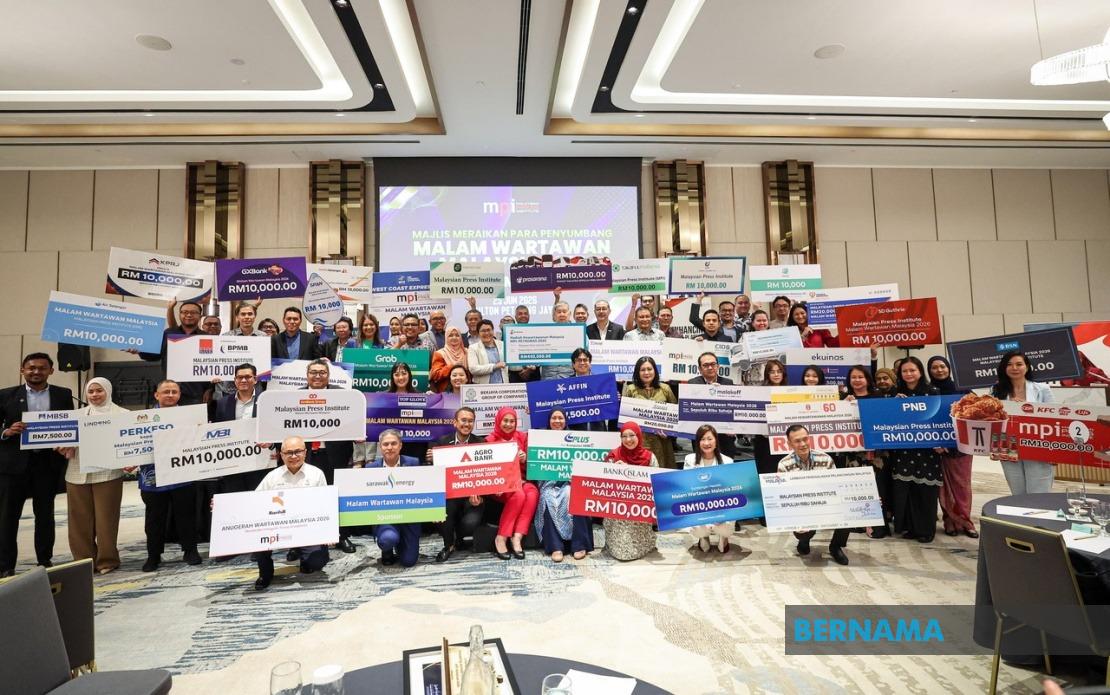
The Malaysian Press Institute has successfully mobilised more than RM1 million in financial commitments for Malaysia Press Night 2026, cementing the event's status as a major gathering for the country's media sector. The institute announced on June 25 that it had garnered RM1.037 million in combined contributions and sponsorships ahead of the ceremony scheduled for July 17. This financial backing represents a substantial show of confidence from Malaysia's business and media communities in the value of recognising journalism excellence and supporting professional standards across the industry.
The funding package consists of two distinct components, each reflecting different levels of engagement with the media sector. Sixty organisations have committed RM587,000 in direct contributions to the event, while PETRONAS has pledged RM450,000 in sponsorship support. PETRONAS's involvement carries particular significance given its three-decade history of backing the MPI-PETRONAS Malaysian Journalism Awards, a partnership that extends back to 1994. This continuity demonstrates the oil and gas giant's sustained belief in the importance of fostering quality news production and maintaining professional standards within Malaysian media.
Dr Ainol Amriz Ismail, chief executive officer of the Malaysian Press Institute, characterised the financial support as evidence of broader commitments within the business community to strengthen journalism. Speaking at the Contributors' Appreciation Ceremony held in Kuala Lumpur, he framed the sponsorships and donations as reflecting a collective investment in professional, ethical and trusted news reporting. His remarks positioned the funding drive as more than mere event sponsorship, instead casting it as a statement of shared values about journalism's essential role in democratic societies and informed public discourse.
The attendance of Prime Minister Datuk Seri Anwar Ibrahim on July 17 will elevate the significance of this year's Malaysia Press Night considerably. The prime minister's participation signals government acknowledgment of media's institutional importance and provides a high-level platform for addressing the media sector's challenges and opportunities. Such attendance typically allows leadership to articulate policy positions regarding media freedom, professional standards and the relationship between government and press institutions, making it a focal point for industry stakeholders seeking clarity on regulatory and operational directions.
The event's structure and participants underscore the breadth of Malaysia's media landscape. The programme included a forum featuring Malaysian Journalism Icon Datuk A. Kadir Jasin, whose decades-long career embodies the evolution of Malaysian journalism, alongside contemporary leaders from major media organisations. Karangkraf Group chief executive officer Firdaus Hussamuddin, TV AlHijrah chief executive officer Namanzee Harris and Vanakkam Malaysia editor-in-chief Thiaga Rajan Muthusamy participated as panellists, with moderator Ally Iskandar facilitating discussion. This mix of veteran journalists, corporate media executives and representatives from diverse outlet types reflects the heterogeneous nature of Malaysia's media ecosystem.
Among those attending the ceremony were MPI president Datuk Yong Soo Heong and deputy president Farrah Naz Abd Karim, indicating the institute's full institutional engagement with the fundraising effort. The presence of Bernama chief executive officer Datin Paduka Nur-ul Afida Kamaludin highlighted the national news agency's stake in media development initiatives, while PETRONAS Strategic Communications, Channels and Media Relations general manager Jalina Joheng's participation reflected corporate sector representation in steering journalism's future direction.
The Malaysian Press Institute's ability to mobilise such funding reflects recognition across Malaysian business sectors that quality journalism serves broader economic and social interests. When corporations commit sponsorship dollars to journalism awards and recognition ceremonies, they implicitly endorse journalism's value as a stabilising force in information ecosystems and as a foundation for business confidence. This alignment between media sector and corporate interests has historically strengthened journalism's institutional resilience during periods of technological disruption or reduced advertising revenues.
Beyond the immediate event, the funding commitments enable the Malaysian Press Institute to sustain its broader mission supporting the media industry. Dr Ainol Amriz highlighted how sponsorships and contributions fund professional development programmes, industry training initiatives and other undertakings designed to benefit Malaysia's media community and the wider industry. These investments in capacity building and skill development respond to documented challenges within Southeast Asian journalism, where resource constraints have sometimes compromised newsroom depth and investigative capability.
For Malaysian readers and media observers, the successful fundraising demonstrates that despite global pressures on traditional news organisations and shifting consumption patterns, significant stakeholders continue investing in journalism's institutional health. The participation of major corporations like PETRONAS, alongside sixty smaller contributors, suggests a sustained belief that professional news production remains worth supporting even as business models evolve. This financial commitment provides temporal breathing room for media organisations to experiment with sustainable revenue models while maintaining editorial quality.
The Malaysia Press Night event itself functions as both celebration and advocacy platform. By gathering industry practitioners, corporate sponsors, government officials and other stakeholders, it creates space for dialogue about journalism's evolving role in Malaysian society. At a time when regional media sectors confront challenges including advertising migration to digital platforms, audience fragmentation and occasionally contentious relationships with government, such convenings serve important functions in reinforcing professional norms and building consensus around shared values.
Looking forward, the sustained financial support for Malaysia Press Night 2026 signals continuity in institutional commitment to journalism even as the media landscape undergoes profound transformation. The fundraising success suggests that despite well-documented global challenges to print and broadcast journalism, Malaysian stakeholders recognise enduring value in recognising excellence, maintaining professional standards and investing in practitioner development. For the broader Southeast Asian region grappling with similar media dynamics, the Malaysian example of sustained institutional support for journalism carries instructive weight.

