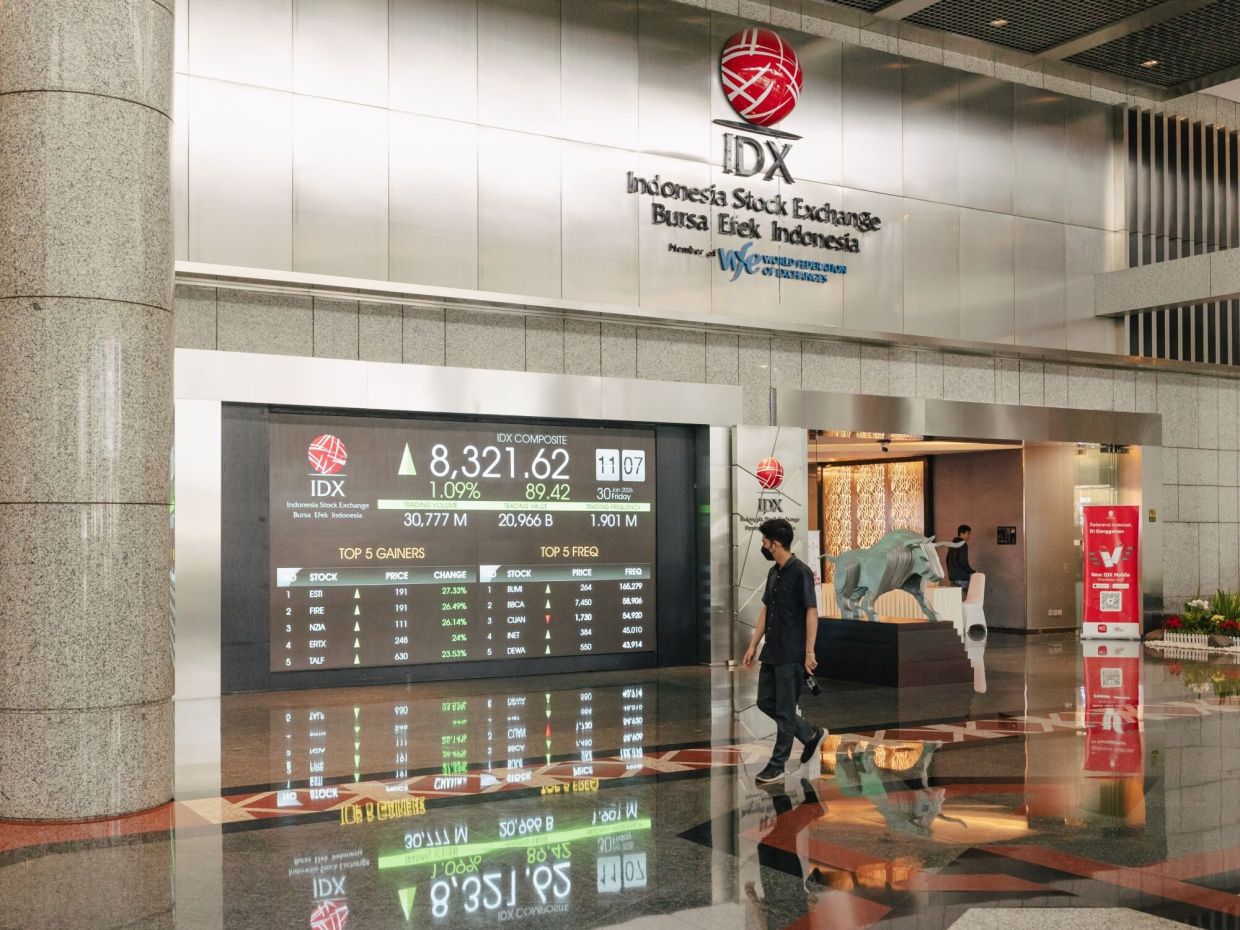
Indonesia's investment landscape faces renewed pressure as MSCI, the world's most influential index provider, has amplified its doubts about the country's market integrity and accessibility. In a Thursday market review, the index giant downgraded Indonesia's information flow rating to negative, bringing fresh scrutiny to Southeast Asia's largest economy at a critical juncture. The assessment zeroes in on the opacity surrounding corporate ownership structures and questionable trading patterns that make it difficult for international investors to accurately determine how freely shares can actually trade. This latest warning precedes what may be the most consequential decision for Indonesia's capital markets: MSCI's verdict next week on whether to reclassify the nation from emerging market status to the lower frontier tier, a move potentially devastating enough to trigger nearly $13 billion in forced selling.
The timing of MSCI's intensified scrutiny reflects a deteriorating investment climate that began in January when the index provider first sounded alarm bells about Indonesia's governance and transparency shortcomings. That initial warning alone sent shockwaves through Jakarta's equity market, which has since experienced sustained pressure as both foreign and domestic investors reassess their exposure. The plunge accelerated after MSCI extended its formal review in April and subsequently purged six companies—mostly connected to prominent business tycoons—from its indexes in May. Each announcement has corresponded with sharp declines in stock valuations, indicating how closely markets hang on MSCI's pronouncements. For a nation that once enjoyed preferred emerging market status alongside India and China, the prospect of frontier classification represents both a symbolic and material blow to its regional financial standing.
MSCI's specific grievances centre on information asymmetry that undermines fundamental market mechanics. The downgrading of the information flow criterion highlights two critical vulnerabilities: opacity in tracking beneficial ownership of listed companies and suspicious coordinated trading behaviour that suggests potential market manipulation or concentration among connected parties. This visibility problem extends beyond individual stock assessment. It prevents global portfolio managers from accurately calculating the true free float—the proportion of shares genuinely available for purchase by outside investors rather than locked within controlling family or state structures. Without reliable free float data, index calculation becomes imprecise, and risk evaluation becomes speculative. For multinational fund managers accountable to beneficiaries worldwide, this opacity represents unacceptable governance risk that may justify abandoning Indonesian equities entirely.
Yet not all observers interpret MSCI's Thursday review as uniformly catastrophic. Mohit Mirpuri, a Singapore-based fund manager at SGMC Capital, offered a more nuanced reading of the accessibility assessment, noting that only one specific metric deteriorated in this review cycle. He emphasised that Indonesia's performance on several other critical benchmarks—including trading mechanics, market depth, and regulatory frameworks—remained competitive against major neighbours such as South Korea, China, and India. This measured perspective suggests that market participants may be overreacting to incremental data points rather than evidence of systemic collapse. Mirpuri's base case expectation that Indonesia will retain its emerging market classification reflects confidence that while problems are real and require fixing, they do not automatically warrant the most severe reclassification. His analysis introduces a note of caution against assuming the worst possible outcome from MSCI's forthcoming decision.
Indonesian authorities have not remained passive in the face of international scrutiny. Following January's initial warning, policymakers implemented substantive reforms designed to address the transparency deficiencies MSCI highlighted. Most dramatically, they doubled the minimum free float requirement for newly listed companies to 15 percent, forcing greater dispersion of ownership. The leadership shake-up at both the stock exchange and the financial services regulator demonstrated that top officials understood the severity of the reputational and economic damage at stake. These executives departed in a single afternoon in January, signalling serious intent to overhaul governance practices. However, the persistence of MSCI's concerns even after these measures suggests that structural problems run deeper than policy tinkering alone can address. True resolution may require sustained effort over multiple years to build institutional infrastructure and establish credible enforcement mechanisms that international investors can trust.
Beyond the technical issues of market structure and information flow, Indonesia's broader macroeconomic environment has deteriorated significantly under President Prabowo Subianto's administration, adding contextual weight to MSCI's concerns. Populist economic measures and fiscal uncertainty have depressed the rupiah to historic lows against the dollar, compelling Bank Indonesia to raise interest rates in recent weeks in a desperate attempt to defend the currency. This currency weakness creates a cruel paradox: while it may theoretically make Indonesian assets cheaper for foreign investors, it simultaneously signals instability and policymaking credibility problems that deter precisely the kind of long-term committed capital that emerging markets require. Rating agencies Moody's and Fitch have already moved in lockstep with this negative sentiment, downgrading their debt outlooks for Indonesia to negative and citing eroded confidence in government decision-making. The $1.4 trillion economy, once celebrated as a consistent performer and regional engine of growth, now carries the stigma of a nation whose leadership has lost the confidence of serious international investors.
Another technical constraint hampering Indonesia's competitiveness relates to currency market infrastructure. MSCI pointedly noted the absence of an efficient offshore currency market while simultaneously criticising the constraints that impede the onshore rupiah market. This dual deficiency means international investors struggle to cost-effectively hedge currency risk when entering or exiting Indonesian positions, effectively raising the transaction cost of capital flows. For index-tracking funds that must manage thousands of positions across dozens of countries, this friction tips the cost-benefit calculation decisively away from Indonesian exposure. Active managers facing similar hedging friction may decide that the expected returns available in Jakarta's market do not justify the logistical complications and costs. These microstructural issues, though technical in appearance, have macroeconomic consequences by restricting the capital inflows that developing economies require for growth.
The potential scale of outflows from a downgrade would constitute a genuine shock to Indonesia's financial system. A $13 billion reduction in foreign holdings would represent the largest wave of selling since the 1998 Asian financial crisis, dwarfing the $3.65 billion that foreign investors have already liquidated through the first portion of this year. The Jakarta composite index has already suffered a devastating 29 percent decline in 2024 (or 2026, depending on current year context), reflecting both legitimate economic concerns and market sentiment driven partly by the MSCI uncertainty itself. Forced selling by passive index trackers follows mechanical rules divorced from company fundamentals, meaning that even solid businesses with strong earnings growth would face indiscriminate pressure if their indices are downgraded. This mechanical selling distinction matters for understanding why MSCI's decision carries such outsized importance: it is not merely about investment opinion but about triggering automatic transactions that overwhelm normal market price discovery mechanisms.
For Malaysia and other Southeast Asian economies, Indonesia's predicament carries sobering implications. The region's largest neighbour commands enormous weight in regional equity indices and investment flows. If Indonesia's weight shrinks through forced index rebalancing, capital flows may redirect toward other ASEAN markets, including Malaysia, creating both opportunity and challenge. Malaysian policymakers must recognise that maintaining MSCI's confidence in regional markets requires sustained commitment to transparency, governance, and macroeconomic stability—precisely the attributes currently under question in Jakarta. The contrast between Malaysia's relative stability and Indonesia's volatility may temporarily favour Malaysian equities, but only if policymakers avoid similar credibility-eroding missteps. Indonesia's experience demonstrates that emerging market status, once lost, is extraordinarily difficult to recover, making preventive governance investment the most rational economic strategy.

