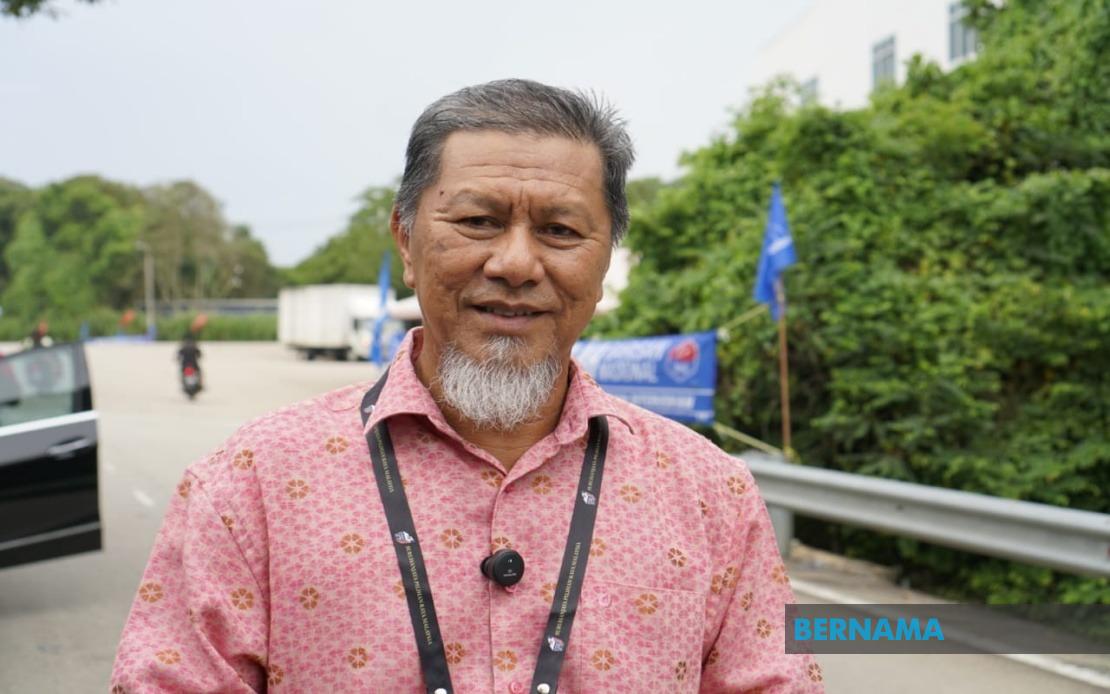
Pakatan Harapan candidate Muhd Najib Lep has unveiled an ambitious vision for Bandar Universiti Pagoh ahead of Saturday's Johor state election, positioning the township as the cornerstone of his economic development strategy for the Bukit Pasir constituency. Speaking in Pagoh on July 8, the Amanah party official argued that the education hub requires substantial reinvestment to unlock its potential as a driver of prosperity for residents, small traders, and micro-entrepreneurs in the region.
The township, which anchors four tertiary institutions including Universiti Tun Hussein Onn Malaysia (UTHM) Pagoh campus and Universiti Teknologi Malaysia (UTM) Pagoh campus, represents an underutilised asset with significant capacity for wealth creation. Despite hosting these major educational facilities, Muhd Najib contends that the broader community has yet to experience the ripple benefits that should naturally flow from such institutional concentration. His argument reflects a common development challenge across Malaysian university towns, where academic infrastructure exists in relative isolation from complementary commercial and service ecosystems.
Muhd Najib highlighted a critical infrastructure deficit that undermines the township's economic viability. Banking services remain scarce, and healthcare facilities fall short of community needs—gaps that discourage both student retention and business investment. These deficiencies illustrate how incomplete municipal planning can render even strategically located developments economically sterile. By addressing such fundamental service gaps, he contends that Bandar Universiti Pagoh can catalyse a multiplier effect where local businesses, particularly SMEs and informal operators, capture spending from the student and academic populations rather than channelling it elsewhere.
The candidate's housing agenda reflects sensitivity to the cost-of-living pressures facing working families across Johor. By prioritising affordable accommodation, he aims to address two interconnected challenges: easing household financial strain whilst creating stable domestic environments conducive to children's academic achievement. This approach acknowledges that educational excellence cannot be sustained in isolation from family economic security—a consideration often overlooked in policymaking but central to household purchasing power and social stability.
Muhd Najib's platform extends beyond commercial development to encompass military welfare, drawing on his background as a former serviceman and current chairman of the Pagoh Malaysian Armed Forces Veterans Association. He has identified a substantial disparity in pension arrangements between defence force retirees who departed service before 2013 and their counterparts who left afterwards. This grievance represents a structural inequity within the armed forces compensation framework that has accumulated into a meaningful financial burden for affected veterans and their families—an issue that resonates beyond Bukit Pasir given the nationwide distribution of military personnel and their dependents.
His thirteen-year military career positions Muhd Najib as an informed advocate for veteran interests, providing him with institutional understanding and credibility within this constituency. The pension disparity he highlights affects real household incomes and reflects broader questions about how successive governments have valued long-service contributions. Addressing this issue through targeted policy advocacy could enhance his appeal among defence force retirees and sympathetic voters who view equitable treatment of former servicemen as a measure of governmental integrity.
Muhd Najib's electoral positioning reflects his prior success in winning the seat during the 14th General Election (GE14), establishing him as an incumbent with demonstrated voter appeal. He emphasises ongoing community engagement that has continued even during periods outside formal state assembly membership, suggesting a grassroots approach that prioritises constituent contact over institutional position. This narrative of consistent local presence resonates with voters seeking representatives committed to incremental problem-solving rather than periodic campaign-season attention.
The three-way contest for Bukit Pasir pits Muhd Najib against incumbent assemblyman Mohamad Fazli Mohamad Salleh of Barisan Nasional and Perikatan Nasional candidate Mohd Idzharruddin Mohd Nasirruddin. The 2022 general election saw Mohamad Fazli achieve a narrow majority of just 198 votes, suggesting genuine electoral volatility in the constituency. Such tight margins indicate that voter preferences remain fluid and responsive to candidate messaging and community perception of delivery performance.
The Johor state election sees 172 candidates competing for 56 assembly seats among an electorate of 2,727,926 eligible voters. This condensed electoral field at the state level creates high stakes for each local contest, as fewer seats mean individual races carry greater weight in determining government composition. For regional observers, Johor's election outcome carries implications for peninsular Malaysian political realignment, given the state's size, economic importance, and recent volatility in coalition loyalties.
Muhd Najib's confidence in his electoral prospects derives partly from reported strong on-ground reception, reflecting the intangible momentum that precedes successful campaigns. His framing emphasises continuity of engagement and responsiveness to constituent concerns—qualities that voters often prioritise over administrative incumbency. Whether such grassroots sentiment translates into sufficient vote share to overcome the 198-vote margin that separated him from outright loss in 2022 will depend on turnout patterns and the degree to which swing voters prioritise his development vision over alternatives offered by competing candidates.

