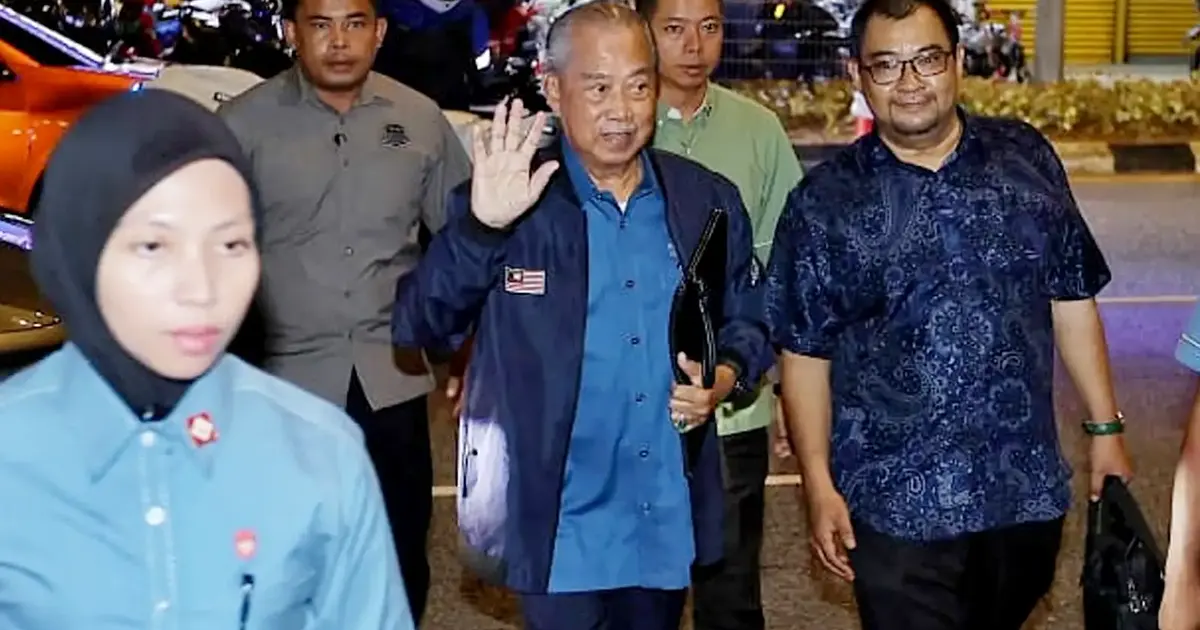
Datuk Seri Muhyiddin Yassin and senior Bersatu officials assembled for an emergency Perikatan Nasional gathering, convening at a critical juncture for the Islamist-led coalition as internal fractures threaten its coherence and parliamentary positioning. The hastily arranged session underscores mounting tensions within the political alliance, which has been increasingly fragile following recent developments that have tested the unity of its constituent parties.
The centrepiece of tonight's discussions will be determining Bersatu's future role and standing within Perikatan Nasional following PAS's definitive action to end its formal association with the party. This rupture represents a significant turning point for the coalition, as PAS has effectively repositioned itself and withdrawn the institutional backing that Bersatu had relied upon as a foundation for their joint political operations. The severance signals not merely a tactical disagreement but reflects deeper ideological and strategic divergences that have accumulated over time.
For Muhyiddin, the development presents an acute leadership challenge, as Bersatu functions as his personal political vehicle and the coalition's organisational backbone. The party chairman must navigate the competing imperatives of maintaining the alliance's structural integrity whilst protecting Bersatu's interests and political relevance. How the emergency meeting addresses this balance will determine whether Perikatan Nasional can recover its earlier momentum or faces further deterioration.
PAS's withdrawal carries substantial implications for parliamentary mathematics and legislative arithmetic. The coalition previously derived considerable voting strength from combining Bersatu's resources with PAS's numerical representation and organisational reach. Without this partnership, the alliance's capacity to support government legislation and initiatives becomes considerably constrained, potentially weakening its influence over policy direction and administrative decisions. This computational shift threatens the stability that coalition members have sought to establish.
The timing of this emergency convocation reflects the urgency party leaders perceive in the situation. Rather than allowing the PAS rupture to fester or create impression of disarray, calling an immediate gathering sends signals of proactive management and coherent strategic thinking. However, such visible emergency responses can also amplify perceptions of crisis, potentially emboldening opposition parties to test the coalition's resolve and unity on legislative votes.
For Malaysian political observers, this development illustrates the persistent volatility within opposition coalitions attempting to consolidate power. Perikatan Nasional has always struggled with internal cohesion, representing an uneasy alliance between Bersatu's secular-leaning pragmatists and PAS's Islamist base. Reconciling these fundamentally different political cultures and ideological commitments has proven consistently challenging, even when broader anti-government sentiment temporarily papered over differences. The current crisis suggests these underlying tensions have finally overcome whatever temporary alignment existed.
Regional implications also merit consideration, as Southeast Asian opposition movements increasingly rely on multi-party coalitions to counter entrenched ruling governments. The deterioration of Perikatan Nasional demonstrates the structural difficulties inherent in maintaining cross-party alliances without established institutional mechanisms for dispute resolution or ideological consensus. Other regional opposition blocs will likely study how Malaysian political actors navigate these challenges.
Bersatu's position merits particular attention, as the party has positioned itself as a bridge between traditional UMNO constituencies and Islamist voter bases represented by PAS. Losing PAS's partnership forces Bersatu to recalibrate its strategic orientation and clarify its identity within Malaysian politics. The party must determine whether it can sustain itself as an independent political force or whether it should reorient toward other coalition arrangements that might better serve its electoral prospects.
The emergency meeting will also address whether remaining Perikatan Nasional members can formulate joint responses to anticipated opposition moves. If the coalition fractures further, parliamentary minority governments become increasingly probable, introducing unprecedented instability into Malaysian legislative affairs. This scenario concerns business communities, investor groups, and international observers who value political predictability as essential for economic planning and policy consistency.
Muhyiddin's performance during these deliberations will prove crucial for his political survival and Bersatu's future trajectory. Party members and coalition partners will scrutinise whether he can devise strategies to stabilise the alliance or whether he must reluctantly acknowledge Perikatan Nasional's fundamental unviability as a governing or opposition vehicle. The decisions emerging from tonight's session may redefine Malaysian political alignment for years ahead.
Beyond immediate tactical concerns, this episode reflects broader questions about coalition governance in Malaysian democracy. Can diverse political parties with conflicting ideologies and interests sustain functional partnerships sufficient for legislative action? How do coalitions balance individual party survival instincts against collective alliance interests? These questions will intensify as political actors contemplate whether Perikatan Nasional remains strategically viable or whether constituent parties should pursue alternative political configurations.

