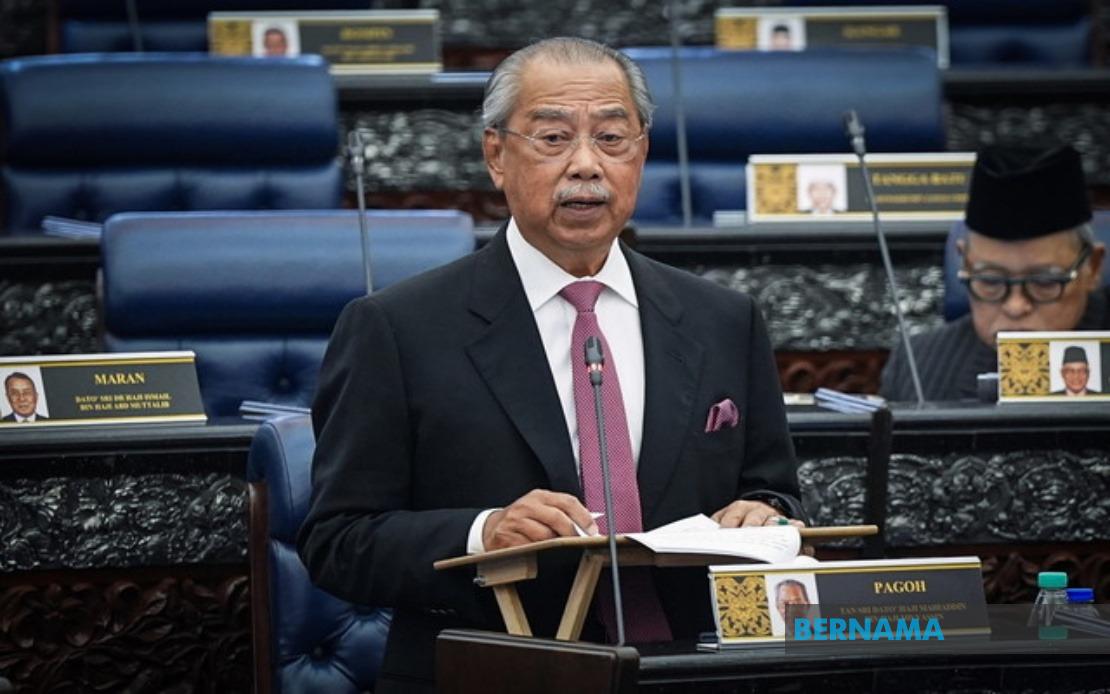
Tan Sri Muhyiddin Yassin, the Pagoh MP and former prime minister, has demanded that Malaysia's government launch a thorough and transparent forensic audit of Lembaga Tabung Haji (TH) operations and conclude the investigation within one year. His remarks came during parliamentary debate on the Royal Commission of Inquiry report into the Islamic pilgrimage fund, underscoring mounting pressure on authorities to act decisively on findings that have raised serious questions about institutional stewardship of pilgrim savings.
The governance failures documented in the RCI report, made public on July 29, form the backdrop to Muhyiddin's intervention. The inquiry established that TH sustained estimated cumulative losses ranging from RM10 billion to RM12.6 billion across the seven-year span from 2014 to 2020. These figures represent a staggering depletion of assets belonging to millions of Malaysians who depend on TH for financing their pilgrimage to Mecca. The scale of the shortfall has galvanized political figures across the spectrum to demand accountability and corrective measures.
Muhyiddin, who also serves as president of Bersatu, argued that an independent forensic audit stands as essential groundwork for establishing precisely how the fund's resources were deployed and identifying whether misconduct contributed to the losses. Such an exercise, he contended, would illuminate the pathways along which money flowed through TH's systems, expose potential fraud, detect whether officials abused their authority, and uncover instances of negligence by those entrusted with management responsibilities. He stressed that anyone determined to have inflicted financial harm on TH through any of these mechanisms must face legal consequences, signaling that he expects the government to pursue prosecutions rather than accept administrative remedies alone.
Parliamentary support for comprehensive investigation extends beyond Muhyiddin's proposal. Syed Saddiq Syed Abdul Rahman, representing MUDA in the Muar constituency, articulated a parallel initiative focused on the 14 investments specifically identified by the RCI as problematic. He advocated for establishment of a Multi-Agency Task Force that would bring together enforcement bodies including the Malaysian Anti-Corruption Commission, the Royal Malaysia Police, and the Inland Revenue Board. His argument rested on the principle that siloed investigations conducted by individual agencies would prove insufficient to untangle complex financial misconduct that typically spans multiple jurisdictions and institutional domains.
Syed Saddiq's proposal extends the investigative scope beyond TH itself, suggesting that the task force examine related cases involving other state-linked investment entities. He specifically mentioned Felda, FGV, and Eagle High as institutions warranting similar scrutiny, implying a broader pattern of asset deterioration across government-linked companies that merits coordinated examination. This signals recognition among lawmakers that TH's difficulties may reflect systemic weaknesses in how Malaysia manages state-owned enterprises and the financial intermediaries through which government funds flow.
The emphasis on forensic audits of individual problematic investments reflects growing sophistication among parliamentarians regarding investigation methodology. Rather than relying solely on conventional audits that assess compliance with accounting standards, forensic approaches actively seek evidence of intentional wrongdoing, reconstruct financial transactions in granular detail, and preserve evidentiary trails suitable for criminal prosecution. For TH specifically, such methodologies could distinguish between honest mistakes in judgment and deliberate malfeasance, a distinction carrying profound implications for how the institution recovers from its losses.
Backing these calls for coordinated action, Datuk Seri Hasni Mohammad from BN's Simpang Renggam division proposed that investigating agencies provide regular progress briefings to Parliament within clearly specified intervals. His suggestion reflects a recognition that without sustained parliamentary oversight, investigation momentum frequently dissipates and institutional memory fades as personnel change and media attention shifts elsewhere. By anchoring follow-up accountability to the legislature itself, Hasni sought to create structural incentives for thoroughness and persistence in pursuing cases emerging from the RCI findings.
Hashni advanced a further proposal for establishing continuous, bipartisan parliamentary monitoring of TH RCI recommendation implementation. This institutional framework would institutionalize oversight by positioning Parliament itself as an ongoing guardian of reform progress rather than leaving implementation responsibility solely with the government and TH management. Such an approach acknowledges the historical reality that publicly released reports frequently gather dust unless structured mechanisms ensure regular reporting to elected representatives who command media platforms and political capital to demand action.
The RCI report, which consumed considerable investigative resources and time to produce, ultimately delivered 25 recommendations for institutional improvement. As of late July, TH indicated that it had already implemented three-quarters of these recommendations, suggesting that at least some aspects of governance reform have proceeded without awaiting completion of the full forensic audit Muhyiddin now demands. This partial implementation raises questions about whether TH's corrective measures address root causes or merely cosmetic deficiencies, questions that only comprehensive financial investigation can definitively answer.
The timing of parliamentary debate on the RCI report assumes particular significance for Malaysian governance. The special sitting dedicated exclusively to examining the TH inquiry's findings represents a form of legislative engagement that emphasizes the seriousness with which Parliament regards the institution's travails. For millions of Malaysian Muslims whose savings reside with TH and whose pilgrimage plans depend on the fund's stability, such parliamentary attention translates into tangible reassurance that elected representatives recognize the scale of the crisis and intend to pursue those responsible to the full extent of legal remedies available.
For Southeast Asian observers of Malaysian institutional development, the TH episode illuminates both weaknesses and potential strengths in Malaysia's governance architecture. The inquiry process itself demonstrates that Malaysia possesses mechanisms through which serious institutional failures can be investigated at depth and findings publicly disclosed. Simultaneously, the gap between RCI report release and implementation of recommendations underscores the challenges of translating investigative findings into enforceable accountability, a problem that impedes governance improvement throughout the region.
The path forward depends substantially on whether the government acts on parliamentary calls for immediate forensic audit initiation and establishes clear institutional arrangements for coordinated investigation. The one-year completion timeline Muhyiddin proposed may prove ambitious given the complexity of transactions spanning seven years and multiple investment vehicles, but setting such deadlines creates measurable benchmarks against which to assess government seriousness. For Malaysians concerned about the fate of their pilgrimage savings and the integrity of state-managed funds more broadly, the coming months will prove pivotal in determining whether parliamentary pressure translates into sustained investigative action.

