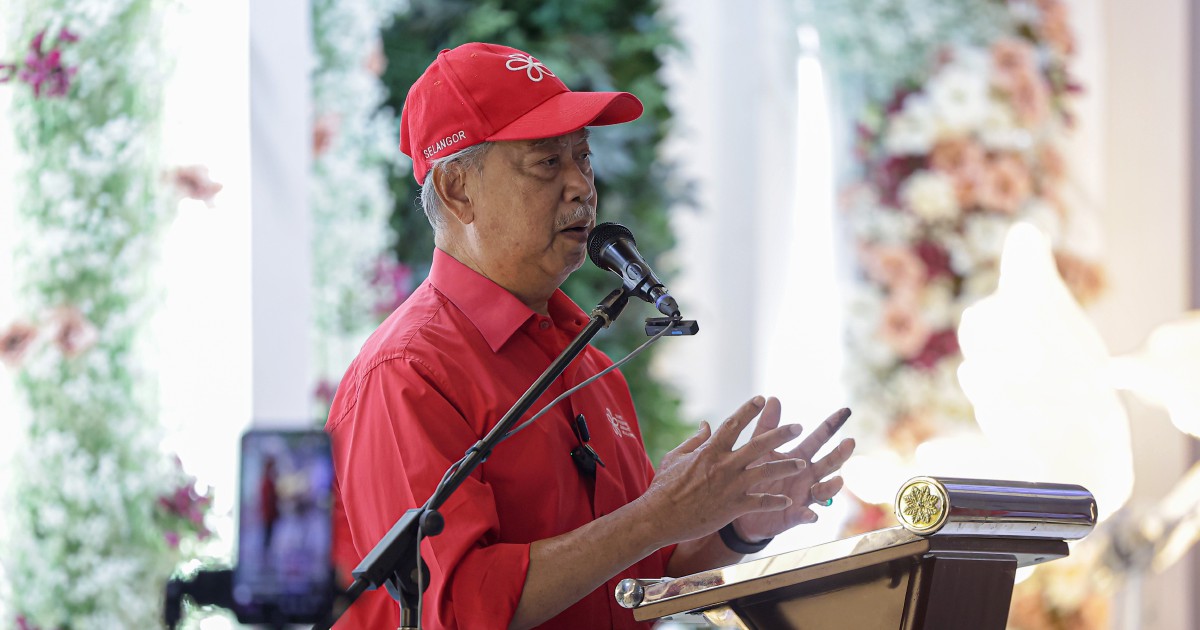
Bersatu president Tan Sri Muhyiddin Yassin has directly confronted Umno vice-president Datuk Seri Mohamed Khaled Nordin over his recent comments labelling the Bersatu party a political spoiler ahead of the Negri Sembilan state election. The sharp rebuke comes as coalition tensions surface in the competitive contest, revealing growing friction within Malaysia's ruling political structures.
Muhyiddin's forceful pushback in Seremban signals that Bersatu is determined to assert its independent political standing rather than accept a subordinate role alongside its larger coalition partners. His response underscores the delicate balance Malaysia's governing coalitions must maintain, particularly when multiple parties compete simultaneously in state-level contests. The tension reflects deeper questions about power-sharing arrangements within Barisan Nasional and its allied structures.
The dispute demonstrates how electoral mathematics can strain relationships even among formally aligned partners. Khaled's use of the term "spoiler" implies that Bersatu's participation could fragment votes and disadvantage Umno-led candidates, a concern that has surfaced repeatedly in Malaysian electoral contests where coalition parties compete directly. This criticism carries particular weight given Bersatu's role as a junior partner within the broader government coalition.
Muhyiddin's objection appears grounded in the principle that all coalition members possess equal rights to contest elections independently. By resisting Khaled's characterisation, the Bersatu president asserts that his party deserves recognition as a legitimate electoral player rather than an inconvenient complication. This stance reflects Bersatu's broader struggle for relevance and influence since its formation, particularly as it navigates relationships with the more established Umno machinery.
The Negri Sembilan election provides an important testing ground for coalition dynamics in the current political environment. The state contest carries significance beyond its immediate territorial scope, signalling how power-sharing arrangements may function in future elections across Malaysia. The visible tension between Bersatu and Umno leadership during campaigning may influence voter perceptions of coalition stability and internal cohesion.
Historically, Malaysian electoral coalitions have grappled with the challenge of accommodating multiple parties with competing territorial and organisational interests. The Barisan Nasional system was designed to allow such arrangements, yet contests like Negri Sembilan inevitably surface questions about resource allocation, seat distribution, and which party ultimately benefits from joint campaigning. These tensions remain largely unresolved structural problems within Malaysian coalition politics.
For Malaysian voters, particularly in Negri Sembilan, the public disagreement between coalition leadership carries practical implications. When senior figures from allied parties criticise each other's electoral legitimacy, it raises doubts about the coherence of their joint platform and the reliability of their campaign promises. Voters must evaluate whether coalition partners genuinely share policy objectives or merely tolerate each other for electoral convenience.
Muhyiddin's response also reflects Bersatu's broader strategic position within Malaysian politics. As a relatively new entrant in the established party system, Bersatu faces constant pressure to prove its viability and distinguish itself from competitors. Every election provides opportunity to demonstrate organisational capacity and voter appeal, making Khaled's "spoiler" description particularly damaging to Bersatu's image and political standing.
The timing of this dispute matters significantly within the electoral calendar. Public bickering during active campaigning can undermine both parties' messaging and give opposition groups ammunition to question coalition reliability. For Negri Sembilan voters considering their choices, such visible tensions may complicate their assessment of what a coalition government actually represents in terms of unified governance.
The clash also highlights how Malaysia's political landscape has evolved since earlier periods of tighter coalition discipline. Contemporary Malaysian politics increasingly sees junior coalition partners asserting independence and refusing subordinate roles, even when such assertions create public friction. This shift reflects changing dynamics in Malaysian electoral politics and the rise of multipolar competition within ruling coalitions.
Muhyiddin's robust defence of Bersatu's candidacy suggests the party leadership sees the Negri Sembilan election as a critical opportunity to strengthen its position and establish itself as indispensable to Malaysian governance. Whether Bersatu's participation ultimately strengthens or complicates the ruling coalition's electoral performance remains an open question with broader implications for future electoral arrangements and power-sharing agreements across Malaysian states.

