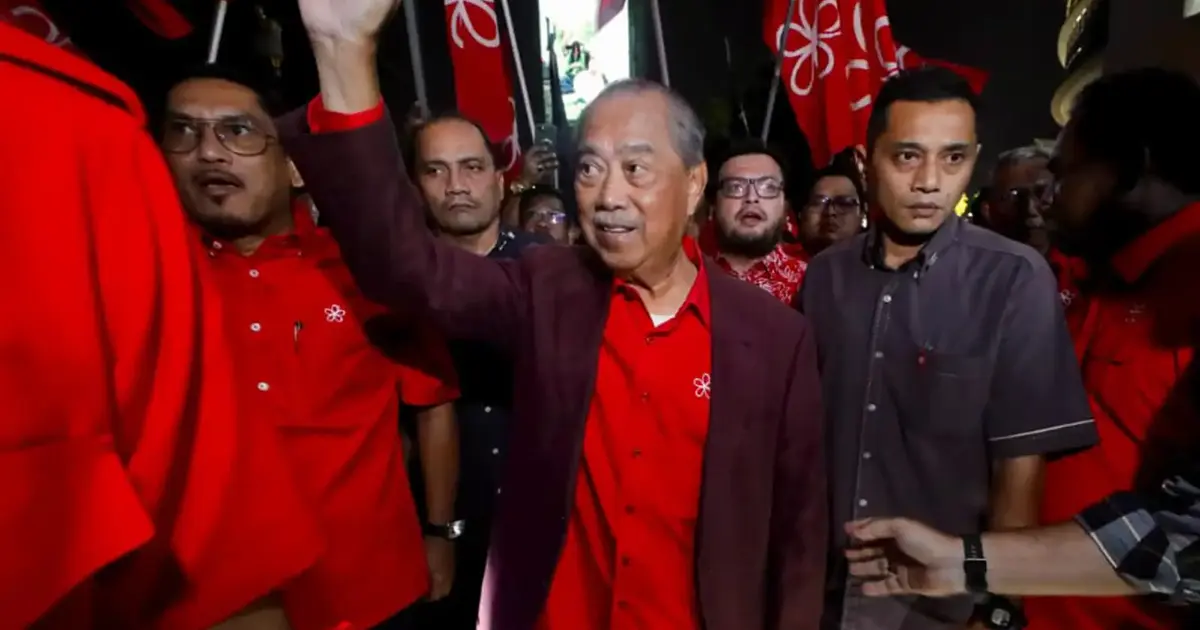
Muhyiddin Yassin has consolidated party backing with a display of grassroots support from over 200 Bersatu members, positioning himself strategically ahead of a significant internal meeting that will chart the party's direction on multiple fronts. The rally underscores the continued strength of Muhyiddin's faction within Bersatu and signals party unity as the organisation navigates a complex political landscape in Malaysia's domestic arena.
The gathering takes on heightened significance given the agenda awaiting discussion at the forthcoming Bersatu assembly. Party deliberations are expected to centre on campaign preparation for two crucial state elections in Johor and Negeri Sembilan, contests that carry substantial weight in determining Bersatu's electoral viability and relevance in Malaysia's federal political structure. These contests represent an immediate test of party organisation and voter appeal in key regions.
Johor holds particular strategic importance in Malaysian politics, being the nation's most populous state and a traditional battleground where state-level outcomes often influence national sentiment. Success or setback in the state will reverberate through Bersatu's membership and potentially affect the party's positioning ahead of future federal contests. Negeri Sembilan, meanwhile, offers Bersatu an opportunity to demonstrate competitiveness in the central region and stake claims to viable governance credentials outside its traditional strongholds.
The mobilisation of over 200 supporters reflects Muhyiddin's efforts to demonstrate command and unity within Bersatu, a party that has experienced internal tensions and leadership questions since its formation. The public display of backing serves a dual purpose: it reinforces Muhyiddin's authority within party structures while sending signals to coalition partners and political rivals about the depth of organisational loyalty he commands. Such shows of strength are carefully calculated moves in Malaysia's intricate factional politics.
Beyond electoral preparation, the meeting agenda encompasses assessment of Bersatu's relationship with PAS, the Pan-Malaysian Islamic Party. This partnership has proven instrumental in shaping Bersatu's political alliances and electoral calculations, particularly in states where PAS commands significant influence and organisational capacity. The nature of this partnership—whether cooperative, competitive, or strained—directly impacts both parties' strategic options and their collective ability to influence government formation at state and federal levels.
The relationship between Bersatu and PAS carries particular importance for Malaysian politics because it reflects broader dynamics within Malay-Muslim political movements. How these two parties navigate their partnership determines not only their individual prospects but also shapes the broader political configuration affecting the prime minister's coalition arrangements and the stability of any future government. The meeting will likely produce strategic guidance on how Bersatu manages this partnership in the upcoming state elections.
For Southeast Asian observers, Bersatu's internal dynamics and electoral preparations carry relevance beyond Malaysia's borders. The party's fortunes influence regional political stability, as Malaysia remains a significant economic and geopolitical actor in Southeast Asia. Electoral outcomes and coalition shifts within Malaysia can affect regional engagement and bilateral relationships with neighbouring countries. The Johor and Negeri Sembilan contests thus merit attention from those tracking regional political developments.
Muhyiddin's consolidation of party backing also comes against a backdrop of Malaysian politics' inherent fluidity, where factional movements and coalition recalibrations occur frequently. His ability to mobilise over 200 supporters demonstrates that despite Bersatu's relatively recent formation and the party's modest electoral footprint compared to larger established players, Muhyiddin retains substantial organisational support. This grassroots strength may prove crucial in internal party contests or in negotiations with coalition partners regarding candidate selection and resource allocation.
The timing of the rally and subsequent meeting reflects standard political practice in Malaysia, where parties conduct internal consultations ahead of significant electoral campaigns. These gatherings serve to align membership with party direction, build momentum among activists, and ensure organisational readiness for the campaign phase. For Bersatu, such mobilisation efforts are particularly important given the competitive nature of contemporary Malaysian elections and the need to efficiently deploy limited party resources.
The forthcoming meeting will likely produce statements regarding campaign strategies, candidate nominations for both state contests, and refined positioning on issues expected to dominate electoral discourse. Bersatu's messaging in these state elections will probably emphasise governance competence, Islamic governance credentials where relevant, and distinct differentiation from competing coalitions. The party's success will partially depend on how effectively it communicates its value proposition to Johor and Negeri Sembilan electorates.
For Malaysian voters and political analysts, the Bersatu meeting outcomes will provide valuable indicators regarding coalition stability, party direction on key policy issues, and the likely competitiveness of these two state contests. The meeting represents a moment where party elites attempt to forge consensus around strategic direction—a process that, if managed poorly, could expose internal divisions or generate dissatisfaction among membership. Conversely, smooth deliberations with clear outcomes strengthen party cohesion heading into campaign phases.