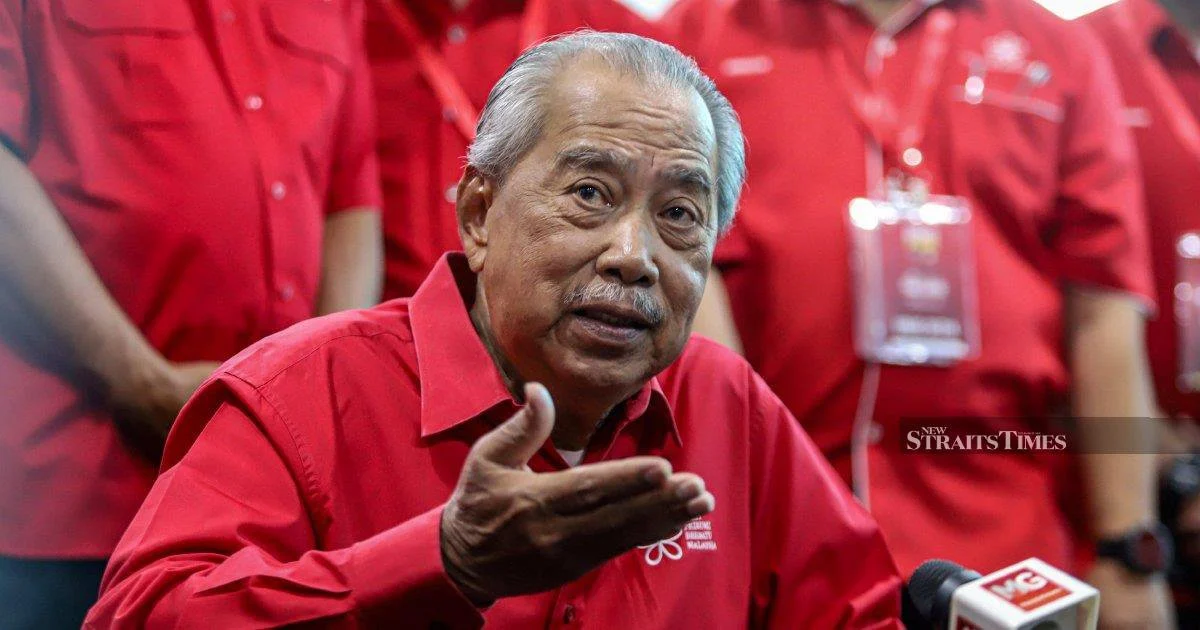
Bersatu will remain an integral part of the Perikatan Nasional coalition for the foreseeable future, according to party president Tan Sri Muhyiddin Yassin, who moved to quell mounting speculation about potential realignments in Malaysia's fractious political landscape. The declaration, made in Kuala Lumpur, underscores Bersatu's commitment to maintaining its position within the opposition bloc at a time when coalition dynamics across the country are shifting and internal tensions within various groupings continue to surface.
The Perikatan Nasional coalition, which has served as the primary opposition vehicle since the 2022 election, encompasses several political parties with varying ideological orientations and regional strongholds. Bersatu's continued participation remains significant because the party controls several parliamentary seats and commands influence particularly in the northern regions, making its stability crucial to PN's overall cohesion. Muhyiddin's emphatic reassurance appears designed to project unity at a moment when political observers have questioned whether coalition members might pursue alternative arrangements or realignments.
Speculation over coalition futures has become increasingly common across Malaysia's political ecosystem, where parties frequently reassess their positions based on electoral prospects, leadership changes, and shifting public sentiment. The Perikatan Nasional, despite its relatively recent formation, has faced periodic questions about its longevity and the strength of commitments binding member parties. Muhyiddin's use of language suggesting permanence—describing Bersatu's tenure as lasting "forever"—attempts to project confidence in institutional continuity during a period when political realignments remain possible.
Bersatu itself has experienced significant transformations since its establishment, having begun as a Bumiputera-focused party before expanding its political reach. The party's position within Perikatan Nasional reflects its strategic choice to align with other opposition-oriented groups rather than pursue isolated parliamentary representation. This coalition strategy has provided Bersatu with platforms for influencing national discourse on multiple policy areas while maintaining leverage in state-level political negotiations.
The timing of Muhyiddin's statement merits consideration against the backdrop of broader Malaysian political developments. Regular shuffling and repositioning among Malaysia's political parties has become characteristic of contemporary governance, with MPs and even entire party blocs occasionally switching allegiances or reorganising their coalitional arrangements. Against this fluid backdrop, explicit commitments to existing coalitions serve symbolic functions in reassuring both internal party members and external observers about leadership stability and strategic direction.
Regional implications of PN's stability extend beyond Malaysia's borders, particularly for Southeast Asian observers monitoring how opposition coalitions function and develop institutional resilience. The bloc's ability to maintain internal cohesion while presenting itself as a viable alternative government carries lessons for democratic development across the region. Perikatan Nasional's performance as a coalition—whether it demonstrates functional cooperation or succumbs to fragmentation—influences broader narratives about multi-party systems in Southeast Asia.
Bersatu's parliamentary representation, while modest in absolute terms, gains significance when considered as part of PN's collective strength. The party's electoral base remains concentrated in specific geographic areas, particularly Peninsular Malaysia's northern corridor, where local governance and state-level politics create opportunities for political influence that transcend federal parliamentary calculations. Maintaining coalition coherence preserves these regional positions and the networks through which Bersatu exercises political agency.
Muhyiddin's position as Bersatu president carries particular weight given his prior experience as Prime Minister and his prominent role in shaping PN's initial formation and trajectory. His pronouncements on coalition matters therefore carry both institutional authority and historical resonance within the party. The emphatic nature of his reassurance suggests awareness that uncertainty about Bersatu's political future could undermine party morale or create openings for dissident voices questioning coalition alignment decisions.
Political commentators in Malaysia have noted that coalition stability frequently depends less on formal agreements than on shared interests among member parties and leaders' commitment to maintaining unity despite inevitable disagreements. The Perikatan Nasional encompasses parties with distinct constituencies and policy preferences, creating potential friction points that require ongoing management and negotiation. Muhyiddin's declaration of unwavering commitment implicitly acknowledges these tensions while asserting that mechanisms exist to manage internal differences constructively.
The broader Malaysian political environment continues evolving as new electoral calculations emerge and demographic changes influence voting patterns. For opposition coalitions like PN, demonstrating institutional permanence becomes strategically valuable in attracting potential allies and retaining existing members' confidence. Muhyiddin's framing of Bersatu's relationship to PN as essentially permanent helps establish the coalition itself as a fixture in Malaysia's political structure rather than a temporary expedient.
Looking forward, the test of such commitments will emerge through actual political behaviour during upcoming state elections and the eventual national electoral cycle. Coalition statements about loyalty and permanence require validation through consistent action and demonstrated willingness to prioritise collective interests over individual party advantage. For Malaysian observers and regional political analysts tracking opposition coalition dynamics, monitoring whether parties honour such declarations provides crucial insights into institutional development within Southeast Asia's democracies.

