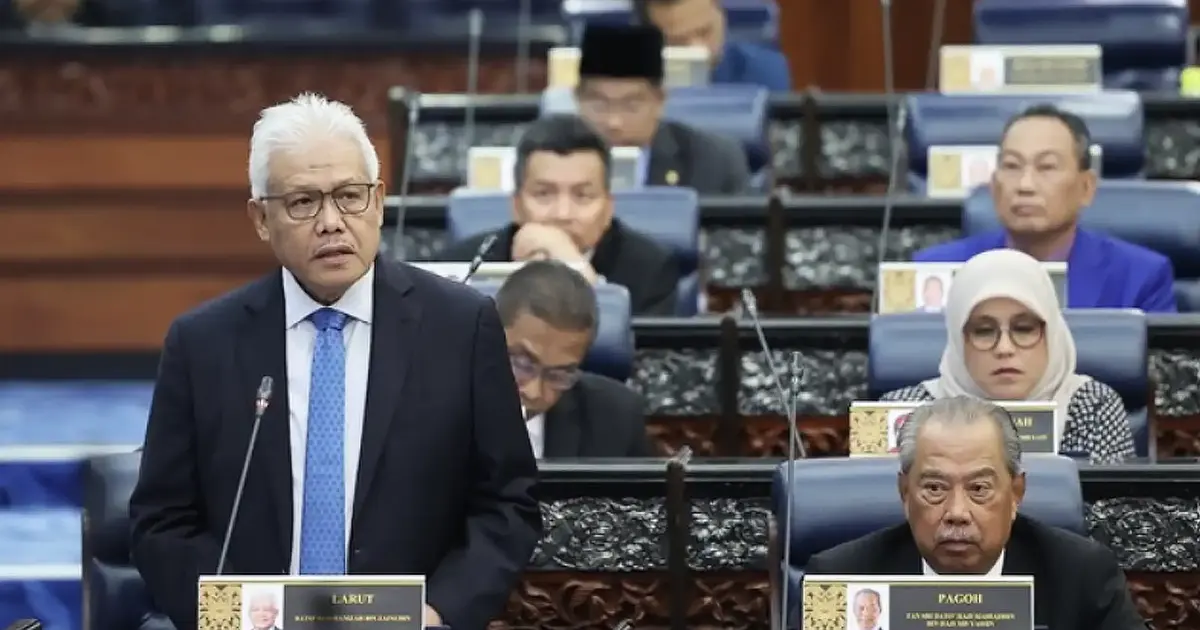
Dewan Rakyat Speaker Johari Abdul has disclosed that former Prime Minister Muhyiddin Yassin approached him with a request to alter his seating arrangement within the chamber, marking a notable development in parliamentary proceedings. The speaker's revelation comes as he simultaneously confirmed receiving official documentation designating Larut MP Hamzah Zainudin as the recognised opposition leader, a position that carries significant procedural and political weight in Malaysia's legislative body.
Parliamentary seating assignments carry deeper significance than mere physical placement within the Dewan Rakyat. The allocation of seats traditionally reflects political alignments, factional groupings, and institutional hierarchy within the legislature. Muhyiddin's request to change his seating position suggests potential shifts in his political positioning or factional alliances, though the specific motivations behind his appeal remain undisclosed. Such requests, while uncommon at the level of senior parliamentarians, do occur when members seek to realign themselves with different parliamentary groupings or distance themselves from particular political arrangements.
The timing of Muhyiddin's seating request warrants attention given the broader context of Malaysian politics. As a former prime minister who previously led Perikatan Nasional, Muhyiddin's parliamentary movements tend to carry symbolic weight within the legislature. Changes in his physical positioning within the chamber can signal important shifts in his political strategies or relationships with other parliamentary factions, particularly as coalition arrangements remain fluid in Malaysia's post-2018 political landscape.
Simultaneously, Speaker Johari Abdul's confirmation of Hamzah Zainudin's role as opposition leader represents formal institutional recognition of critical importance. The opposition leader position carries defined privileges and responsibilities under parliamentary standing orders, including priority speaking rights during debates, responsibility for articulating opposition positions, and formal recognition in all parliamentary procedures. Hamzah's appointment as opposition leader reflects the consolidation of opposition-aligned parties under a unified leadership structure, providing clearer parliamentary configuration despite Malaysia's often fractious political environment.
Hamzah Zainudin's elevation to opposition leader status marks a significant development for his political career and for the Larut constituency he represents in Perak. As an MP from the opposition bloc, his formal designation as opposition leader positions him as the principal parliamentary spokesperson and strategist for opposition-aligned members. This responsibility encompasses coordinating opposition questioning during government ministers' time, directing opposition amendments to legislation, and providing consistent parliamentary counter-narratives to government policy announcements.
The formal letter received by Speaker Johari Abdul confirming Hamzah's designation suggests formal procedures were followed in his appointment, likely involving coordination among opposition-aligned parties and adherence to parliament's established protocols for recognising opposition leadership. This documentation serves as the official basis for Hamzah's standing in parliamentary interactions with government, the speaker, and administrative personnel within the Dewan Rakyat.
For Malaysian parliamentarians and observers, these developments underscore the ongoing organisational evolution within the legislature. Opposition consolidation around a single recognized leader potentially strengthens opposition effectiveness in parliamentary proceedings, enabling more coordinated questioning and policy critique. Conversely, individual parliamentarian movements like Muhyiddin's seating adjustment may indicate evolving political calculations about alignment and influence within the chamber.
The speaker's role in managing both these developments—accommodating Muhyiddin's seating request while formally recognizing opposition leadership—reflects the administrative dimension of parliamentary operations. While the speaker maintains political neutrality in formal roles, managing seating arrangements and institutional designations requires navigating requests from senior parliamentarians while maintaining overall legislative orderliness and established protocols.
For Southeast Asia's broader democratic context, these parliamentary mechanics illustrate how Malaysia's legislature manages factional competition and political realignments. Unlike more rigidly aligned legislatures in the region, the Dewan Rakyat must continuously adapt to shifting political coalitions and individual parliamentarian repositioning. The flexibility demonstrated through accommodating Muhyiddin's request and formalizing opposition leadership reflects institutional resilience in managing Malaysia's complex multiparty democracy.
Moving forward, attention will focus on whether Muhyiddin's seating change precipitates broader parliamentary realignment or remains a discrete administrative adjustment. Meanwhile, Hamzah Zainudin's formal recognition as opposition leader provides clearer institutional structure for opposition activities, potentially enabling more effective parliamentary oversight and alternative policy articulation during legislative sessions and committee work.

