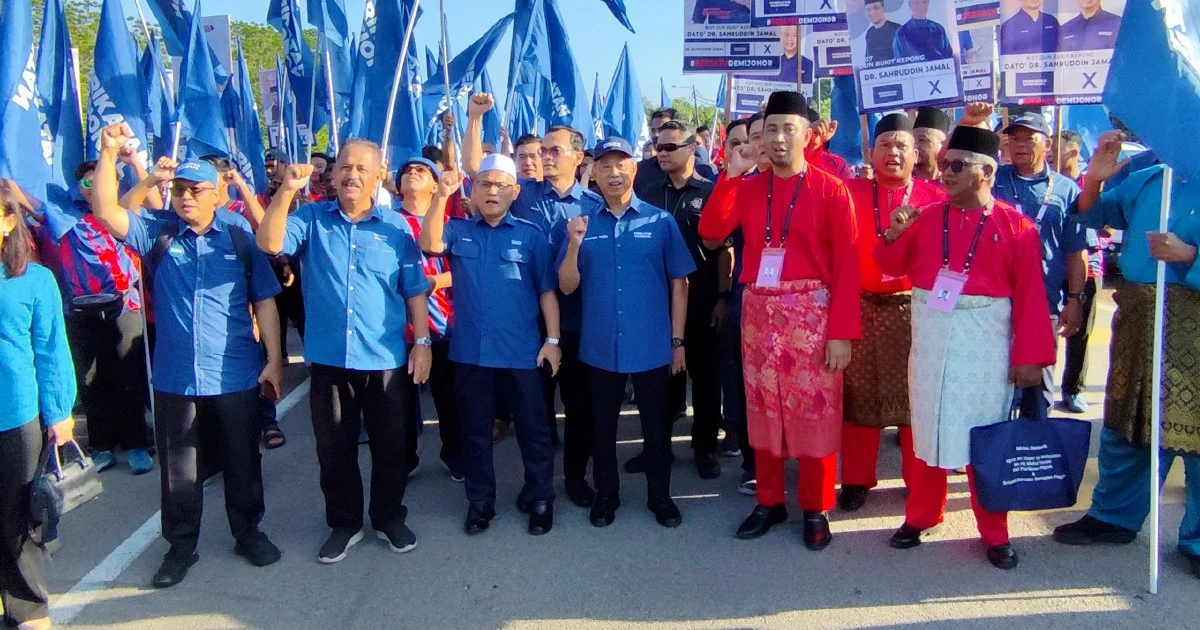
Tan Sri Muhyiddin Yassin, the president of Bersatu, demonstrated his personal involvement in the party's campaign strategy by arriving at the Pagoh Sports Complex Hall during the nomination process early Wednesday morning. His appearance at 8.45 am underscored the importance Bersatu is placing on the Bukit Kepong contest, one of several battlegrounds that will shape the political landscape in Johor as the state heads to the polls.
The decision by the party leadership to be present alongside candidate Sahruddin during the crucial nomination day carries considerable symbolic weight. In Malaysian politics, such high-profile show of unity from top party figures typically signals both confidence in the candidate's viability and the strategic importance attributed to that particular seat. For Bersatu, which has positioned itself as a centrist force in the broader coalition arrangements that dominate contemporary Malaysian politics, securing Bukit Kepong would represent a meaningful consolidation of its electoral footprint in the southern state.
Muhyiddin's hands-on approach to campaign matters reflects broader dynamics within Bersatu as the party seeks to maintain relevance within an increasingly fragmented political marketplace. The Pekan member has long been instrumental in shaping the party's direction since its founding, and his willingness to participate in grassroots nomination activities suggests the party hierarchy views the Johor contest as consequential to its medium-term prospects. For voters in the region, the presence of a senior national political figure at local nomination events often indicates which contests parties regard as genuinely competitive or strategically valuable.
Bukit Kepong, as a constituency, occupies a particular niche within Johor's electoral map. The seat encompasses areas with mixed demographic composition, blending rural communities with increasingly urbanized zones. This characteristic makes it precisely the kind of marginal or semi-marginal seat where party machinery, organizational groundwork, and candidate credibility can determine electoral outcomes. The presence of Muhyiddin during nomination procedures sends a message to party workers and supporters that Bersatu intends to contest aggressively in this division rather than concede ground to competitors.
The timing of the Johor election itself occurs within a broader context of heightened political activity across Malaysia. State-level contests have assumed greater prominence as coalition partners and rival blocs vie for advantages that could influence the composition of the federal parliament and the distribution of ministerial positions. Johor, as one of Malaysia's largest states by population and economy, carries disproportionate weight in these calculations. A strong performance or disappointing result in the state could ripple through national political calculations in unexpected ways.
Bersatu's positioning within the current political alignments adds another layer of complexity to its campaign in Johor. The party emerged from internal tensions within the United Malays National Organization and has navigated various coalition arrangements with both Pakatan Harapan and other groupings. This fluid political positioning means that success in state-level contests becomes important not merely for immediate governance outcomes but also as evidence of the party's capacity to deliver votes to whichever national coalition it may be allied with at any given moment.
The nomination process itself represents a formal threshold in Malaysian electoral contests. Candidates must be formally nominated by party officials and assessed for eligibility by returning officers before they can legally contest a seat. The presence of senior party figures during this administrative procedure serves multiple purposes simultaneously: it draws media attention to the candidate and constituency, demonstrates organizational competence to rival parties, and provides opportunities for candidates to articulate their platforms before supporters gathered at the nomination centre.
Sahruddin's candidacy in Bukit Kepong comes with expectations that Bersatu will mobilize its organizational capabilities effectively. Party candidates in any election benefit substantially from visible backing by national leaders, particularly when those leaders enjoy name recognition and credibility within their respective communities. Muhyiddin's appearance therefore functions as a form of indirect endorsement and encouragement to party machinery to dedicate resources and effort toward securing victory in this constituency.
For Malaysian voters interested in state-level politics, the appearance of national party leaders at local events offers insights into electoral prioritization and campaign resource allocation. Constituencies that attract visits from senior figures often receive greater party investment in campaign materials, volunteer coordination, and candidate support. The Johor election has attracted significant national attention because of its implications for broader political alignments, and individual constituencies within the state that attract top-level interest frequently become focal points for intensive ground campaigns.
The weeks leading up to the Johor election will witness intensified activity as parties mobilize their grassroots networks and candidates seek to connect with voters on local issues. Nomination day marks the formal commencement of this competitive process, and Muhyiddin's presence at Pagoh signals that Bersatu intends to contest across the state with energy and commitment, positioning itself competitively in constituencies like Bukit Kepong where outcomes remain genuinely uncertain.

