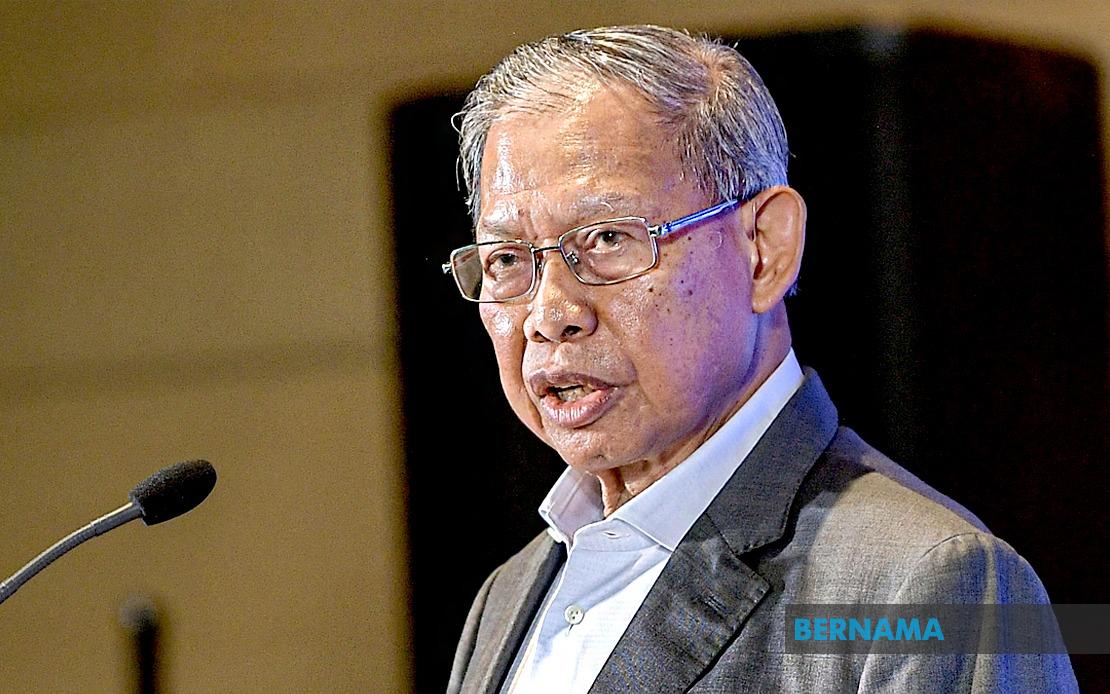
Datuk Seri Mustapa Mohamed has firmly closed the door on his electoral career, declaring at a celebration in Pasir Mas that he will not stand as a candidate in the 16th General Election. The former Jeli Member of Parliament's announcement signals a significant generational shift within UMNO's ranks, as one of the party's most experienced political operators steps back from frontline competition to make room for the next wave of leaders.
At 76 years old, Mustapa acknowledged that his physical condition no longer permits the demands of active campaigning and parliamentary duty. Speaking candidly to reporters following a "Welcome Home" event and Independence Month celebration organised by the Council of Former Kelantan Elected Representatives, he reflected on the natural limits that come with age and the responsibility this places on established politicians to recognise emerging talent. His remarks carried both a personal admission of declining stamina and a broader philosophical stance about party renewal.
Mustapa's decision carries particular weight given his senior standing within UMNO's institutional memory. As a former Minister of International Trade and Industry, his career spanned decades of Malaysian economic policymaking and diplomatic engagement. His withdrawal from electoral contests represents a rare moment of graceful succession planning in Malaysian politics, where senior figures often contest elections well into their twilight years or cling to advisory positions that limit younger colleagues' advancement.
The politician rejoined UMNO in June of this year after a five-year hiatus spent with Bersatu, a party he had joined in September 2018 during the turbulent period following the 2018 general election. His return to UMNO underscores the party's continuing appeal as a political home for experienced hands seeking to influence its strategic direction, even as they step back from electoral competition. This dual movement—rejoining UMNO while simultaneously exiting electoral politics—reveals a nuanced approach to remaining engaged without monopolising opportunity.
Rather than vanishing from public life entirely, Mustapa intends to channel his expertise into mentoring roles and knowledge-sharing arrangements. He explicitly stated his commitment to supporting younger colleagues through guidance, strategic counsel, and the transmission of institutional wisdom accumulated over decades in senior government positions. This model of elder statesmanship represents an alternative pathway for senior politicians seeking continued relevance without blocking the advancement of promising successors.
Beyond party structures, Mustapa plans to leverage academic platforms to extend his influence and contribute to Malaysia's intellectual discourse on economics and governance. He indicated his intention to engage with students at both public and private universities, positioning himself as a knowledge broker between government experience and academic enquiry. This educational dimension adds another layer to his vision of constructive retirement, transforming his experience into teaching material for emerging Malaysian leaders across multiple institutions.
His emphasis on physical capacity and generational fairness strikes a different note than the often-acrimonious succession narratives that characterise Malaysian politics. Rather than framing younger leadership as a threat to established networks or presenting his withdrawal as reluctant, Mustapa framed it as a moral imperative. The phrase "it would be unfair for any party not to recognise the role of young people" suggests a principled position that transcends tactical calculation.
For UMNO specifically, Mustapa's graceful exit carries strategic implications. The party faces pressure to refresh its image and appeal to younger voters who have shown increasing scepticism towards traditional power structures. His public endorsement of youth leadership and his own withdrawal create space for regeneration while maintaining institutional continuity through his advisory contributions. This balancing act addresses a fundamental challenge facing established political parties in Malaysia: how to integrate new talent without alienating experienced operators whose networks and knowledge remain valuable.
The timing of this announcement, made during an Independence Month celebration, also carries symbolic resonance. It positions generational renewal as part of Malaysia's broader national narrative of progress and development. Mustapa's language—invoking Malaysia's "excellence" and linking it to younger leadership—frames succession not as a loss but as a prerequisite for national advancement. This framing may influence how other senior UMNO figures approach their own transitions, potentially normalising earlier retirements from electoral competition.
Mustapa's public commitment to continued contribution without electoral competition also addresses a persistent challenge in Malaysian politics: the tendency for senior figures to maintain tight control over party resources and opportunities regardless of their active participation. By committing himself to mentoring and academic engagement, he provides an example of how experienced politicians can remain influential without occupying the electoral positions that younger candidates need to build their political capital and experience.
The statement also reflects broader demographic pressures within UMNO and Malaysian politics more generally. As the party's traditional voter base ages, the organisation faces pressure to demonstrate dynamism and forward-looking vision. Mustapa's positioning of youth leadership as both inevitable and desirable may help frame demographic succession as strategic necessity rather than demographic defeat.
Looking ahead, Mustapa's role as an intellectual and advisory resource rather than electoral candidate could shape how UMNO develops policy positions on trade, economics, and regional engagement—areas where his ministerial background provides relevant expertise. His academic contributions may also influence how the next generation of UMNO leaders approaches governance and policy formulation, suggesting that his influence may extend beyond party meetings into universities and public discourse.
Ultimately, Mustapa Mohamed's declaration represents a deliberate choice to transition from power-holding to knowledge-sharing, from electoral competition to mentorship, and from physical participation to intellectual contribution. Whether this model gains traction among other senior Malaysian politicians remains to be seen, but his example demonstrates that meaningful political engagement need not depend on regular electoral validation or ministerial office.

