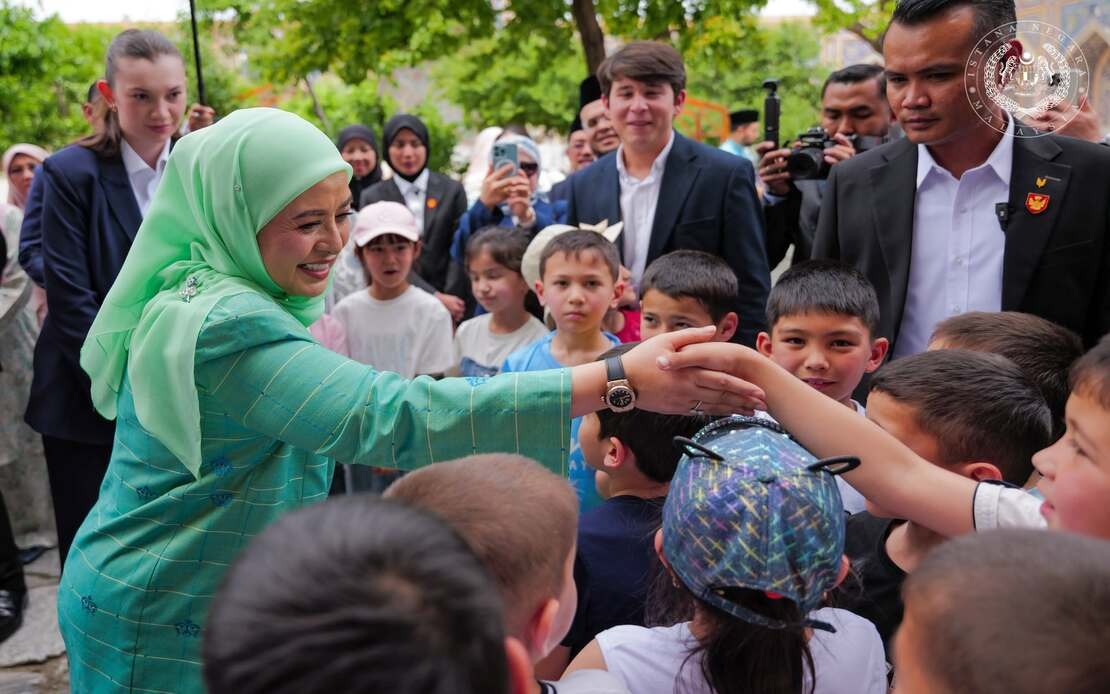
Malaysia's commitment to social cohesion rests fundamentally on mutual respect among its diverse communities, according to Her Majesty Raja Zarith Sofiah, Queen of Malaysia. Speaking through an official statement shared on Sultan Ibrahim Sultan Iskandar's Facebook page this week, the Queen articulated how this principle has long anchored the nation's stability and collective well-being, serving as a unifying force across the country's multicultural landscape.
The Queen's remarks carry particular significance given Malaysia's ongoing navigation of religious and cultural pluralism. By positioning mutual respect as a foundational value rather than merely aspirational rhetoric, Her Majesty underscores how this principle transcends ceremonial significance and operates as a practical necessity for sustaining peaceful coexistence. The emphasis on both domestic and international dimensions suggests an understanding that social harmony cannot exist in isolation—it requires consistent reinforcement through interactions at community, national, and global levels.
In grounding her message within Islamic tradition, the Queen referenced a hadith recorded in Sahih Al-Bukhari, one of Islam's most authoritative hadith collections. The teaching, attributed to Prophet Muhammad through Abu Hurairah, encapsulates three interconnected virtues: avoiding harm to neighbours, honouring guests, and maintaining ethical speech. This theological framework provides Malaysian Muslims with explicit religious grounding for practicing tolerance and courtesy, demonstrating how Islamic values align with Malaysia's constitutionally enshrined commitment to pluralism.
The specific hadith quoted emphasises restraint and ethical conduct as expressions of faith. Prophet Muhammad's instruction that believers must either speak good or remain silent addresses the contemporary challenge of discourse in an increasingly connected society. For Malaysians navigating social media platforms and diverse public spaces, this classical teaching offers guidance on how religious conviction should inform daily interactions—a timely reminder amid occasional instances of communal tension. The Queen's invocation of this particular hadith signals that religious adherence and social responsibility are complementary rather than opposing forces.
Her Majesty illustrated her commitment to these principles through a personal anecdote from February, when she engaged warmly with more than 100 international tourists visiting Istana Negara's main entrance. This encounter exemplifies how mutual respect operates in practice—through genuine hospitality extended to visitors regardless of their background or faith. The graciousness demonstrated reflects a deliberate messaging that Malaysia, as a nation, welcomes global engagement while maintaining its cultural identity. For tourists and international observers, such moments shape perceptions of Malaysia as an inclusive destination.
The Queen's engagement with foreign visitors carries diplomatic weight often overlooked in casual analysis. Tourism represents a significant economic sector for Malaysia, and perceptions of hospitality directly influence travel patterns and international business confidence. By personally demonstrating warmth toward visitors, the Queen reinforces Malaysia's position as a welcoming nation while simultaneously modelling the courteous behaviour she advocates. This convergence of cultural, religious, and economic dimensions illustrates how personal conduct by national figures communicates values beyond symbolic gestures.
For Southeast Asia more broadly, Malaysia's emphasis on mutual respect addresses regional concerns about rising polarisation and identity-based tensions. Neighbouring countries confronting similar challenges of religious diversity and rapid social change find relevance in Malaysia's institutional commitment to pluralism. The Queen's message, delivered through official channels, indicates that Malaysia's leadership views social cohesion not as a static achievement but as a continuously cultivated practice requiring regular reinforcement from all levels of society.
The principle articulated resonates particularly with younger Malaysians navigating an increasingly complex social environment. Digital connectivity has created unprecedented opportunities for cross-cultural dialogue but also new vectors for misunderstanding and conflict. The Queen's stress on courtesy and thoughtful speech addresses this contemporary reality, suggesting that traditional values remain applicable to modern challenges. For organisations and communities seeking to build inclusive spaces, Her Majesty's message provides authoritative endorsement for investing in respectful engagement practices.
The reference to both Muslim and non-Muslim audiences in the official statement signals an inclusive interpretation of these virtues. While the Queen specifically reminded Muslims of Islamic teachings, the framing suggests these principles operate as universal foundations for Malaysian society rather than sectarian values. This approach reinforces the constitutional framework of Malaysia, where Islam holds a special position while religious freedom and minority rights receive constitutional protection. The Queen's rhetoric bridges these seemingly competing frameworks by emphasising shared ethical commitments.
Implementing mutual respect at institutional and community levels requires more than rhetorical commitment. The Queen's statement implicitly calls for translation of these ideals into concrete practices—in workplaces, schools, religious institutions, and governance structures. Malaysian organisations increasingly recognise that diversity initiatives succeed only when underpinned by genuine respect rather than compliance-driven frameworks. Her Majesty's intervention provides moral authority for such efforts and legitimises investment in respectful workplace and community cultures.
The timing of these remarks, articulated during a period when Malaysia continues developing its post-pandemic social fabric, underscores the ongoing relevance of foundational values. As economic pressures and social frustrations occasionally resurface in public discourse, reminders of shared commitments to mutual respect serve important stabilising functions. The Queen's intervention thus operates simultaneously as spiritual guidance, diplomatic messaging, and practical advocacy for Malaysia's continued social cohesion.

