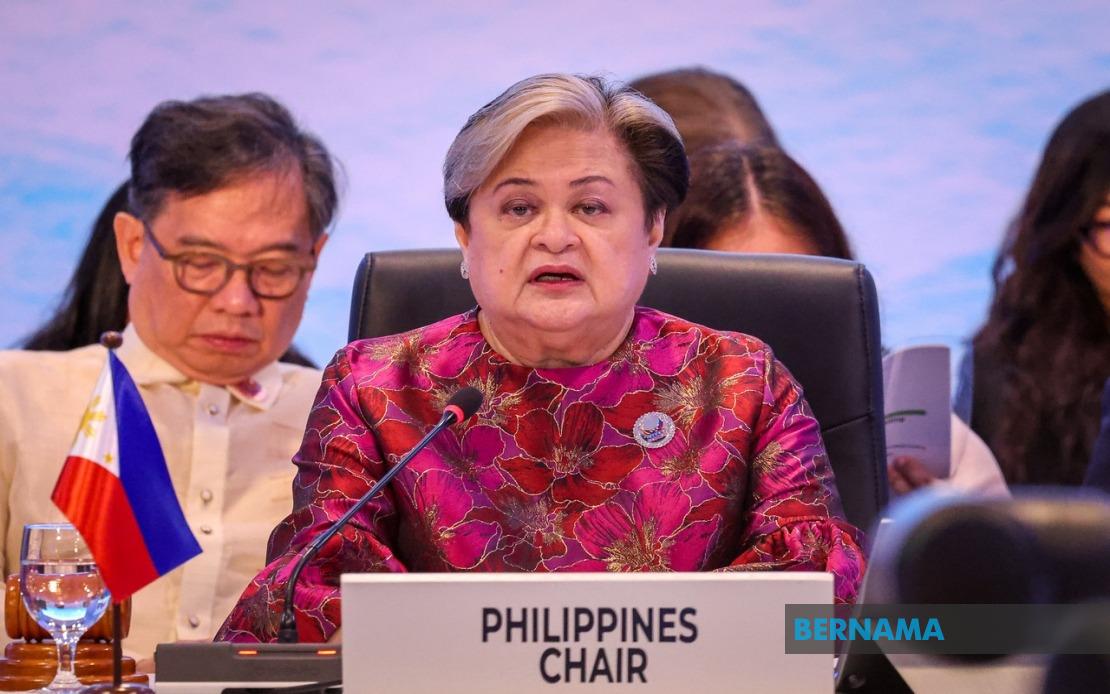
Myanmar's path back into ASEAN's formal diplomatic structures remains uncertain and likely distant, according to Philippine Foreign Secretary Ma. Theresa Lazaro, who used the 59th ASEAN Foreign Ministers' Meeting in Pasay City to candidly assess the stalled situation. Speaking to reporters following Thursday's gathering, Lazaro emphasised that questions persist regarding whether the Myanmar military regime has genuinely committed to implementing the Five-Point Consensus—the regional blueprint that ASEAN agreed upon in 2021 as its primary mechanism for steering the country through its ongoing political turmoil.
The Five-Point Consensus emerged after the February 2021 coup as ASEAN's measured diplomatic response, calling for an immediate cessation of violence, dialogue between all parties, mediation by an ASEAN envoy, provision of humanitarian aid, and a visit by that envoy to Myanmar. However, nearly four years later, progress has stalled, with the junta resisting external pressure and ethnic armed organisations controlling substantial territory. Lazaro's sceptical assessment reflects broader frustration within ASEAN capitals that despite multiple rounds of engagement, the military leadership has shown limited willingness to move meaningfully towards genuine political settlement or meaningful dialogue.
During bilateral discussions with Myanmar's foreign minister at the forum, Lazaro indicated that compliance remains the central sticking point. She noted that evaluating whether the junta has sufficiently met its commitments under the Five-Point Consensus would be the determining factor in any decision to restore Myanmar's participation in ASEAN's official meetings. This effectively places the burden on Naypyidaw to demonstrate tangible progress rather than rhetorical gestures. The Philippine position signals that ASEAN will not simply restore Myanmar to its seat as though nothing has happened, a crucial message given concerns that premature rehabilitation could undermine the bloc's credibility on democratic governance and human rights.
Lazaro emphasised ASEAN's characteristic patience, suggesting the bloc will continue monitoring developments and await whatever limited compliance might emerge. This phrasing—"let's see the compliance that they can give"—hints at the region's reduced expectations after years of disappointment. Rather than demanding comprehensive adherence to all Five-Point provisions, ASEAN appears willing to accept incremental improvements as proof of goodwill. This pragmatic lowering of the bar reflects both the limitations of ASEAN's diplomatic leverage and its institutional preference for consensus-building over confrontation.
The Philippine FM's statement that membership participation hinges solely on 5PC compliance, rather than individual countries' political preferences, carries significant weight for Malaysia and other nations that have expressed varied views on Myanmar policy. It signals that ASEAN will maintain a unified standard rather than allowing bilateral relationships to determine Myanmar's diplomatic standing. This approach protects smaller nations from pressure while establishing measurable criteria that theoretically could apply across future crises within the regional community.
Beyond the formal diplomatic stalemate, Lazaro announced a more concrete initiative reflecting growing frustration with the political deadlock: the Philippines will lead a humanitarian delegation to Myanmar in the fourth quarter of 2026. This mission represents a shift toward grassroots engagement, targeting vulnerable communities in areas controlled by ethnic armed organisations rather than waiting for junta cooperation. The timing and scope suggest Manila sees humanitarian work as a means of maintaining ASEAN's presence and credibility on the ground even as formal political negotiations remain frozen.
The planned delegation will seek permits from the junta government, a requirement that itself becomes a litmus test of Myanmar's willingness to facilitate international humanitarian work. This condition effectively adds another compliance measure beyond the official Five-Point Consensus framework. The junta's response—whether it grants access, imposes restrictions, or refuses outright—will signal its commitment to regional cooperation on non-political grounds. For Malaysia and other ASEAN nations, Myanmar's handling of humanitarian access will influence expectations regarding future diplomatic engagement.
The delegation will operate in coordination with the ASEAN Humanitarian Centre in Jakarta and partner with major international organisations including the United Nations Office for the Coordination of Humanitarian Affairs, Médecins Sans Frontières, and the World Food Programme. This multi-stakeholder approach reflects how Myanmar's crisis has become embedded in the broader international humanitarian response architecture, placing pressure on ASEAN to coordinate with established global actors rather than pursue isolated regional initiatives.
For Malaysia, the implications are significant given the country's traditional emphasis on ASEAN solidarity and pragmatic engagement with Myanmar despite domestic human rights concerns. Lazaro's cautious stance suggests that Philippines leadership within ASEAN is moving toward a more conditions-based approach that may ultimately resonate with Malaysian policymakers seeking to balance their economic interests in the region with growing international scrutiny of ASEAN's handling of the Myanmar crisis. The humanitarian focus offers a pathway for Malaysia to demonstrate engagement without appearing to legitimise military rule.
The stalled process also reflects deeper questions about ASEAN's capacity to influence internal developments within member states. Nearly four years of engagement have yielded minimal movement, suggesting the bloc's consensus-based diplomacy and preference for non-interference may be inadequate tools for addressing regional crises rooted in fundamental political disagreements. For Southeast Asia, Myanmar's exclusion from formal ASEAN meetings underscores the tension between the principle of regional unity and the practical need to maintain consistent standards for participation.
Looking ahead, Lazaro's framing suggests Myanmar's reintegration will require visible shifts in junta behaviour—whether through genuine dialogue with opposition forces, measurable humanitarian improvements, or demonstrable progress on implementing even partial aspects of the Five-Point Consensus. Without such developments, Myanmar appears likely to remain in diplomatic limbo, participating selectively in ASEAN functions while remaining excluded from full engagement. This arrangement allows the bloc to maintain its fiction of unity while signalling clear expectations for future membership participation, a compromise reflecting ASEAN's institutional constraints and conflicting national interests among its ten members.

