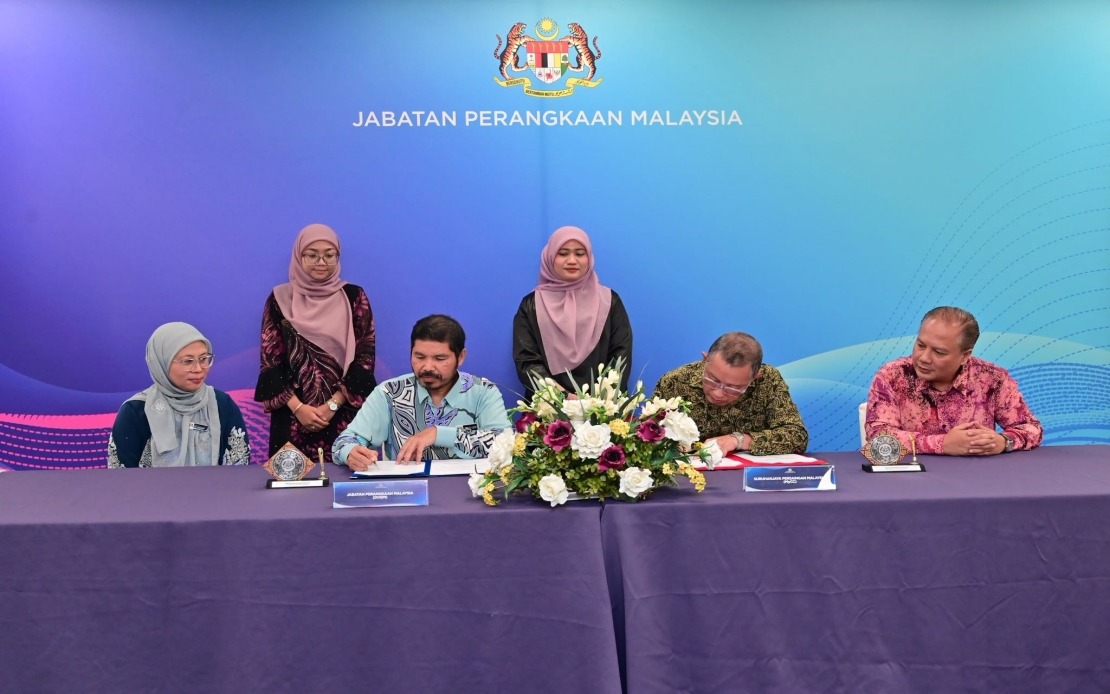
Malaysia's regulatory framework for fair competition has taken a significant step forward with the Malaysia Competition Commission (MyCC) and the Department of Statistics Malaysia (DOSM) formalising a strategic partnership. The two agencies signed a memorandum of understanding at the DOSM headquarters in Putrajaya on June 18, with MyCC chairman Tan Sri Idrus Harun and Chief Statistician Datuk Seri Dr Mohd Uzir Mahidin affixing their signatures to the agreement. The ceremony was witnessed by MyCC chief executive officer Datuk Iskandar Ismail and DOSM Deputy Chief Statistician (Economic Programmes) Siti Asiah Ahmad, underscoring the institutional commitment at senior levels.
The collaboration represents a recognition by government that effective competition policy depends increasingly on sophisticated data analysis and real-time market insights. By pooling resources and expertise, the two organisations aim to build a more comprehensive understanding of competition dynamics across Malaysia's diverse economic sectors. This move aligns with global trends where regulators increasingly rely on advanced analytics to detect anti-competitive behaviour, monitor market concentration and protect consumer interests. For Malaysian businesses, the partnership signals that regulatory oversight will become more sophisticated and evidence-based, potentially reducing the scope for anti-competitive practices to escape detection.
Under the framework established by the MoU, the agencies will facilitate the sharing of administrative and economic data held by DOSM with MyCC's enforcement teams. This grants competition regulators access to detailed statistical information on supply chains, pricing patterns, market structure and sectoral trends that would be difficult or costly to obtain independently. Such data integration allows MyCC to conduct faster, more targeted investigations into suspected cartel activity, monopolistic practices or market abuse. For DOSM, the arrangement provides MyCC with a direct line to query and validate datasets, ensuring that competition analysis rests on reliable statistical foundations.
Capacity building emerges as a central pillar of the partnership. Both agencies commit to developing their human capital through structured training programmes, expert exchanges and collaborative knowledge-sharing initiatives. MyCC staff will gain exposure to DOSM's advanced statistical methodologies, whilst DOSM economists will deepen their understanding of competition economics and enforcement strategies. This cross-pollination of expertise is particularly valuable in Southeast Asia, where competition agencies sometimes struggle to attract specialist talent in competition economics and data science. The partnership effectively creates a regional hub of expertise that can tackle increasingly complex competition cases involving digital markets, cross-border e-commerce and platform economies.
The agreement specifically emphasises joint monitoring of strategic economic sectors and government policies to ensure fair competition principles are embedded across the economy. This monitoring function addresses a gap in many developing regulatory systems, where competition enforcement tends to be reactive—responding to complaints—rather than proactive. By systematically tracking price movements, supply chain disruptions, market entry barriers and policy impacts, the two agencies can identify emerging competition problems before they cause widespread consumer harm. This is particularly relevant for Malaysia given its reliance on key commodity sectors, essential services and import-dependent supply chains where competition can easily break down.
Data and analytics now occupy a central position in competition enforcement globally, and this MoU reflects MyCC's strategic recognition of that shift. The commission has explicitly framed data as the world's main economic commodity, acknowledging that competitive advantage increasingly stems from data control rather than traditional factors like capital or labour. For Malaysian policymakers, this signals an intention to develop robust frameworks for data portability, interoperability and fair access—issues that will become pressing as digital platforms consolidate market power. The partnership provides a mechanism for testing and refining approaches to data-related competition concerns before they mature into the complex regulatory battles now unfolding in the European Union and United States.
Mohd Uzir emphasised that the collaboration will enable more comprehensive statistics and analyses by combining DOSM's statistical rigour with MyCC's competition expertise. This combined lens allows for deeper understanding of market structures and the underlying factors influencing price movements and competitive dynamics. For instance, when consumer prices spike, the partnership can rapidly dissect whether the increase reflects genuine cost pressures, temporary supply shocks or anti-competitive collusion. This kind of nuanced analysis protects Malaysian consumers from paying inflated prices whilst also reassuring legitimate businesses that they will not be unfairly blamed for market-wide price movements beyond their control.
The MoU also addresses supply chain transparency, a theme of considerable importance to Malaysia's manufacturing sector and export-oriented industries. By monitoring supply chains at a granular level, the agencies can identify bottlenecks, concentration points and dependencies that create vulnerability to anti-competitive abuse. This is particularly relevant for industries like semiconductors, automotive components and electronics where Malaysia holds significant positions in global value chains. Better supply chain visibility through the MyCC-DOSM partnership allows early warning of competition risks that could disrupt Malaysia's industrial competitiveness.
The partnership reflects broader government commitment to embedding data-driven decision-making across policy agencies. Rather than operating in silos, MyCC and DOSM will work in tandem to evaluate whether government policies themselves inadvertently restrict competition or create market distortions. This meta-level analysis—examining how policy and competition interact—remains underdeveloped in many Asian economies. Malaysia's move positions it ahead of several regional peers in developing institutional capacity to assess policy-competition nexus comprehensively.
For Malaysian consumers, the practical benefit lies in a more transparent and competitive economic ecosystem. When regulators have better data and analytical capability, they can move faster against cartels, abuse of dominance and other practices that inflate costs for households. Small and medium enterprises stand to gain from reduced barriers to market entry and more level competitive playing fields. The partnership also signals to international investors that Malaysia operates a modern, evidence-based regulatory environment, potentially attracting higher-quality foreign direct investment.
The MoU establishes a foundation for deeper institutional integration between Malaysia's statistics and competition authorities, but its success will depend on implementation quality. Both agencies must invest in compatible data systems, develop clear protocols for data security and confidentiality, and cultivate staff with hybrid skills spanning statistics and competition economics. The memorandum is a strategic statement of intent; translating that intent into operational reality requires sustained commitment and resource allocation. Observers will watch closely for how quickly the partnership produces tangible outcomes—whether in the form of enhanced competition investigations, published joint analyses or improved sectoral reports that guide both policy and business strategy across the Malaysian economy.

