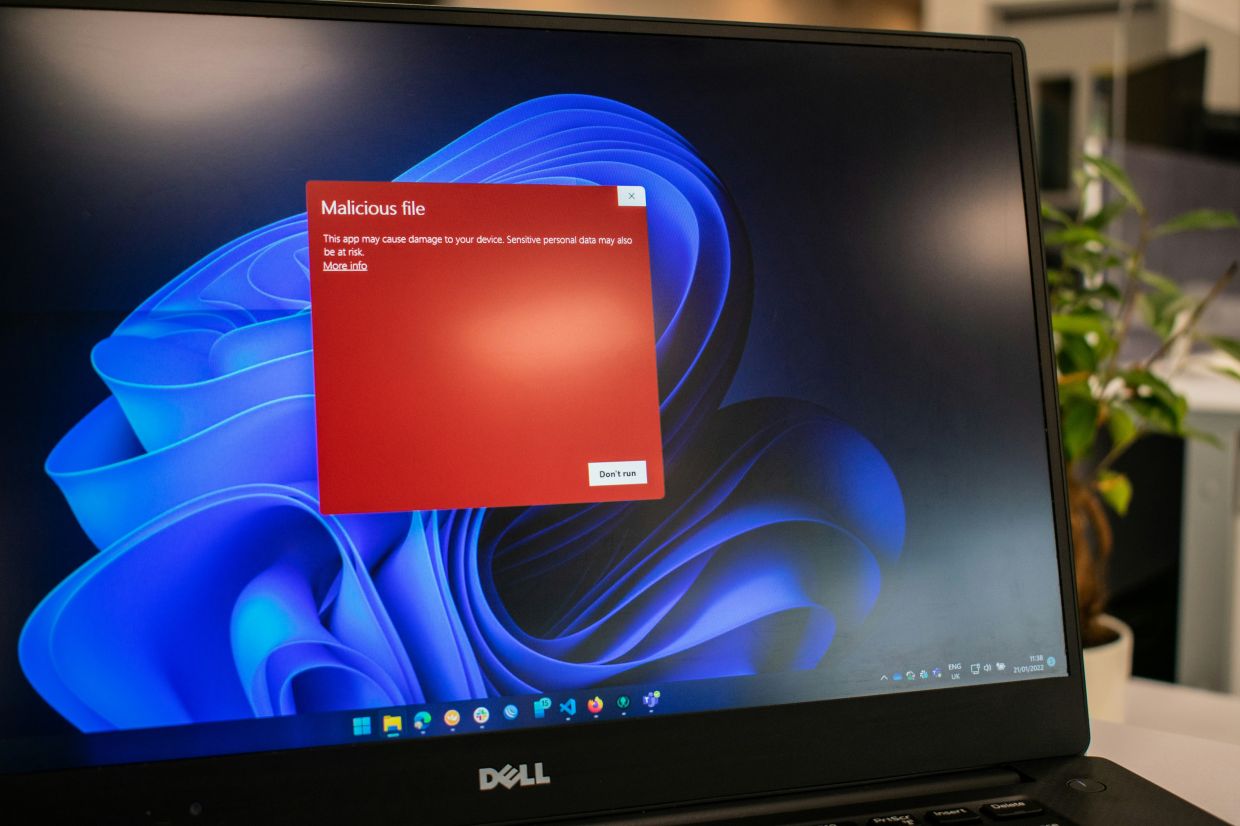
Malaysia's Computer Emergency Response Team (MyCert) has issued an urgent warning about a coordinated malware campaign leveraging WhatsApp Web and Desktop to compromise Windows computers across the country. The sophisticated attack uses social engineering methods to manipulate users into executing malicious code, representing a significant threat to both individual users and corporate networks dependent on Windows infrastructure.
The infection vector relies on attackers sending carefully crafted messages through WhatsApp that contain deceptive file attachments. These files masquerade as ordinary business documents—specifically legal agreements, billing statements, and financial reconciliations—which are common enough that recipients may lower their guard. The attackers employ particularly convincing Malaysian-language filenames such as "Sila semak bil anda.vbs" (Please check your bill), alongside English variants like "Acknowledgment of Debt.vbs", "December statement of account.vbs", and "Reconciliation.vbs". This localization strategy significantly increases the likelihood that Malaysian users will trust and open these files.
The technical deception extends beyond mere nomenclature. While these files bear extensions and naming conventions suggesting they are PDF documents or standard office files, they are actually Visual Basic Script executables with .vbs extensions. When unsuspecting users double-click these files, they trigger automatic script execution—essentially inviting attackers directly into their systems. This distinction between perceived and actual file types exploits a common user assumption that WhatsApp attachments are benign, creating a critical vulnerability in the security awareness chain.
Once executed, the malware deploys a Remote Access Trojan (RAT) directly onto the compromised machine. This gives attackers the capability to remotely access and commandeer the entire system, treating it as if they were physically present at the keyboard. The attacker's control persists even after device restarts, establishing a persistent foothold that can prove extremely difficult for ordinary users to detect and remove. This persistence mechanism is particularly concerning for corporate environments, where an infected workstation could serve as a launching point for broader network intrusion.
The malware's functionality extends far beyond simple surveillance. Upon installation, the RAT actively disables standard Windows security prompts and protections, creating an environment where malicious activities can proceed uninterrupted. Attackers can then quietly harvest sensitive data—login credentials, banking authentication codes, one-time passwords for financial transactions, and any information typed or displayed on screen—without triggering antivirus alerts. This silent operation makes the compromise especially dangerous for users conducting online banking or accessing sensitive corporate information, as there may be no obvious warning signs that their credentials have been compromised.
MyCert emphasizes that users receiving such messages should never open or execute suspicious attachments, regardless of how legitimate they appear. Equally important is resisting the urge to forward suspicious files to contacts, as this unknowingly spreads the malware within social and professional networks. Users should not reply to the sender, as responding confirms that their phone number is active and monitored, potentially escalating the targeting campaign. Instead, victims should report the malicious message directly through WhatsApp's built-in reporting feature and simultaneously contact MyCert at [email protected] with supporting evidence including screenshots, timestamps, and sender identification.
For those who have already opened or executed these files, MyCert strongly recommends treating their device as fundamentally compromised. The immediate priority is disconnecting the affected machine from the internet entirely, which severs the attacker's remote control channel and prevents further data exfiltration. Users should then change all passwords associated with accounts previously accessed on that device, but crucially, this password reset must be performed from a separate, clean computer. Any credentials entered on the infected machine should be presumed exposed and require updating across all associated services.
Corporate users face an additional layer of urgency. Those working on company-provided devices must immediately notify their organization's IT security team, as an infected corporate workstation represents a potential beachhead for enterprise-wide network attacks. Information technology professionals must treat such infections as potential indicators of compromise affecting broader network security infrastructure. Standard antivirus scans frequently fail to detect sophisticated RATs, particularly when security prompts have been disabled, necessitating specialized malware removal assistance from cybersecurity professionals.
This campaign underscores a broader trend in Malaysian cybercrime where attackers increasingly exploit trust-based communication platforms and cultural context to increase social engineering effectiveness. The use of Malay language filenames and financial document themes suggests the attackers have invested effort in understanding their target audience, making generic security awareness campaigns less effective. Malaysian users should maintain heightened skepticism toward unexpected financial documents received through messaging platforms, even when they originate from apparently routine business contexts.
The RAT-based attack methodology is particularly insidious because it transforms compromised devices into remote-controlled assets that can be repurposed for various criminal objectives beyond credential theft. Attackers may use infected machines to participate in distributed denial-of-service attacks, deploy ransomware to encrypt files for extortion, access corporate networks through VPN credentials, or conduct further reconnaissance of connected systems. The persistence of the compromise across reboots means that users relying solely on casual antivirus tools likely cannot fully remediate the infection without professional intervention.
MyCert recommends that any individual or organization with suspected exposure should compile detailed information about the attack including the original message contents, associated links, infection timing, and device specifics for reporting to cyber security authorities. This information gathering assists in tracking the scope and origins of the campaign, potentially enabling law enforcement collaboration and disruption of the attack infrastructure. As remote work and reliance on personal devices for business purposes continues expanding across Malaysia, such malware distribution methods will likely remain prevalent.

