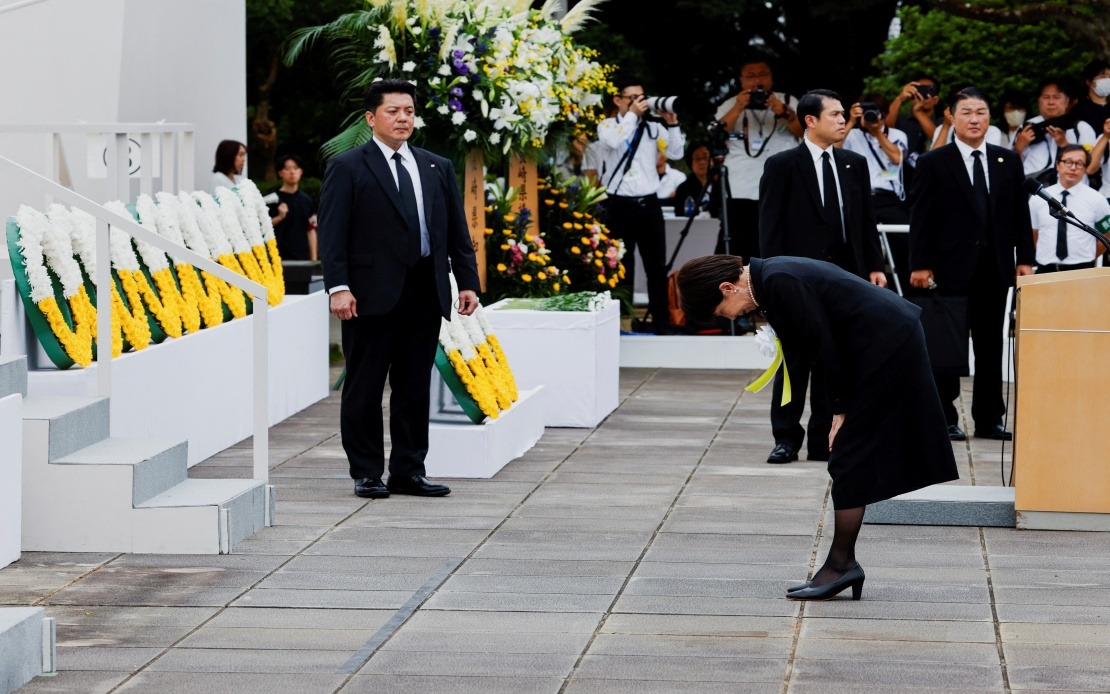
The southwestern Japanese city of Nagasaki observed its 81st anniversary on Sunday of the devastating atomic bombing that concluded World War II in the Pacific theatre. The commemoration comes at a time when international discussions about the role of nuclear weapons in contemporary security strategies have intensified, prompting fresh examination of the humanitarian imperative to prevent nuclear proliferation.
The bombing of Nagasaki on August 9, 1945, delivered a plutonium-based device designated "Fat Man" from an American bomber, which detonated at 11:02 a.m. and inflicted immediate devastation on the city. This attack followed the destruction of Hiroshima just three days earlier, with Nagasaki ultimately becoming the final city to endure a nuclear weapons strike in wartime. The immediate and long-term human toll proved catastrophic, with approximately 74,000 residents killed by the year's end, while countless others bore permanent physical and psychological scars from the event.
At the anniversary ceremony, Nagasaki Mayor Shiro Suzuki was set to deliver a message emphasizing that nuclear weapons represent an existential threat incompatible with human survival. The mayor's remarks underscored the necessity for global leadership to commit substantively to nuclear disarmament initiatives. Prime Minister Sanae Takaichi was also scheduled to participate, alongside a statement from UN Secretary-General António Guterres, signalling the international dimension of Japan's advocacy on this issue.
The ceremony preserved a central ritual of remembrance: at 11:02 a.m., attendees observed a moment of silence marking the precise instant of detonation. This symbolic pause connects contemporary observers directly to the survivors and victims, maintaining the emotional and moral weight of the historical record across generations. For hibakusha—the term designating atomic bomb survivors—and their advocacy networks, such ceremonies serve as crucial platforms for transmitting eyewitness testimony and ensuring that the documented suffering informs contemporary policy discussions.
Japan's own nuclear posture remains contested terrain. The longstanding "three non-nuclear principles"—prohibiting the production, possession, or introduction of nuclear weapons on Japanese soil—have undergone renewed scrutiny as regional security challenges mount. Following ceremonies in Hiroshima the preceding Thursday, Prime Minister Takaichi affirmed that the government remains committed to these principles, yet the fact that such clarifications prove necessary reflects genuine uncertainty within policy circles about Japan's strategic direction.
The international arms control architecture has simultaneously deteriorated. The Nuclear Non-Proliferation Treaty review conference, convened every five years in principle to assess progress toward disarmament obligations, concluded in May after a month-long session in New York without reaching consensus. This represented the third consecutive review conference to end without agreed outcomes, indicating a fundamental fracture in the global consensus that previously underpinned non-proliferation frameworks. For Southeast Asian nations seeking stability through multilateral agreements, such breakdowns signal troubling erosion of institutional mechanisms designed to constrain nuclear weapons development.
Japan's particular vantage point carries distinctive moral and strategic significance. As the sole nation to have experienced nuclear warfare against civilian populations, Japan possesses unparalleled standing in advocating for disarmament while simultaneously navigating alliance commitments with nuclear-armed powers. This tension reflects the broader paradox confronting the international system: how to pursue meaningful disarmament while addressing security threats that some states believe require nuclear deterrence.
The hibakusha represent a living historical archive now approaching obsolescence through simple aging. The average age of officially recognized survivors exceeds 86 years, meaning the window for first-hand testimony continues narrowing inexorably. Organizations supporting survivors race to document comprehensive oral histories and ensure that knowledge derived from direct experience is archived systematically before it passes from living memory. For Malaysia and the broader region, where nuclear weapons debates remain relatively abstract, the Japanese experience offers concrete evidence of the irreversible humanitarian consequences of nuclear weapons employment.
The geopolitical context lending contemporary urgency to Nagasaki's message involves multiple overlapping tensions: strategic competition between established and rising powers, regional territorial disputes with potential for escalation, and the proliferation of nuclear capabilities to additional states. Within Southeast Asia specifically, these dynamics create complicated calculations for nations balancing multilateral engagement with great powers against regional stability imperatives.
Japan surrendered on August 15, 1945, just six days after Nagasaki's destruction, ending World War II in the Pacific. The compressed timeline between the atomic bombings and Japan's capitulation remains historically debated regarding causation, yet the result fundamentally altered human civilization's trajectory by introducing weapons of mass destruction into the international arena. Eighty-one years later, the fundamental challenge articulated by Nagasaki's commemorations persists unchanged: whether humanity can successfully constrain the weapons it has created, or whether their proliferation represents an inevitable feature of the nuclear age.

