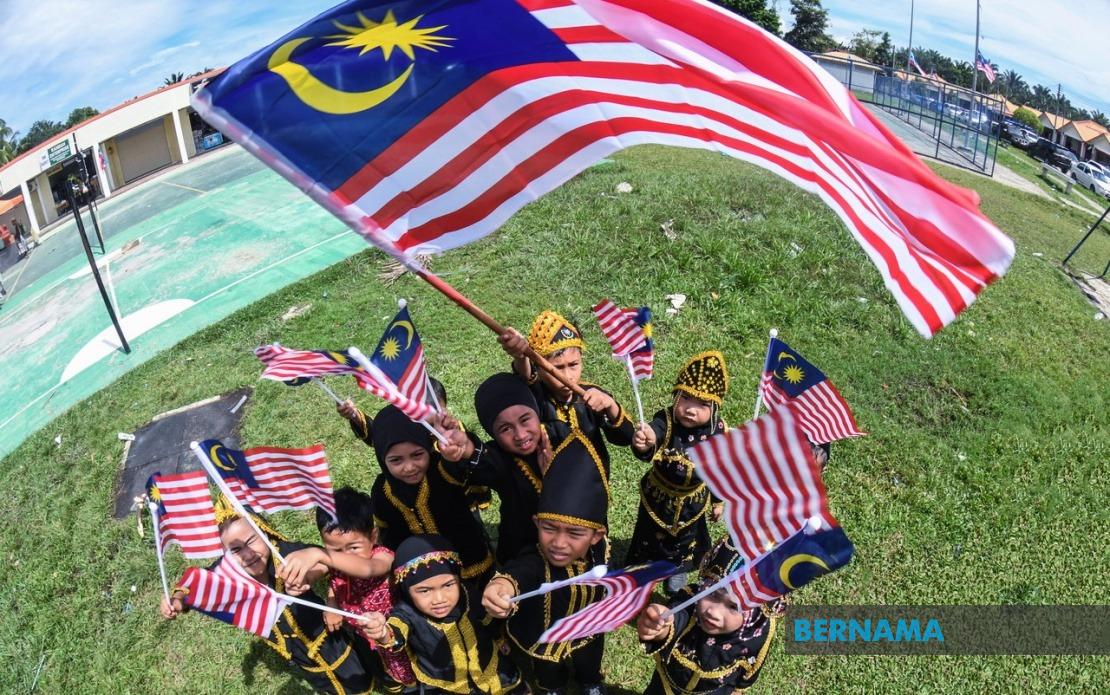
The launch ceremony for National Month and the Fly the Jalur Gemilang 2026 campaign will shift towards a more restrained yet spiritually focused celebration, according to officials coordinating this year's National Day and Malaysia Day festivities. Rather than replicating the large-scale public spectacles held in previous years across different Malaysian cities, organisers have opted for a deliberate scaling back of scale while preserving the core messaging around national pride and unity. This strategic recalibration reflects consideration of broader contextual factors affecting the nation and the wider region during 2026.
The ceremony, set to take place on July 19 at the Ministry of Health Training Institute Sultan Azlan Shah in Tanjung Rambutan, Ipoh, represents a departure from established precedent. Muhammad Najmi Mustapha, who directs communications and community development efforts within the Information Department, articulated the rationale during discussions with media. Previous iterations of this flagship event have drawn crowds to open-air venues such as Muar in Johor and the federal administrative centre in Cyberjaya, transforming public spaces into focal points for commemoration. This year's planners determined that an indoor setting would better align with present circumstances while still permitting the general public to participate in and experience the celebratory atmosphere.
Global headwinds have factored prominently into the decision-making process. Muhammad Najmi explicitly cited the ongoing energy supply constraints affecting economies worldwide and the persistent military and humanitarian crises unfolding across West Asia. These international dynamics have created a complex backdrop for national celebrations globally, prompting many countries to reconsider the scale and resource intensity of public events. By embracing a more measured approach, Malaysian authorities signal awareness of these pressures whilst demonstrating commitment to maintaining ceremonial traditions that reinforce collective identity and civic consciousness.
Prime Minister Datuk Seri Anwar Ibrahim will officially open the proceedings, commencing at 10 am on the designated Sunday. This participation by the nation's chief executive underscores the symbolic importance attached to the occasion despite the reduced physical footprint. The broadcast reach will be substantial, with transmission via Radio Televisyen Malaysia and the Malaysian National News Agency complemented by simultaneous digital streaming across social media platforms associated with Merdeka360 and the Ministry of Communications. This multi-channel dissemination strategy ensures that geographical constraints do not prevent citizens from witnessing the formal launch and absorbing messaging around patriotic expression.
Central to this year's campaigns is the continuation and expansion of the "1 Rumah 1 Jalur Gemilang" initiative, a grassroots mobilisation effort that encourages residential households to display the national flag prominently. This programme, which emerged several years ago as a mechanism for distributing patriotic expression across domestic spaces rather than concentrating it in designated public areas, has evolved substantially. The framework now encompasses nine distinct clusters spanning education institutions, universities, healthcare facilities, security establishments, community organisations, industrial enterprises, government offices, places of worship, and sports clubs. This enlargement reflects recognition that patriotism permeates multiple sectors of society and that fostering national consciousness requires simultaneous activation across diverse institutional settings.
Digital engagement has become increasingly central to the execution strategy. Citizens are encouraged to weaponise their social media presence as vehicles for patriotic display, adopting the Jalur Gemilang as profile imagery and disseminating National Month content utilising designated hashtags including #HKHM2026, #MalaysiaMADANI, #KesejahteraanDinikmati, and #Merdeka360. This approach leverages the pervasive presence of social platforms amongst Malaysian demographics whilst permitting individuals across diverse geographical and socioeconomic backgrounds to participate in collective expression. The emphasis on hashtag-driven content creation establishes measurable metrics for engagement whilst generating organic amplification of celebratory messaging through algorithmic circulation.
The thematic framework governing 2026 festivities has been selected to reflect government priorities and contemporary national circumstances. Communications Minister Datuk Seri Fahmi Fadzil previously unveiled "Malaysia MADANI: Kesejahteraan Dinikmati" as the overarching theme, with accompanying official branding that will persist through the following year. The Malaysia MADANI concept represents a philosophical approach to governance emphasising inclusive prosperity and shared wellbeing across demographic segments. By anchoring 2026 celebrations to this framework, policymakers establish continuity between commemorative events and the substantive policy agenda being pursued across governmental institutions.
The broader National Day celebrations scheduled for August 31 will unfold at Dataran Putrajaya in accordance with analogous principles of modesty paired with vibrancy. Rather than perceiving reduced scale as diminishment, organisers characterise this approach as maintaining ceremonial dignity whilst permitting deeper community participation in neighbourhood and sectoral-level festivities. The distributed model through which celebrations will manifest across nine distinct cluster types essentially federalises patriotic expression, enabling localised commemoration that resonates with immediate institutional or community contexts whilst maintaining symbolic linkage to the nationwide narrative.
For Malaysian observers and regional stakeholders, this recalibration of National Day observance carries instructive implications. Many Southeast Asian democracies navigate comparable tensions between resource constraints and the desire to project national cohesion through ceremonial spectacle. Malaysia's pragmatic approach suggests that patriotic efficacy does not correlate directly with budgetary expenditure or physical attendance figures. Instead, the multiplication of patriotic expression across diverse institutional and digital domains may generate more authentic and enduring engagements with national identity than concentrated grand ceremonies. The strategy implicitly posits that patriotism manifests most powerfully when distributed throughout the civic fabric rather than concentrated in elite-managed spectacles.
The emphasis on household and institutional flag displays alongside social media mobilisation reflects evolving understanding of how patriotic consciousness gets constructed and reinforced in contemporary societies. Rather than positioning the state as the primary choreographer of national celebration, the decentralised model invites citizens, organisations, and communities to become active producers of patriotic expression within their respective domains. This participatory framing potentially generates stronger affective attachments to national identity than scenarios where audiences passively observe official ceremonies. For policymakers across the region grappling with similar commemorative challenges, Malaysia's 2026 approach offers a template demonstrating how geopolitical headwinds and fiscal constraints need not diminish the symbolic force of national celebrations when reconfigured through inclusive, distributed, and digitally-enabled frameworks.

