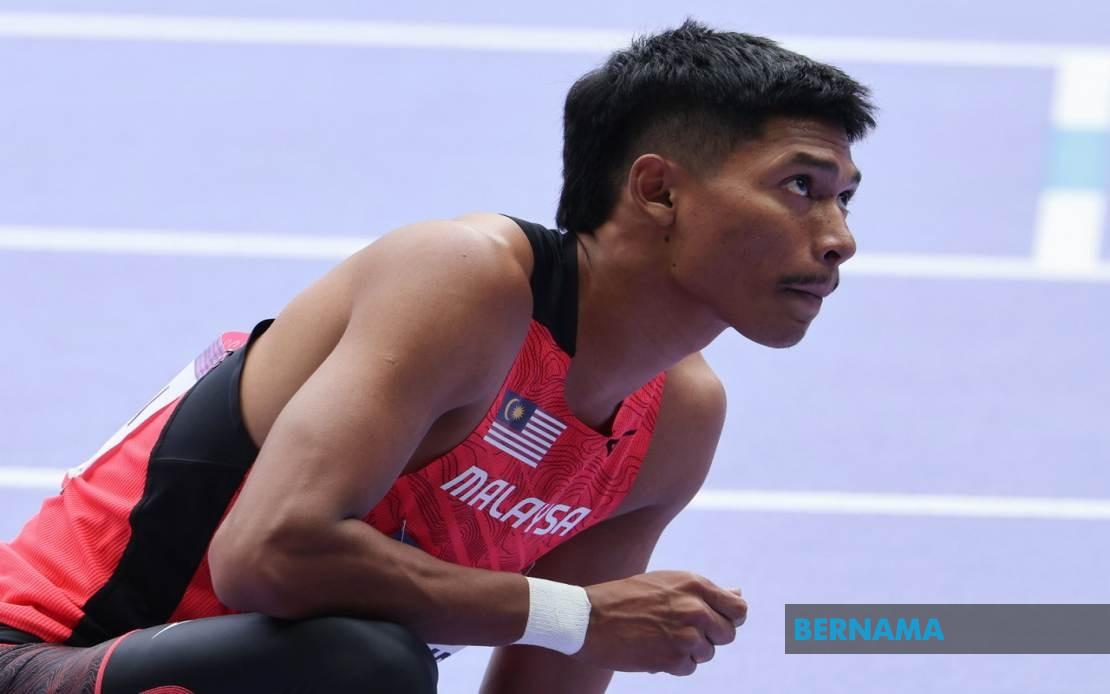
Muhammad Azeem Mohd Fahmi, the holder of Malaysia's national 100-metre record at 10.09 seconds, has announced his intention to base himself in Malaysia as he transitions into the next phase of his professional athletic career after recently concluding his university studies in the United States. The 22-year-old sprinter, who spent four years at Auburn University, indicated that he harbours no immediate ambitions to return abroad, choosing instead to dedicate himself to both personal and professional priorities within Malaysian borders.
The decision reflects a deliberate pivot towards family reconnection after an extended period away from home. Azeem emphasised that his current priority centres on rebuilding relationships with loved ones who have remained in Malaysia throughout his overseas tenure. The time spent studying and training in the United States, whilst undoubtedly beneficial for his athletic development, has created a separation that he is now eager to address. This focus on family dynamics represents a significant consideration in his career planning, suggesting that personal well-being and support networks play a crucial role in his approach to elite athletics.
Azeem articulated his gratitude for the foundational support system that has shaped his trajectory as a competitive sprinter. His acknowledgement of family members, parents, siblings, coaching staff, and close friends underscores the collaborative nature of elite athletic achievement. In the Malaysian context, where family structures often remain central to decision-making processes, his emphasis on this support network resonates with broader cultural values. He explicitly credited these individuals with providing the motivation and guidance necessary to establish himself as one of Southeast Asia's fastest sprinters.
The coaching arrangement for his continued development demonstrates a hybrid approach that leverages international expertise whilst maintaining local operational oversight. Azeem will continue to follow a training regimen designed by his American coach, Ken Harnden, whose experience at Auburn has clearly left a significant impact on the athlete's methodology and approach to sprint development. However, day-to-day coaching supervision will be managed by Malaysian coach Muhammad Amir Izwan Tan Abdullah, ensuring that Azeem receives consistent, hands-on guidance within the Malaysian athletics ecosystem.
This dual-coaching structure reflects an increasingly common trend in Southeast Asian sports development, where athletes benefit from international coaching philosophies whilst maintaining connections to domestic support systems. The arrangement suggests that Malaysian athletics authorities have recognised the value of both retaining Azeem's talent domestically and providing him with continued access to world-class training methodologies. For Malaysian sprinting as a discipline, retaining a national record holder of Azeem's calibre represents a significant advantage in building a competitive domestic athletics programme that can challenge regional rivals.
Beyond his immediate athletic objectives, Azeem has signalled his intentions regarding further academic pursuits. He has expressed interest in pursuing postgraduate education at the master's level, though he has deliberately positioned this as a secondary priority relative to his sporting commitments. His decision to defer advanced academic studies in favour of concentrated athletic training demonstrates a mature understanding of the finite window available for competitive sprinting at elite levels. The temporary postponement of educational advancement underscores his recognition that peak athletic performance requires sustained focus and dedication.
The athlete's strategic approach to the coming months reveals considered planning around training intensity and performance targets. By allocating an initial period exclusively to athletics development, Azeem appears intent on maximising his competitive trajectory during his physiological prime years. This decision carries implications for Malaysian athletics broadly, as the nation looks to establish a stronger presence in regional and international sprint competitions. Having retained a nationally significant talent who has trained at a major American university, Malaysia's athletics programme gains both a proven performer and a pipeline of international best practices in sprint coaching and athlete development.
Azeem's choice to remain in Malaysia also addresses broader questions about athlete retention within Southeast Asian sports systems. Countries across the region frequently experience talent drain, with accomplished athletes relocating permanently to developed nations for better training facilities, sponsorship opportunities, or professional prospects. By choosing to remain domestically, Azeem signals confidence in Malaysia's capacity to support competitive athletic development and suggests that improvements in local infrastructure and coaching quality have made remaining at home a viable long-term strategy for elite performers.
The transition from university athletics to professional competition in the domestic context represents a critical juncture in Azeem's career development. His four-year immersion in the American collegiate athletics system has exposed him to training methods, competition standards, and performance benchmarks that significantly exceed those typically available in Malaysia. By committing to repatriate this acquired knowledge and experience to the Malaysian athletics framework, Azeem positions himself as a potential catalyst for broader improvements in domestic sprint training and coaching methodologies. The knowledge transfer occurring through his return could benefit not only his own continued development but also younger Malaysian sprinters seeking to close the competitive gap with regional counterparts.

